

Guide to High Performance Custom Made Power Steering Hoses
The Ultimate Guide to Custom Made Power Steering Hoses
For automotive enthusiasts and fleet managers, the steering system's reliability is non-negotiable. When standard off-the-shelf parts fail to meet specific vehicle modifications or extreme performance requirements, custom made power steering hoses emerge as the ideal solution. These precision-engineered components ensure a perfect fit, reducing the risk of leaks and improving steering responsiveness. Whether you are restoring a classic car or optimizing a heavy-duty industrial machine, investing in tailored hydraulic lines can prevent costly downtime and safety hazards. In this comprehensive guide, we will explore why customization is superior to universal fits and how to choose the right specifications for your needs.
Why Choose Custom Made Power Steering Hoses Over Universal Parts?
Universal hoses often rely on adapters or excessive lengths that can lead to kinking, rubbing, and premature wear. In contrast, custom made power steering hoses are designed based on the exact routing of your engine bay. This eliminates unnecessary bends and ensures that the hose does not interfere with moving parts like pulleys or fans. By utilizing high-grade materials and precise end-fittings, custom hoses provide a leak-proof seal that handles high-pressure surges far more effectively than generic alternatives. This precision not only extends the life of the power steering pump but also enhances the overall driving experience.
Expert Insight: Custom hoses allow for the use of superior materials, such as braided stainless steel, which provide significantly higher burst pressure ratings compared to standard rubber hoses.
Material Science: Enhancing the Durability of Custom Hoses
The longevity of your steering system depends heavily on the materials used in construction. Most custom made power steering hoses utilize a combination of synthetic rubber (such as Nitrile or EPDM) and reinforcement layers. For high-performance applications, braided steel exteriors are preferred as they offer an impenetrable barrier against abrasion and extreme heat. This prevents the inner tube from collapsing under vacuum or expanding under high pressure, ensuring a consistent flow of hydraulic fluid. Selecting the right material ensures that your vehicle remains operational even in the harshest environmental conditions.
Material Comparison Benefits:
• Braided Steel: Maximum abrasion resistance and high pressure tolerance.
• Synthetic Rubber: Excellent flexibility and cost-effectiveness for standard use.
• PTFE Lining: Superior chemical compatibility and zero permeability.
Technical Comparison: Custom Made Power Steering Hoses vs. OEM
While Original Equipment Manufacturer (OEM) hoses are designed for the vehicle as it left the factory, they often lack the durability needed for long-term ownership or modified setups. custom made power steering hoses allow the user to upgrade the specifications, such as increasing the wall thickness or changing the fitting type to a more secure flare. This makes them an ideal choice for "restomod" projects where modern power steering pumps are fitted into vintage chassis.
Key Applications for Custom Power Steering Lines
Customization is not just about luxury; it is often a necessity. In the world of heavy machinery, where operating pressures are immense, custom made power steering hoses are used to withstand extreme vibrations and environmental contaminants. In the racing industry, custom lines are essential to navigate tight engine compartments while maintaining maximum flow efficiency. Additionally, classic car owners often turn to custom hoses to integrate modern power steering pumps into old steering boxes, ensuring a seamless and reliable transition that preserves the vehicle's aesthetic value.
Custom Made Power Steering Hoses: Technical Specifications
To order the perfect hose, one must understand the technical parameters involved. The inner diameter (ID) must match the pump's output to avoid turbulence, while the external reinforcement must be chosen based on the operating temperature. High-quality custom made power steering hoses are typically crimped using professional hydraulic presses, ensuring that the fittings will never slip, even under the most intense pressure spikes during full-lock steering maneuvers.
How to Properly Measure for Custom Steering Lines
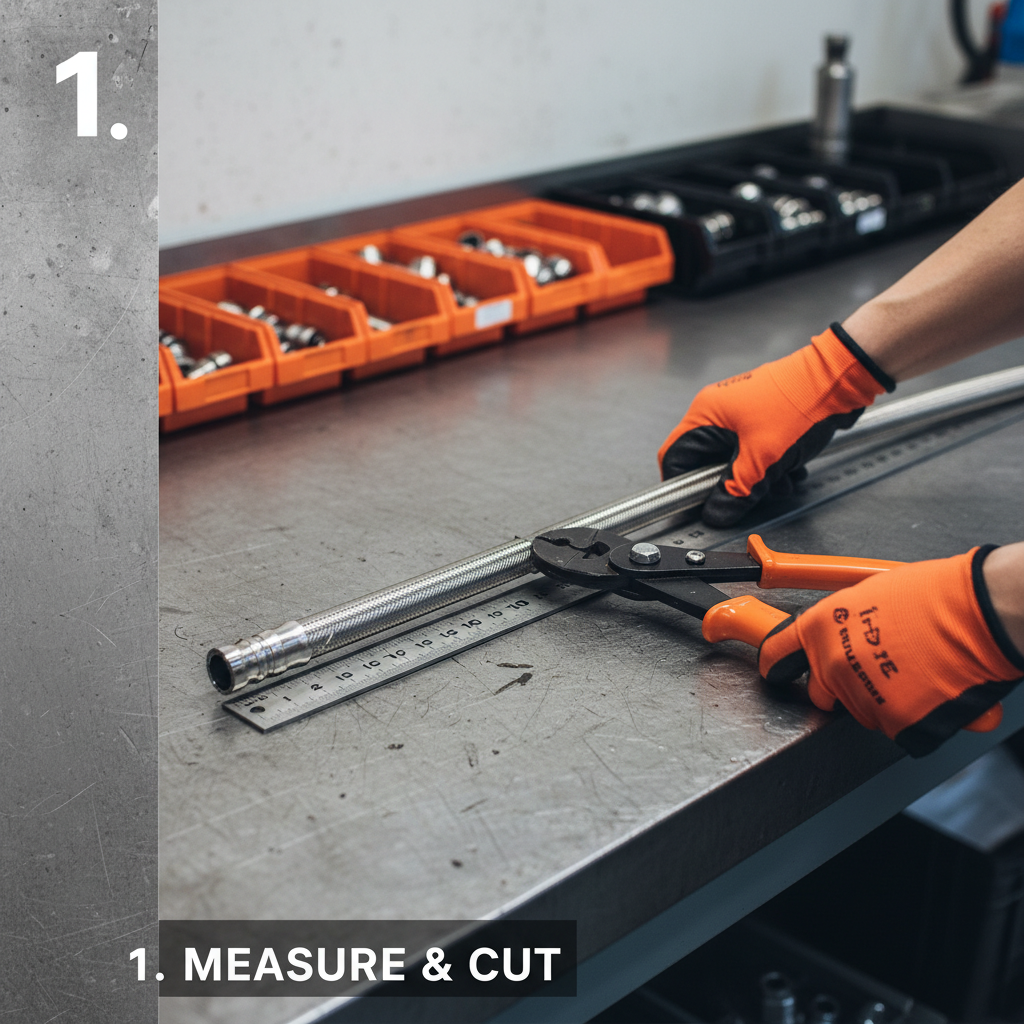
Measuring for custom made power steering hoses requires a meticulous approach to avoid errors. The best method is to use a flexible nylon string or a dedicated routing wire to trace the exact path the hose will take. It is critical to leave a small amount of "slack" to account for engine torque—the movement of the engine within the mounts during acceleration. Once the length is determined, identify the thread pitch and diameter of your fittings. Providing a clear photo of the existing setup can further ensure that the custom hose arrives ready for a "plug-and-play" installation.
Conclusion: Upgrade Your Steering Precision
Choosing custom made power steering hoses is more than just a repair—it is a system upgrade. By selecting the right materials and precision fitment, you eliminate the common failure points of generic hoses, ensuring a safer, more responsive, and longer-lasting steering system. Whether for industrial use or automotive passion, quality custom lines provide the peace of mind that your vehicle will perform flawlessly under pressure. Invest in precision today for a smoother drive tomorrow.
Frequently Asked Questions (FAQs)
How long do custom made power steering hoses typically last?
The lifespan of custom hoses varies depending on the materials used. Standard synthetic rubber hoses usually last 5-8 years, but high-performance braided stainless steel options can last significantly longer, often exceeding a decade. The key to longevity is ensuring the hose is routed away from extreme heat sources and moving parts. Regular inspection for outer wear or fluid weeping is recommended. When sourced from a professional provider like Hoseqrt, you can expect a product built to outlast OEM standards.
Can I use a custom hose for a non-standard steering pump?
Absolutely. This is one of the primary reasons for choosing custom hoses. Whether you have installed an aftermarket high-flow pump or are adapting a pump from a different vehicle model, customization allows for the mixing of different fitting types (e.g., an AN fitting on one end and a metric flare on the other). This flexibility ensures that mismatched components can work together seamlessly without the need for unreliable adapters that often become leak points.
Will a custom hose improve my steering feel?
While a hose doesn't change the steering ratio, it can certainly improve the "feel" and consistency. A poorly fitted OEM or universal hose can collapse internally or kink, restricting fluid flow and causing "stiff" steering or erratic power assistance. Custom hoses ensure an unobstructed, smooth flow of hydraulic fluid from the pump to the rack or gear box. By reducing flow restriction and eliminating air pockets through precise fitting, you achieve a more consistent and effortless steering response.
What information do I need to provide for a custom order?
To ensure an exact fit, you should provide the total length of the hose (measured along the routing path), the specific types of fittings required for both ends, and the intended application (e.g., daily driver, off-road, or racing). If you are unsure about the fitting types, providing a high-resolution photo of your pump and steering box ports is highly helpful. Mentioning the type of fluid you use (ATF, specialized hydraulic oil, etc.) also helps the manufacturer choose the most compatible inner liner material for your custom power steering hose.
-
Custom Power Steering Hose Kit Guide for Vehicle PerformanceNewsApr.16,2026
-
Guide to High Performance Custom Made Power Steering HosesNewsApr.09,2026
-
Comprehensive Guide to Custom High Pressure Power Steering Hose SolutionsNewsApr.07,2026
-
Comprehensive Guide to CRV Power Steering Hose Maintenance and ReplacementNewsApr.04,2026
-
Comprehensive Guide to CPP Power Steering Hoses for Optimal Vehicle PerformanceNewsMar.31,2026
-
Understanding the Cost to Repair Power Steering Hose and Associated FactorsNewsMar.28,2026
 Afrikaans
 Albanian
 Amharic
 Arabic
 Armenian
 Azerbaijani
 Basque
 Belarusian
 Bengali
 Bosnian
 Bulgarian
 Catalan
 Cebuano
 Corsican
 Croatian
 Czech
Czech
 Danish
 Dutch
Dutch
 Esperanto
 Estonian
 Finnish
 French
 Frisian
 Galician
 Georgian
 German
 Greek
Greek
 Gujarati
 Haitian Creole
 Hausa
Hausa
 Hawaiian
 Hebrew
 Hindi
Hindi
 Miao
Miao
 Hungarian
 Icelandic
 Igbo
Igbo
 Indonesian
 Irish
Irish
 Italian
 Japanese
 Javanese
 Kannada
 Kazakh
 Khmer
Khmer
 Rwandese
 Korean
 Kurdish
 Kyrgyz
 Lao
Lao
 Latin
Latin
 Latvian
 Lithuanian
 Luxembourgish
 Macedonian
 Malgashi
 Malay
Malay
 Malayalam
 Maltese
 Maori
Maori
 Marathi
 Mongolian
 Myanmar
 Nepali
 Norwegian
 Norwegian
 Occitan
 Pashto
 Persian
 Polish
 Portuguese
 Punjabi
 Romanian
 Russian
 Samoan
 Scottish Gaelic
 Serbian
 Sesotho
 Shona
Shona
 Sindhi
 Sinhala
 Slovak
 Slovenian
 Somali
 Spanish
 Sundanese
 Swahili
 Swedish
 Tagalog
 Tajik
Tajik
 Tamil
Tamil
 Tatar
Tatar
 Telugu
 Thai
Thai
 Turkish
 Turkmen
 Ukrainian
 Urdu
Urdu
 Uighur
 Uzbek
Uzbek
 Vietnamese
 Welsh
Welsh
 Bantu
Bantu
 Yiddish
 Yoruba
 Zulu
Zulu
 English