

Comprehensive Guide to Case 580C Power Steering Hose Maintenance and Replacement
Understanding Your Case 580C Power Steering Hose: A Comprehensive Guide
Maintaining the power steering in your Case 580C is crucial for efficient operation. A failing Case 580C power steering hose can lead to difficult maneuvering, reduced productivity, and potentially costly repairs. This article provides a detailed overview of the hose, its common issues, preventative maintenance, and where to source high-quality replacements. Ensuring your power steering system operates optimally safeguards your investment and maximizes your machine’s performance.
Identifying Your Case 580C Power Steering Hose
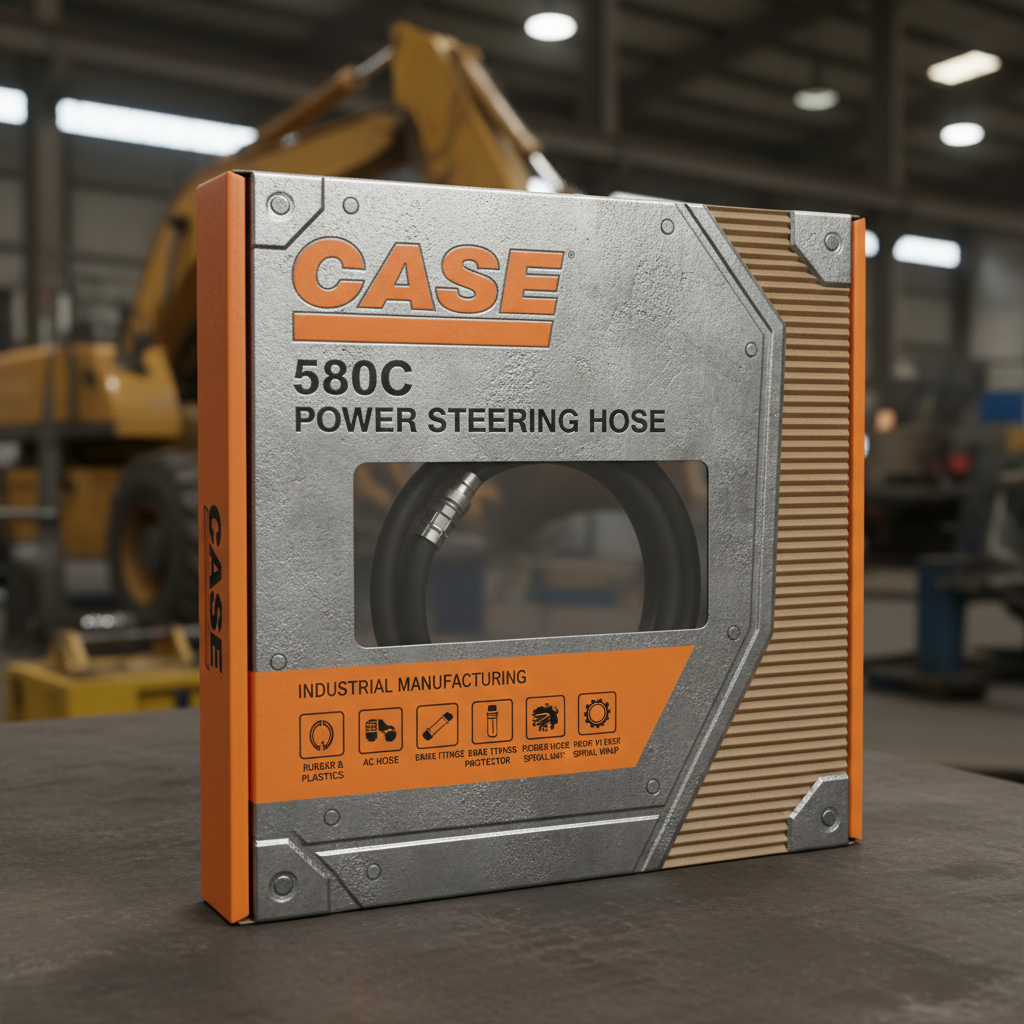
The Case 580C power steering hose is a vital component responsible for delivering hydraulic fluid from the pump to the steering cylinder. It’s typically a high-pressure hose constructed with reinforced rubber or synthetic materials to withstand the demanding conditions of heavy machinery operation. There are typically two hoses within the power steering system – a high-pressure hose and a low-pressure (return) hose. Accurate identification is essential when ordering a replacement to ensure compatibility and proper function. Look for the specific part number stamped on the existing hose, or consult your Case 580C operator's manual for precise specifications.
Common Issues with Case 580C Power Steering Hoses
Several factors can contribute to the failure of a Case 580C power steering hose. These include age and wear, exposure to extreme temperatures, abrasion from surrounding components, and contamination of the hydraulic fluid. Common symptoms of a failing hose include difficulty steering, a noticeable leak around the hose connections, fluid loss, and a whining sound from the power steering pump. Ignoring these symptoms can exacerbate the problem and lead to more extensive (and expensive) repairs.
Key Indicators of a Failing Hose: Fluid leaks, difficult steering, whining noise, reduced steering responsiveness.
Case 580C Power Steering Hose: Specifications and Replacement Options
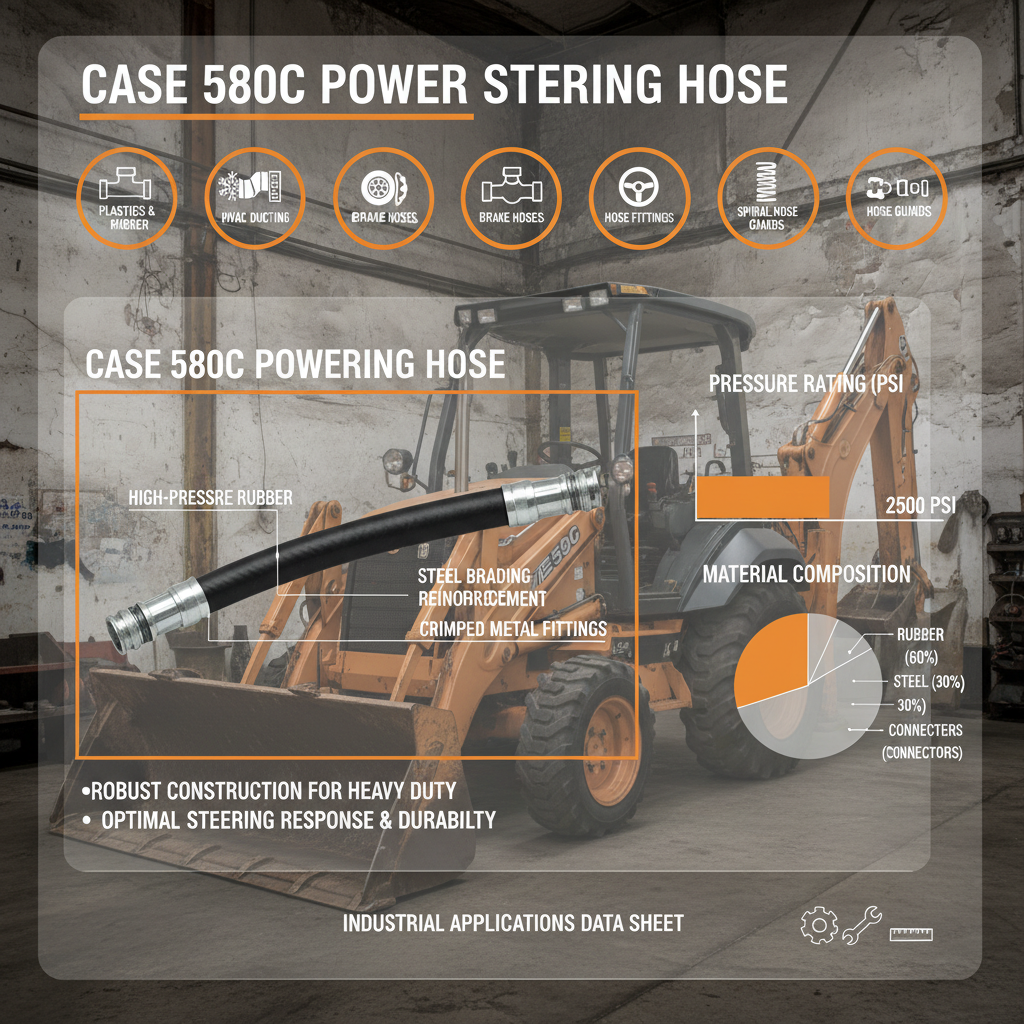
Selecting the correct replacement hose is paramount. Hoses are categorized by pressure rating, length, and connection type. At Hose QRT, we provide hoses specifically engineered for Case 580C models, ensuring a perfect fit and reliable performance. We offer a range of options, including standard rubber hoses and upgraded synthetic hoses for increased durability and resistance to harsh environments.
Preventative Maintenance for a Long-Lasting System
Regular maintenance can significantly extend the life of your power steering system. This includes periodically inspecting the hoses for cracks, bulges, or leaks. Ensure the hydraulic fluid level is correct and that the fluid is clean and free of contaminants. Avoid oversteering or putting excessive strain on the system. Consider flushing and replacing the hydraulic fluid according to the manufacturer's recommendations. Proper care and attention will save you time and money in the long run.
Why Choose Hose QRT for Your Case 580C Power Steering Needs?
At Hose QRT, we specialize in providing high-quality hydraulic hoses and fittings for a wide range of heavy machinery, including the Case 580C. We are committed to delivering superior products, competitive pricing, and exceptional customer service. Our team of experts can assist you in identifying the correct hose for your specific application and ensure a smooth and hassle-free ordering process. We understand the importance of minimizing downtime and getting your machine back to work quickly.
Conclusion: Keeping Your Case 580C Running Smoothly
Investing in a quality Case 580C power steering hose from a reputable supplier like Hose QRT is vital for the longevity and performance of your machinery. Regular maintenance and prompt replacement of worn components will prevent costly repairs and ensure safe and efficient operation. Don't compromise on quality – choose Hose QRT for reliable solutions and exceptional service.
Frequently Asked Questions (FAQs)
How often should I inspect my Case 580C power steering hose?
It’s recommended to visually inspect your power steering hose at least monthly, and before and after each major project. Look for signs of cracking, bulging, abrasion, or leaks around the connections. Regular inspection can help identify potential problems before they lead to a complete failure. Also, check the fluid level and condition. If you notice any issues, address them immediately to prevent further damage.
Can I repair a leaking power steering hose?
While temporary repairs may be possible with hose clamps, they are generally not recommended as a long-term solution. Power steering hoses operate under high pressure, and a compromised hose can burst unexpectedly, posing a safety hazard. The best course of action is to replace the leaking hose with a new one from a trusted supplier like Hose QRT. This ensures a reliable and safe repair.
What type of hydraulic fluid should I use in my Case 580C?
Refer to your Case 580C operator's manual for the recommended hydraulic fluid specification. Using the incorrect fluid can damage the power steering system and void your warranty. Generally, Case 580C models require a hydraulic fluid that meets the ISO VG 32 or ISO VG 46 standard. Always ensure the fluid is clean and free of contaminants before adding it to the system.
How long does it typically take to replace a Case 580C power steering hose?
The time it takes to replace a Case 580C power steering hose can vary depending on the mechanic's experience and the accessibility of the hose. Generally, a straightforward hose replacement can be completed within 1 to 2 hours. However, if the connections are corroded or difficult to access, it may take longer. Always ensure the system is properly depressurized before disconnecting any hoses.
-
Custom Power Steering Hose Kit Guide for Vehicle PerformanceNewsApr.16,2026
-
Guide to High Performance Custom Made Power Steering HosesNewsApr.09,2026
-
Comprehensive Guide to Custom High Pressure Power Steering Hose SolutionsNewsApr.07,2026
-
Comprehensive Guide to CRV Power Steering Hose Maintenance and ReplacementNewsApr.04,2026
-
Comprehensive Guide to CPP Power Steering Hoses for Optimal Vehicle PerformanceNewsMar.31,2026
-
Understanding the Cost to Repair Power Steering Hose and Associated FactorsNewsMar.28,2026
 Afrikaans
 Albanian
 Amharic
 Arabic
 Armenian
 Azerbaijani
 Basque
 Belarusian
 Bengali
 Bosnian
 Bulgarian
 Catalan
 Cebuano
 Corsican
 Croatian
 Czech
Czech
 Danish
 Dutch
Dutch
 Esperanto
 Estonian
 Finnish
 French
 Frisian
 Galician
 Georgian
 German
 Greek
Greek
 Gujarati
 Haitian Creole
 Hausa
Hausa
 Hawaiian
 Hebrew
 Hindi
Hindi
 Miao
Miao
 Hungarian
 Icelandic
 Igbo
Igbo
 Indonesian
 Irish
Irish
 Italian
 Japanese
 Javanese
 Kannada
 Kazakh
 Khmer
Khmer
 Rwandese
 Korean
 Kurdish
 Kyrgyz
 Lao
Lao
 Latin
Latin
 Latvian
 Lithuanian
 Luxembourgish
 Macedonian
 Malgashi
 Malay
Malay
 Malayalam
 Maltese
 Maori
Maori
 Marathi
 Mongolian
 Myanmar
 Nepali
 Norwegian
 Norwegian
 Occitan
 Pashto
 Persian
 Polish
 Portuguese
 Punjabi
 Romanian
 Russian
 Samoan
 Scottish Gaelic
 Serbian
 Sesotho
 Shona
Shona
 Sindhi
 Sinhala
 Slovak
 Slovenian
 Somali
 Spanish
 Sundanese
 Swahili
 Swedish
 Tagalog
 Tajik
Tajik
 Tamil
Tamil
 Tatar
Tatar
 Telugu
 Thai
Thai
 Turkish
 Turkmen
 Ukrainian
 Urdu
Urdu
 Uighur
 Uzbek
Uzbek
 Vietnamese
 Welsh
Welsh
 Bantu
Bantu
 Yiddish
 Yoruba
 Zulu
Zulu
 English