

Durable Quick Release Ball Joint | Easy Connect & Disconnect
Understanding the quick release ball joint: An Essential Component in Modern Industrial Systems
In the intricate landscape of industrial piping and fluid transfer systems, the efficiency and reliability of connections are paramount. The quick release ball joint stands as a critical innovation, offering unparalleled advantages in scenarios demanding rapid assembly, disassembly, and secure sealing. Unlike traditional flanged or threaded connections, these joints facilitate swift operational changes, significantly reducing downtime and enhancing safety across various sectors. This comprehensive guide delves into the technical aspects, application scenarios, and strategic importance of these advanced coupling solutions for B2B decision-makers and engineers.
The demand for agile and robust connection technologies has surged, particularly in high-stakes environments where maintenance efficiency directly impacts productivity and safety. From petrochemical plants to water treatment facilities, the ability to quickly and securely connect or disconnect pipe sections, hoses, and other equipment components is a game-changer. Key benefits include improved operational flexibility, reduced labor costs, and enhanced system integrity against pressure and vibration stresses.
Industry Trends and Market Dynamics
The industrial coupling market is witnessing a strong shift towards solutions that offer not only secure connections but also operational agility. Key trends include the increasing adoption of automated systems, the imperative for enhanced safety protocols, and the growing focus on sustainable practices through reduced material waste and energy consumption. The market for quick-release couplings, including the quick release ball joint, is projected to grow significantly, driven by these factors.
For instance, the global industrial quick disconnect coupling market size was valued at USD 1.25 billion in 2022 and is expected to expand at a compound annual growth rate (CAGR) of 6.5% from 2023 to 2030, according to Grand View Research. This growth is largely fueled by the rising demand from sectors such as oil & gas, chemicals, and pharmaceuticals, where rapid and leak-free connections are critical. Innovations in material science, such as advanced elastomers for seals and high-strength alloys for bodies, are further enhancing the performance envelope of these components, allowing for applications in more extreme pressure and temperature regimes.
The integration of smart sensor technologies into coupling mechanisms, enabling real-time monitoring of connection integrity and operational parameters, represents another significant trend. This allows for predictive maintenance, further minimizing downtime and optimizing system performance. Products like the rainbird coupler and the ball joint quick disconnect are examples of specialized solutions designed to meet specific industry needs for rapid, reliable connections.
Detailed Process Flow: Manufacturing the Quick Release Ball Joint
The manufacturing of a high-performance quick release ball joint is a meticulously engineered process, ensuring precision, durability, and compliance with stringent industry standards. The journey from raw material to a finished product involves several critical stages, each contributing to the coupler's superior functionality.
- 1. Material Selection & Procurement: High-grade materials are chosen based on the intended application's demands for corrosion resistance, pressure tolerance, and temperature stability. Common materials include Stainless Steel (304, 316L), Carbon Steel (A105, A350 LF2), and specialized alloys. Sealing materials like NBR, FKM (Viton), EPDM, and PTFE are selected for compatibility with specific media and operating conditions.
-
2. Component Fabrication:
- Casting/Forging: Larger body components often begin as precision castings (e.g., investment casting for intricate shapes and high dimensional accuracy) or forgings (for enhanced strength and grain structure).
- CNC Machining: Critical dimensions, sealing surfaces, and intricate features like the ball locking mechanism are machined to extremely tight tolerances using advanced CNC (Computer Numerical Control) machines. This ensures precise fitment, smooth operation, and optimal sealing performance.
- Heat Treatment: Components may undergo heat treatment processes (e.g., quenching and tempering, annealing) to achieve desired mechanical properties such as hardness, toughness, and wear resistance.
- 3. Surface Treatment & Finishing: To enhance corrosion resistance and improve surface hardness, components may receive treatments such as passivation (for stainless steel), electroless nickel plating, or specialized coatings. This also ensures a clean, smooth finish crucial for sealing integrity.
- 4. Assembly: Skilled technicians assemble the various components, including the main body, ball locking mechanism, sealing rings, and operating levers. Strict quality control measures are in place at this stage to ensure correct assembly and functionality.
-
5. Testing & Quality Assurance: Every quick release ball joint undergoes rigorous testing to validate its performance and adherence to international standards such as ISO 9001, ANSI B16.5, and ASTM E1417.
- Pressure Testing: Hydrostatic and pneumatic pressure tests are conducted to verify leak-free performance at specified working and burst pressures.
- Leakage Testing: Advanced leak detection methods ensure no media escape during operation.
- Dimensional Inspection: Critical dimensions are verified against engineering drawings.
- Functional Testing: The quick-release mechanism is tested for smooth engagement and disengagement.
Typical service life for a properly maintained quick release ball joint can exceed 10-15 years, depending on operating conditions and media aggressiveness. Regular inspection and seal replacement are often the primary maintenance requirements.
- 6. Packaging & Shipping: Finished products are carefully packaged to prevent damage during transit, ensuring they arrive in pristine condition, ready for installation.
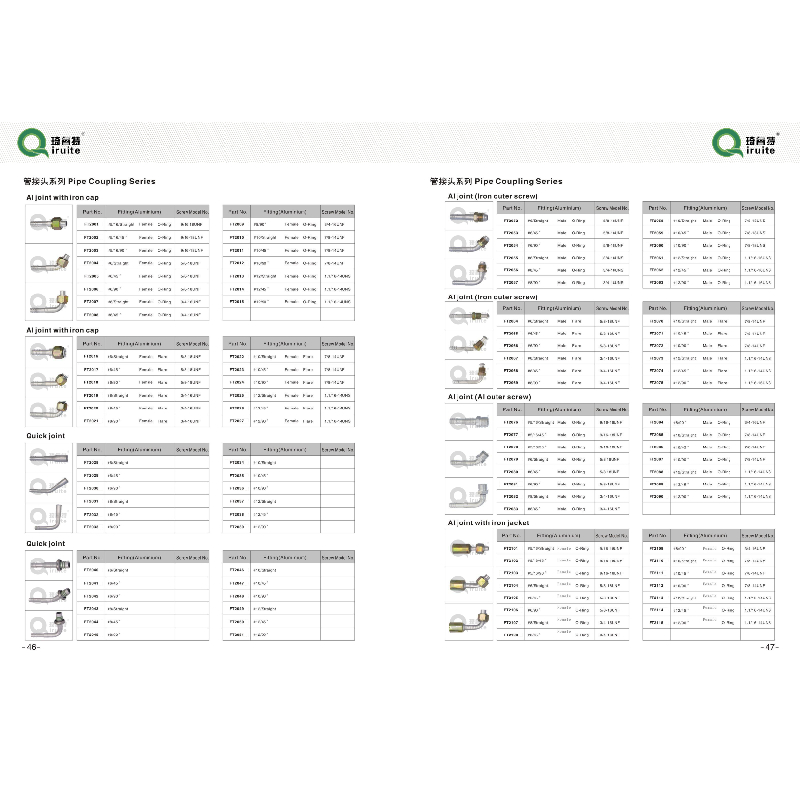
Technical Specifications and Parameters
The selection of a quick release ball joint is heavily dependent on its technical parameters, which dictate its suitability for specific industrial applications. Key specifications include material construction, nominal size, pressure rating, temperature range, and sealing mechanism.
Typical Product Specification Table: Quick Release Ball Joint (Standard Industrial Series)
| Parameter | Specification Range | Notes |
|---|---|---|
| Material (Body) | 304 SS, 316L SS, Carbon Steel (A105), Brass | Selection based on media compatibility & corrosion resistance |
| Material (Ball/Locking Mechanism) | Hardened Stainless Steel | Ensures durability and smooth operation |
| Seal Material | NBR, FKM (Viton), EPDM, PTFE | Determined by fluid type and temperature |
| Nominal Size (DN) | DN15 to DN300 (1/2" to 12") | Matches standard pipe diameters |
| Working Pressure | Up to PN100 (100 bar / 1450 psi) | Higher ratings available for specialized models |
| Burst Pressure | Typically 3-4 times Working Pressure | Safety factor for operational integrity |
| Temperature Range | -40°C to +200°C (-40°F to +392°F) | Varies with seal material and body material |
| End Connections | Flanged (ANSI, DIN), Threaded (NPT, BSP), Weld Ends, Hose Shank | Ensures compatibility with existing infrastructure |
| Certifications | ISO 9001, CE, PED, API 607 (Fire Safe) | Guarantees quality and compliance |
Comparison: Quick Release Ball Joint vs. Traditional Flanged Connection
| Feature | Quick Release Ball Joint | Traditional Flanged Connection |
|---|---|---|
| Connection Speed | Seconds to minutes | Hours to half-day (depending on size) |
| Tools Required | Minimal, often none | Wrenches, torque tools, lifting equipment |
| Downtime Impact | Significantly reduced | Substantial due to labor and time |
| Leakage Risk | Very low with proper sealing technology | Higher risk due to gasket compression variables |
| Reusability | High, with seal replacement | High, but gasket replacement always required |
| Vibration Resistance | Excellent due to integral design | Can loosen over time, requiring re-torquing |
| Cost (Installation & Maintenance) | Higher initial, lower long-term | Lower initial, higher long-term |
These parameters are crucial for engineers designing fluid transfer systems, ensuring that the chosen coupling meets the exact performance requirements for safety, efficiency, and longevity.
Application Scenarios Across Target Industries
The versatility and robustness of the quick release ball joint make it indispensable across a spectrum of demanding industries, where rapid deployment, maintenance, and secure connections are critical.
- Petrochemical & Oil & Gas: In these hazardous environments, the ability to quickly connect and disconnect drilling hoses, transfer lines, and processing equipment is vital for safety, efficiency, and emergency response. The corrosion resistance of materials like 316L SS is paramount for handling aggressive hydrocarbons and chemicals. Energy saving is achieved by minimizing leakages and reducing the need for repeated draining and refilling during maintenance.
- Water Supply & Drainage: For municipal water networks, irrigation systems (e.g., using a rainbird coupler equivalent for large-scale operations), and wastewater treatment plants, quick access for inspection, repair, or system reconfiguration is essential. These joints facilitate rapid pipe section replacement, ensuring continuous service and mitigating contamination risks.
- Chemical Processing: Handling corrosive and abrasive media at varying temperatures and pressures demands couplings that offer both chemical resistance and absolute leak integrity. The euclid quick joint and euco quick joint, often available in specialized variants like euclid quick joint 200 or euco quick joint 200, are designed for such rigorous applications, preventing hazardous spills and ensuring operational safety.
- Mining: In mining operations, heavy-duty hoses for water, slurry, and pneumatic systems require connections that can withstand extreme wear, vibration, and impact. Quick-release capabilities enable rapid relocation of equipment and efficient hose management, reducing costly operational delays.
- Food & Beverage/Pharmaceutical: Here, hygiene and quick sanitation are critical. Stainless steel ball joint quick disconnect couplings allow for easy and thorough cleaning, preventing bacterial growth and ensuring product purity, meeting FDA and HACCP standards.
- Marine & Offshore: Exposure to saltwater and harsh weather necessitates highly corrosion-resistant materials. The ease of connection and disconnection is invaluable for fluid transfer during bunkering, offloading, and temporary piping setups on vessels and offshore platforms.
Technical Advantages and Performance Edge
The technical advantages of a quick release ball joint extend far beyond mere convenience, translating into significant operational and economic benefits for industrial users.
- Rapid Connection & Disconnection: The primary advantage is the speed at which these joints can be engaged or disengaged, often without specialized tools. This drastically reduces downtime during maintenance, inspection, or reconfiguration, leading to substantial labor cost savings.
- Superior Sealing Integrity: Engineered with advanced sealing mechanisms, including robust O-rings and precise machining, these couplings offer exceptional leak-free performance even under high pressure and vibration. This is critical for preventing costly and hazardous spills, ensuring environmental compliance and operational safety.
- Enhanced Safety: The secure locking mechanism of a quick release ball joint prevents accidental disconnection, reducing the risk of injuries and property damage. Their design often allows for visual confirmation of proper engagement.
- Corrosion Resistance: Available in a variety of corrosion-resistant materials such as stainless steel and specialized alloys, these joints maintain integrity and performance in aggressive chemical environments and harsh outdoor conditions. This extends service life and reduces the need for frequent replacements.
- Vibration and Shock Resistance: The robust construction and flexible design of ball joints inherently absorb and mitigate the effects of system vibrations and hydraulic shock, maintaining connection integrity where rigid connections might fail or loosen.
- Reduced Environmental Impact: By minimizing leaks and facilitating quicker maintenance, these couplings contribute to reduced waste of process fluids and lower energy consumption associated with system downtimes and restarts.
Vendor Comparison and Selection Criteria
Choosing the right supplier for quick release ball joint solutions is a strategic decision that impacts project timelines, operational efficiency, and long-term cost of ownership. B2B decision-makers should evaluate vendors based on several critical criteria:
- Quality and Certifications: Prioritize manufacturers adhering to international standards like ISO 9001, API, CE, and PED. These certifications attest to stringent quality control processes and product reliability. Verify material traceability and test reports.
- Technical Expertise & Customization: A reputable vendor should offer comprehensive technical support and the ability to provide customized solutions for unique applications, including specific materials, pressure ratings, or end connections.
- Lead Time & Fulfillment: Evaluate the vendor's capacity to meet demand, including production lead times for standard and custom orders, and their logistical capabilities to ensure timely delivery, especially for critical infrastructure projects.
- After-Sales Support & Warranty: Comprehensive warranty policies, readily available spare parts (e.g., seals), and responsive technical support for installation, troubleshooting, and maintenance are indicative of a reliable long-term partner.
- Price-Performance Ratio: While initial cost is a factor, focus on the total cost of ownership, which includes longevity, maintenance requirements, and the prevention of costly downtime. A seemingly higher-priced, high-quality quick release ball joint can yield significant savings over its lifespan compared to cheaper, less reliable alternatives.
Customized Solutions for Specialized Needs
Off-the-shelf solutions, while robust, may not always address the unique challenges posed by highly specialized industrial processes. Customization is a key offering for advanced quick release ball joint manufacturers, enabling optimal performance in niche applications.
Tailored solutions can include:
- Exotic Material Selection: For extremely corrosive or high-temperature environments, customized joints can be fabricated from materials like Hastelloy, Monel, or Titanium.
- Unique End Connections: Integration with non-standard pipe sizes or specialized equipment interfaces, such as specific hose shanks (e.g., for a fast point tub 15kg buff equivalent in industrial mixing applications) or custom flange drilling.
- Specific Pressure & Temperature Ratings: Engineering designs to exceed standard pressure or temperature limits, often involving advanced FEA (Finite Element Analysis) and specialized sealing designs.
- Specialized Coatings: Application of coatings like ceramic or polymer layers for enhanced abrasion resistance or reduced friction in specific media.
- Integrated Safety Features: Inclusion of additional safety interlocks or pressure relief mechanisms specific to client operational protocols.
Engaging with a manufacturer capable of providing these bespoke solutions ensures that the quick release ball joint integrates seamlessly into complex systems, delivering optimal safety, efficiency, and longevity.
Application Case Studies (Simulated)
Real-world implementations demonstrate the tangible benefits of integrating quick release ball joint solutions into industrial operations.
Case Study 1: Petrochemical Plant - Crude Oil Transfer Line
A major petrochemical facility faced significant downtime during the routine maintenance and re-routing of temporary crude oil transfer lines. Traditional flanged connections required extensive labor, heavy equipment for alignment, and several hours for each connection/disconnection, leading to substantial production losses.
- Solution: Implementation of DN150 (6-inch) 316L Stainless Steel quick release ball joint couplings with FKM seals for critical transfer points.
- Outcome: Connection/disconnection time reduced from 4-6 hours per joint to less than 15 minutes. This resulted in a 75% reduction in maintenance downtime for line reconfigurations, saving an estimated $500,000 annually in avoided production losses and labor costs. The enhanced sealing also eliminated minor leaks previously observed, improving environmental compliance.
Case Study 2: Municipal Water Treatment Plant - Filter Backwash Lines
A large municipal water treatment plant experienced frequent failures and leaks in their PVC backwash lines, particularly at connection points where vibration was common. Repairs were slow, often requiring partial system shutdown and extensive pipe cutting and re-gluing.
- Solution: Installation of DN200 (8-inch) Carbon Steel quick release ball joint couplings with EPDM seals for the backwash and drainage lines, designed for enhanced vibration resistance.
- Outcome: The plant reported a 90% reduction in leakage points within the first year. Maintenance time for line segment replacement was cut by over 80%, from several hours to less than 30 minutes, allowing for quicker repairs and minimizing disruption to water supply. The robust design significantly extended the operational life of the connections.
Frequently Asked Questions (FAQ)
- Q: What is the maximum pressure a quick release ball joint can handle?
- A: Standard models can handle up to PN100 (1450 psi), with specialized high-pressure designs exceeding this for demanding applications. Always consult the product's specific technical data sheet.
- Q: Are these couplings compatible with aggressive chemicals?
- A: Yes, with proper material selection. Stainless steel (316L) bodies and FKM or PTFE seals offer excellent chemical resistance. It is crucial to specify the exact chemical composition, concentration, and temperature for optimal material recommendation.
- Q: What maintenance is required for a quick release ball joint?
- A: Minimal maintenance is typically required. Regular visual inspection for wear, especially on seals, is recommended. Seals should be replaced periodically, based on operating conditions and manufacturer guidelines, to ensure continued leak-free performance.
- Q: Can these joints be used in high-temperature applications?
- A: Yes, depending on the chosen seal material and body material. Options are available for continuous operation up to 200°C (392°F) or even higher for intermittent use or with specialized high-temperature seals.
- Q: What are the typical lead times for these products?
- A: For standard configurations and common sizes, lead times typically range from 2-4 weeks. Customized or large-volume orders may require 6-10 weeks, depending on material availability and production complexity. Expedited options may be available upon request.
- Q: What warranty is provided?
- A: We offer a standard 12-month warranty from the date of shipment against defects in materials and workmanship. Extended warranty options and comprehensive service agreements are available for long-term project support.
Customer Support and Fulfillment Details
Our commitment to our clients extends beyond product delivery. We provide comprehensive support to ensure optimal performance and satisfaction throughout the lifecycle of our quick release ball joint solutions.
- Technical Assistance: Our team of experienced engineers is available for consultation, offering guidance on product selection, application engineering, installation best practices, and troubleshooting.
- Global Logistics & Fulfillment: With established logistics networks, we ensure efficient and reliable delivery to destinations worldwide, adhering to project schedules and regulatory requirements. Our lead times are meticulously managed to meet your operational needs.
- After-Sales Service: We provide ongoing support, including spare parts availability, maintenance recommendations, and training programs to empower your operational teams.
- Quality Assurance: All products are backed by our ISO 9001 certified quality management system, ensuring that every quick release ball joint meets the highest standards of reliability and performance.
We understand the critical nature of industrial connections and are dedicated to providing products and services that uphold the highest levels of safety, efficiency, and trust.
References
- Grand View Research. (2023). Industrial Quick Disconnect Coupling Market Size, Share & Trends Analysis Report By Application, By Material, By End-Use, By Region, And Segment Forecasts, 2023 - 2030.
- ISO 9001:2015. Quality Management Systems – Requirements. International Organization for Standardization.
- ASTM International. (2018). Standard Practice for Liquid Penetrant Testing. ASTM E1417/E1417M-18.
- American Petroleum Institute (API). (2009). Specification for Fire Test for Quarter-Turn Valves and Valves with Nonmetallic Seats. API Standard 607.
-
Custom Power Steering Hose Kit Guide for Vehicle PerformanceNewsApr.16,2026
-
Guide to High Performance Custom Made Power Steering HosesNewsApr.09,2026
-
Comprehensive Guide to Custom High Pressure Power Steering Hose SolutionsNewsApr.07,2026
-
Comprehensive Guide to CRV Power Steering Hose Maintenance and ReplacementNewsApr.04,2026
-
Comprehensive Guide to CPP Power Steering Hoses for Optimal Vehicle PerformanceNewsMar.31,2026
-
Understanding the Cost to Repair Power Steering Hose and Associated FactorsNewsMar.28,2026
 Afrikaans
 Albanian
 Amharic
 Arabic
 Armenian
 Azerbaijani
 Basque
 Belarusian
 Bengali
 Bosnian
 Bulgarian
 Catalan
 Cebuano
 Corsican
 Croatian
 Czech
Czech
 Danish
 Dutch
Dutch
 Esperanto
 Estonian
 Finnish
 French
 Frisian
 Galician
 Georgian
 German
 Greek
Greek
 Gujarati
 Haitian Creole
 Hausa
Hausa
 Hawaiian
 Hebrew
 Hindi
Hindi
 Miao
Miao
 Hungarian
 Icelandic
 Igbo
Igbo
 Indonesian
 Irish
Irish
 Italian
 Japanese
 Javanese
 Kannada
 Kazakh
 Khmer
Khmer
 Rwandese
 Korean
 Kurdish
 Kyrgyz
 Lao
Lao
 Latin
Latin
 Latvian
 Lithuanian
 Luxembourgish
 Macedonian
 Malgashi
 Malay
Malay
 Malayalam
 Maltese
 Maori
Maori
 Marathi
 Mongolian
 Myanmar
 Nepali
 Norwegian
 Norwegian
 Occitan
 Pashto
 Persian
 Polish
 Portuguese
 Punjabi
 Romanian
 Russian
 Samoan
 Scottish Gaelic
 Serbian
 Sesotho
 Shona
Shona
 Sindhi
 Sinhala
 Slovak
 Slovenian
 Somali
 Spanish
 Sundanese
 Swahili
 Swedish
 Tagalog
 Tajik
Tajik
 Tamil
Tamil
 Tatar
Tatar
 Telugu
 Thai
Thai
 Turkish
 Turkmen
 Ukrainian
 Urdu
Urdu
 Uighur
 Uzbek
Uzbek
 Vietnamese
 Welsh
Welsh
 Bantu
Bantu
 Yiddish
 Yoruba
 Zulu
Zulu
 English