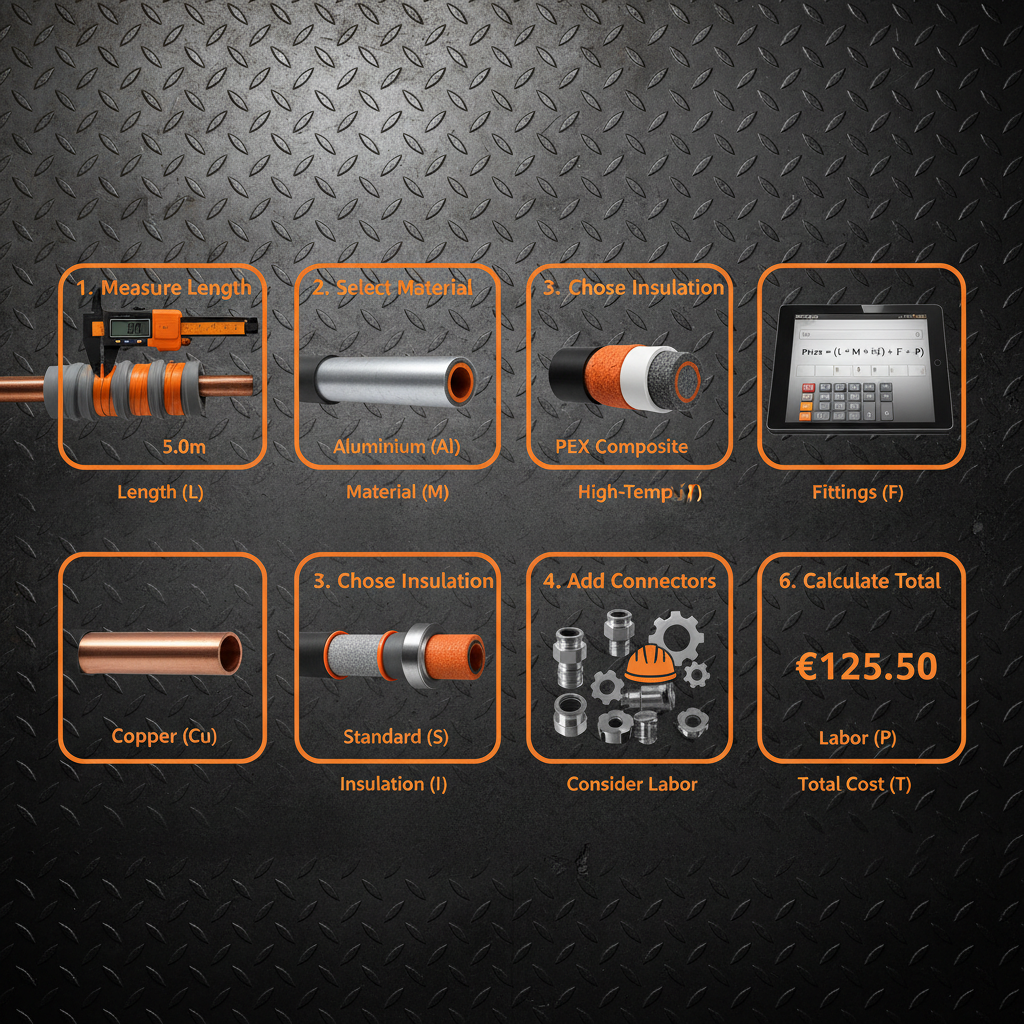
You know, after running around construction sites all year, dealing with dust and fumes… honestly, the biggest trend I’ve seen lately is everyone wanting “smart” everything. Smart pipes, smart connectors, even smart sealant. Seems a little much sometimes, but folks are chasing efficiency, and that’s fair enough.
I've noticed that a lot of designers, bless their hearts, get caught up in making things look pretty on a CAD screen. They forget what it's like to actually work with this stuff. For example, designing a connector with a really tight radius – looks sleek, right? But try getting a wrench on that thing with gloves on, in the pouring rain. Nightmare.
Speaking of materials, we’re using a lot of PEX-AL-PEX these days. It’s got that aluminum layer sandwiched in there for oxygen barrier, which is crucial for radiant heating. It smells faintly of plastic when you cut it – not a terrible smell, but you definitely know you’re working with it. Handling it, you gotta be careful not to kink it, especially in the cold. And the fittings… oh, the fittings. So many different kinds. You need a good crimping tool, and you need to know how to use it.

To be honest, the push for pre-fabricated manifolds is huge right now. Everyone wants to reduce on-site labor, and that makes sense. But what I’ve seen a lot of times is these manifolds arriving with the wrong fitting types, or the spacing is just slightly off. A minor detail that causes a massive headache for the installer.
Strangely, there's been a resurgence of copper, too. Some folks are convinced it's just more reliable, even though it’s more expensive and takes longer to install. It's that old-school thinking, you know? "If it ain't broke, don't fix it." I get it, but sometimes you gotta embrace the new stuff.
Assuming proper installation and normal water quality, PEX-AL-PEX can realistically last 50 years or more. However, factors like water pH, temperature fluctuations, and exposure to UV light can shorten its lifespan. Regular inspections are always recommended. It’s more about the connections than the pipe itself, to be honest.
Over-bending is a big one. You can’t just yank it around corners. Also, using the wrong crimping tool or not calibrating it properly. I've seen guys just assume it's working, and that's a recipe for disaster. And don’t even get me started on mixing different brands of fittings – that’s just asking for trouble. It happened at that new housing development near Bakersfield last fall... a real mess.
Technically, yes, but it really depends. Direct sunlight will degrade the PEX layer over time, so it needs to be protected with UV-resistant shielding or buried. It's fine for underground runs, but if it's exposed to the elements, you're looking at a reduced lifespan. We’ve got a special coating we recommend for exposed applications.
Pressure testing is key. You want to pressurize the system with air or water and look for any drops in pressure. Also, visually inspect all the connections for any signs of water or corrosion. Sometimes a small leak can go unnoticed for a long time, causing hidden damage. A good flashlight and a keen eye are your best friends here.
Absolutely not. PEX-AL-PEX is not certified for gas lines. You need to use specifically designed gas piping materials, like black iron or polyethylene gas pipe. Using the wrong material could lead to a dangerous gas leak and a potential explosion. Don't even think about it. Seriously.
You'll need a PEX-AL-PEX crimping tool (compatible with the specific fittings you're using), a PEX cutter, a deburring tool, and a flashlight. A torque wrench is also helpful to ensure the fittings are tightened to the correct specification. And don’t forget a good pair of work gloves. Your hands will thank you.
So, after all this rambling, what’s the takeaway? PEX-AL-PEX is a solid material, but it’s not a magic bullet. It requires careful installation, attention to detail, and a good understanding of its limitations. It’s a tool, and like any tool, it’s only as good as the person using it.
Ultimately, whether this thing works or not, the worker will know the moment he tightens the screw. And if he feels a little bit of doubt, he needs to stop, double-check, and make sure everything is done right. That’s the only way to build something that lasts. Visit our website: air conditioning pipe suppliers

 Afrikaans
 Albanian
 Amharic
 Arabic
 Armenian
 Azerbaijani
 Basque
 Belarusian
 Bengali
 Bosnian
 Bulgarian
 Catalan
 Cebuano
 Corsican
 Croatian
 Czech
Czech
 Danish
 Dutch
Dutch
 Esperanto
 Estonian
 Finnish
 French
 Frisian
 Galician
 Georgian
 German
 Greek
Greek
 Gujarati
 Haitian Creole
 Hausa
Hausa
 Hawaiian
 Hebrew
 Hindi
Hindi
 Miao
Miao
 Hungarian
 Icelandic
 Igbo
Igbo
 Indonesian
 Irish
Irish
 Italian
 Japanese
 Javanese
 Kannada
 Kazakh
 Khmer
Khmer
 Rwandese
 Korean
 Kurdish
 Kyrgyz
 Lao
Lao
 Latin
Latin
 Latvian
 Lithuanian
 Luxembourgish
 Macedonian
 Malgashi
 Malay
Malay
 Malayalam
 Maltese
 Maori
Maori
 Marathi
 Mongolian
 Myanmar
 Nepali
 Norwegian
 Norwegian
 Occitan
 Pashto
 Persian
 Polish
 Portuguese
 Punjabi
 Romanian
 Russian
 Samoan
 Scottish Gaelic
 Serbian
 Sesotho
 Shona
Shona
 Sindhi
 Sinhala
 Slovak
 Slovenian
 Somali
 Spanish
 Sundanese
 Swahili
 Swedish
 Tagalog
 Tajik
Tajik
 Tamil
Tamil
 Tatar
Tatar
 Telugu
 Thai
Thai
 Turkish
 Turkmen
 Ukrainian
 Urdu
Urdu
 Uighur
 Uzbek
Uzbek
 Vietnamese
 Welsh
Welsh
 Bantu
Bantu
 Yiddish
 Yoruba
 Zulu
Zulu
 English