

Comprehensive Guide to Chevrolet Power Steering Hose Maintenance and Replacement
Chevrolet Power Steering Hose: A Comprehensive Guide
Maintaining your Chevrolet's power steering system is crucial for a smooth and safe driving experience. A key component of this system is the Chevrolet power steering hose, responsible for delivering vital hydraulic fluid. This article provides a deep dive into everything you need to know about these hoses – from identifying issues and understanding types, to choosing the right replacement from Hose QRT. Ignoring a failing power steering hose can lead to difficult steering, fluid leaks, and potential damage to other components. Let’s explore how to keep your Chevrolet’s power steering performing optimally.

Identifying Chevrolet Power Steering Hose Problems
Recognizing the signs of a failing power steering hose is the first step towards preventing more significant issues. Common symptoms include difficulty steering, especially at low speeds, a whining noise when turning the steering wheel, and visible fluid leaks under the vehicle. A pulsating steering feel can also indicate air entering the system through a cracked or loose hose. Regularly inspect your hoses for cracks, bulges, or any signs of deterioration. Don’t wait for a complete failure; proactive maintenance can save you time and money in the long run. Hose QRT offers high-quality replacement hoses to address these issues promptly.
Key Warning Signs: Difficulty steering, whining noise, fluid leaks, pulsating steering, visible hose damage.
Types of Chevrolet Power Steering Hoses
Chevrolet power steering systems utilize several different types of hoses. These include high-pressure hoses that transport fluid from the pump to the steering gear, return hoses that carry fluid back to the reservoir, and low-pressure hoses connecting various components. Different Chevrolet models and years will require specific hose types, so accurate identification is crucial. Hose QRT provides a wide selection of hoses engineered to meet the exact specifications of your vehicle. Understanding the hose layout and function can help you pinpoint the source of a leak or steering issue.
Hose Types Overview:
• High-Pressure Hoses: Carry fluid from the pump.
• Return Hoses: Return fluid to the reservoir.
• Low-Pressure Hoses: Connect system components.
Chevrolet Power Steering Hose Comparison
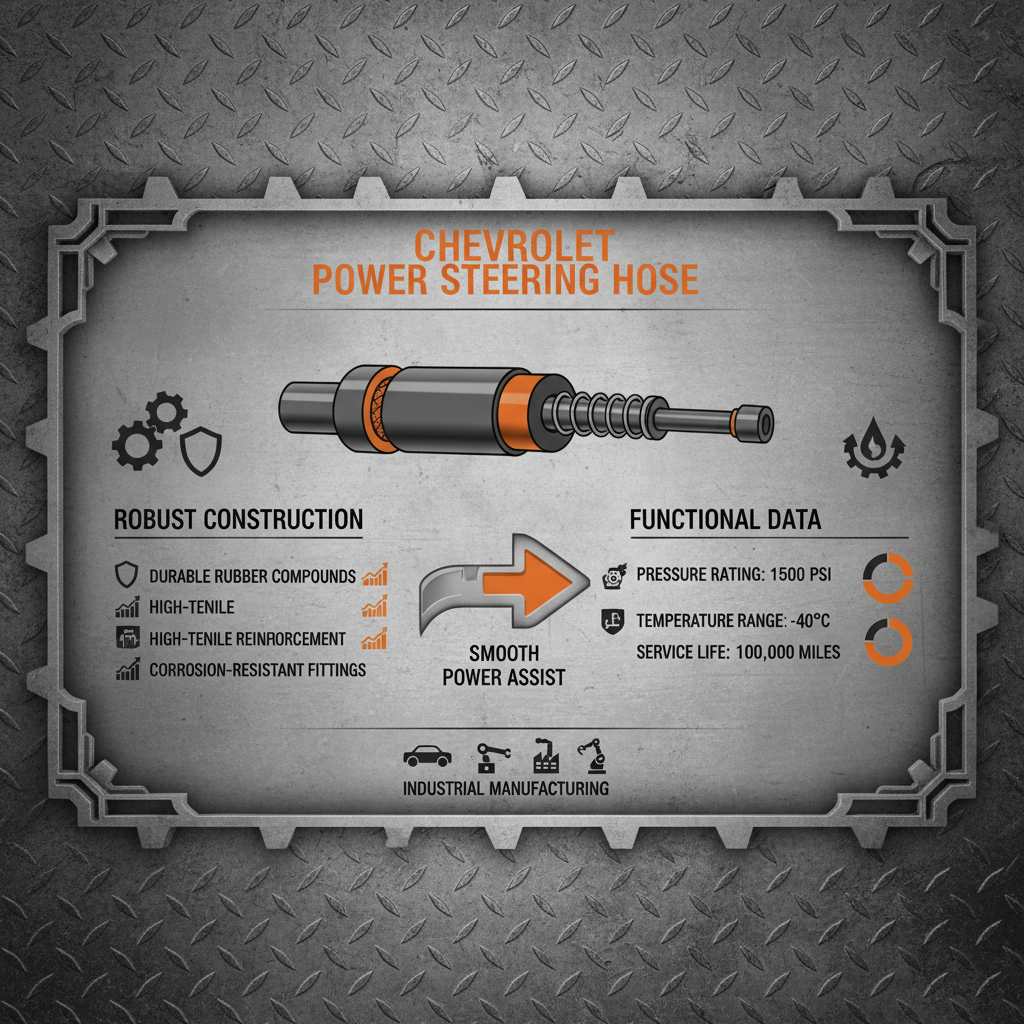
When choosing a replacement Chevrolet power steering hose, it's essential to consider the material and construction. Rubber hoses are common but can degrade over time. Thermoplastic hoses offer better heat and chemical resistance, leading to a longer lifespan. Reinforced hoses with steel braiding provide increased durability and burst strength. Hose QRT specializes in durable, high-quality hoses engineered for superior performance and reliability.
Why Choose Hose QRT for Your Chevrolet Power Steering Hose Needs?
At Hose QRT, we understand the importance of reliable power steering. We offer a comprehensive selection of Chevrolet power steering hoses, manufactured to meet or exceed OEM specifications. Our hoses are designed for long-lasting performance and are backed by a commitment to quality and customer satisfaction. We also provide expert advice and support to help you find the perfect hose for your vehicle. Don't compromise on safety and performance – choose Hose QRT.
Proper Installation and Maintenance Tips
Correct installation is crucial for ensuring the longevity of your new power steering hose. Always follow the vehicle manufacturer’s instructions and use appropriate tools. Before installation, inspect all fittings and connections for damage. After installation, check for leaks and ensure proper fluid levels. Regularly inspect your power steering system for any signs of wear or leaks. Keeping the system clean and using the correct type of power steering fluid will also extend the life of your hoses and components. Hose QRT can offer guidance on selecting the right fluid for your Chevrolet model.
Conclusion: Maintaining Your Chevrolet's Power Steering System
Investing in a quality Chevrolet power steering hose from Hose QRT is a smart step towards ensuring a safe and enjoyable driving experience. By understanding the symptoms of a failing hose, choosing the right replacement, and following proper installation and maintenance procedures, you can keep your power steering system running smoothly for years to come. Don't wait for a breakdown – prioritize your vehicle's health today!
Frequently Asked Questions (FAQs)
How often should I replace my Chevrolet power steering hose?
The recommended replacement interval for a Chevrolet power steering hose varies depending on driving conditions and hose material. Generally, it's advisable to inspect the hoses every 2-3 years and replace them if any signs of wear, cracking, or leaks are present. Rubber hoses typically have a shorter lifespan than thermoplastic or reinforced hoses. Proactive replacement, even without visible signs of damage, can prevent unexpected failures and costly repairs. Hose QRT can provide specific recommendations based on your vehicle model and driving habits.
Can I repair a leaking power steering hose?
While temporary repair solutions like hose clamps may provide a short-term fix, they are generally not recommended for long-term reliability. Power steering hoses operate under high pressure, and a compromised hose can fail unexpectedly. The best course of action is to replace the leaking hose with a new one from a reputable supplier like Hose QRT. This ensures a secure and dependable repair.
What type of power steering fluid should I use?
Using the correct type of power steering fluid is critical for maintaining the health of your system. Refer to your Chevrolet's owner's manual for the recommended fluid specification. Using the wrong fluid can cause damage to the pump and other components. Hose QRT can help you identify the correct fluid for your vehicle if you're unsure.
How much does it cost to replace a power steering hose?
The cost of replacing a Chevrolet power steering hose can vary depending on the vehicle model, the type of hose, and labor rates. The hose itself can range from $50 to $200 or more, while labor costs can add another $100 to $300. Hose QRT offers competitive pricing on high-quality hoses, helping you save on overall repair costs.
-
Custom Power Steering Hose Kit Guide for Vehicle PerformanceNewsApr.16,2026
-
Guide to High Performance Custom Made Power Steering HosesNewsApr.09,2026
-
Comprehensive Guide to Custom High Pressure Power Steering Hose SolutionsNewsApr.07,2026
-
Comprehensive Guide to CRV Power Steering Hose Maintenance and ReplacementNewsApr.04,2026
-
Comprehensive Guide to CPP Power Steering Hoses for Optimal Vehicle PerformanceNewsMar.31,2026
-
Understanding the Cost to Repair Power Steering Hose and Associated FactorsNewsMar.28,2026
 Afrikaans
 Albanian
 Amharic
 Arabic
 Armenian
 Azerbaijani
 Basque
 Belarusian
 Bengali
 Bosnian
 Bulgarian
 Catalan
 Cebuano
 Corsican
 Croatian
 Czech
Czech
 Danish
 Dutch
Dutch
 Esperanto
 Estonian
 Finnish
 French
 Frisian
 Galician
 Georgian
 German
 Greek
Greek
 Gujarati
 Haitian Creole
 Hausa
Hausa
 Hawaiian
 Hebrew
 Hindi
Hindi
 Miao
Miao
 Hungarian
 Icelandic
 Igbo
Igbo
 Indonesian
 Irish
Irish
 Italian
 Japanese
 Javanese
 Kannada
 Kazakh
 Khmer
Khmer
 Rwandese
 Korean
 Kurdish
 Kyrgyz
 Lao
Lao
 Latin
Latin
 Latvian
 Lithuanian
 Luxembourgish
 Macedonian
 Malgashi
 Malay
Malay
 Malayalam
 Maltese
 Maori
Maori
 Marathi
 Mongolian
 Myanmar
 Nepali
 Norwegian
 Norwegian
 Occitan
 Pashto
 Persian
 Polish
 Portuguese
 Punjabi
 Romanian
 Russian
 Samoan
 Scottish Gaelic
 Serbian
 Sesotho
 Shona
Shona
 Sindhi
 Sinhala
 Slovak
 Slovenian
 Somali
 Spanish
 Sundanese
 Swahili
 Swedish
 Tagalog
 Tajik
Tajik
 Tamil
Tamil
 Tatar
Tatar
 Telugu
 Thai
Thai
 Turkish
 Turkmen
 Ukrainian
 Urdu
Urdu
 Uighur
 Uzbek
Uzbek
 Vietnamese
 Welsh
Welsh
 Bantu
Bantu
 Yiddish
 Yoruba
 Zulu
Zulu
 English