

Can a Power Steering Hose Be Repaired Assessing Feasibility and Safety
Can a Power Steering Hose Be Repaired?
When your vehicle’s power steering starts acting up, a leaking power steering hose is a common culprit. But does it always mean a costly replacement? Often, yes, but the question of power steering hose repair is more nuanced than you might think. This article will explore the factors determining whether a repair is feasible, the risks involved, and when replacement is the only safe option. We'll cover different types of hose failures and provide guidance for making the right decision for your vehicle. Ignoring a power steering leak can lead to system failure and potentially dangerous driving conditions.
Understanding Power Steering Hose Failures
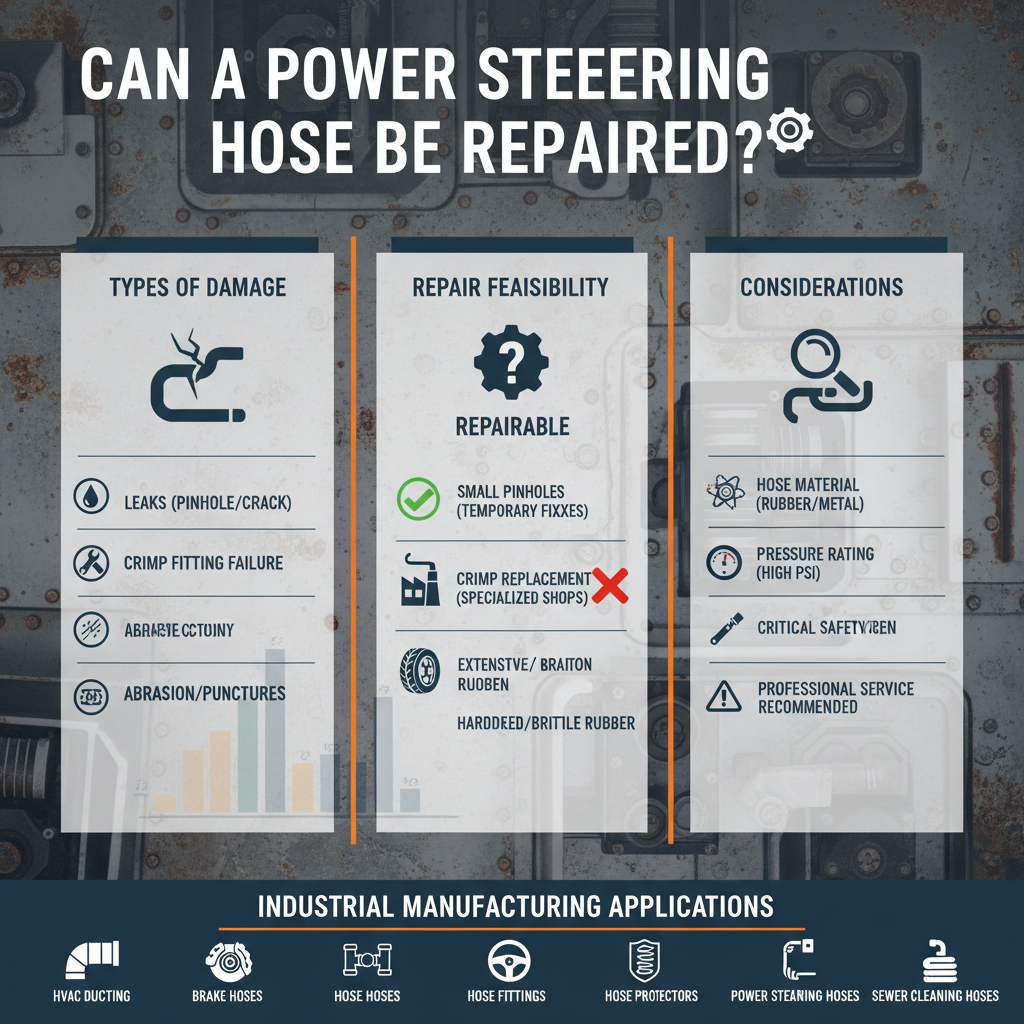
Power steering hoses are subject to wear and tear due to constant exposure to pressure, heat, and potentially corrosive fluids. Common failure points include cracks, splits, and leaks at the crimped connections. Rubber hoses can degrade over time, becoming brittle and prone to failure. Steel-braided hoses offer more durability, but even they can develop leaks at the fittings. Before considering a repair, it's crucial to accurately diagnose the problem. A small seep might be repairable, while a major split usually necessitates replacement. The material of the hose itself also plays a role - different materials respond differently to age and fluids.
Important Note: Attempting to repair a power steering hose requires a solid understanding of hydraulic systems and safety precautions. Improper repairs can lead to system failure and potential injury.
When Repairing a Power Steering Hose Is Possible
Minor leaks at the hose fittings are often the most amenable to repair. This usually involves tightening the clamps or, in some cases, replacing the crimp sleeve if it has become corroded. Pinholes in the rubber section of the hose might be temporarily patched with specialized hose repair compounds, but this is generally considered a short-term fix and not a permanent solution. It is crucial to only attempt repairs on hoses that are still in relatively good condition overall – no extensive cracking or degradation. Using the correct tools and materials is paramount for a successful and safe repair.
Repair Considerations:
• Tighten hose clamps first – often the simplest solution.
• Inspect crimp sleeves for corrosion; replace if necessary.
• Use quality hose repair compounds for pinhole leaks (temporary fix).
• Ensure a secure and leak-proof connection after any repair.
When Replacement Is Necessary: A Comparison
Often, replacing the power steering hose is the safest and most reliable option. Extensive cracking, splits, or significant deterioration of the hose material almost always necessitate replacement. Similarly, if the hose is damaged near a critical connection point, repair is unlikely to be successful. A replacement ensures a consistent flow of power steering fluid and prevents potential system failure. Choosing a high-quality replacement hose from a reputable supplier like Hose QRT is crucial for long-term performance and safety.
The Risks of Attempting a DIY Repair
Improperly repaired power steering hoses can lead to a variety of problems, including fluid leaks, reduced steering performance, and even complete system failure. A sudden loss of power steering, especially at high speeds, can be extremely dangerous. Using the wrong materials or techniques can also introduce contaminants into the power steering system, damaging the pump and other components. If you’re not completely confident in your abilities, it's always best to leave this repair to a qualified mechanic.
Conclusion: Prioritize Safety and Reliability
Determining whether a power steering hose can be repaired requires careful assessment. While minor leaks at fittings may be addressable, significant damage typically warrants replacement. Prioritize safety and reliability by choosing a high-quality replacement hose from a trusted supplier like Hose QRT. When in doubt, consult a qualified mechanic to ensure the job is done correctly and your power steering system operates safely and efficiently.
Frequently Asked Questions (FAQs)
How long does a power steering hose typically last?
The lifespan of a power steering hose varies depending on driving conditions, climate, and the quality of the hose itself. Generally, you can expect a power steering hose to last between 5 to 10 years. However, hoses exposed to extreme temperatures, harsh chemicals, or frequent vibrations may fail sooner. Regular inspections can help identify potential problems before they escalate. Replacing hoses proactively, especially in older vehicles, can prevent unexpected breakdowns and costly repairs.
What are the symptoms of a leaking power steering hose?
Several symptoms can indicate a leaking power steering hose. These include a whining noise when turning the steering wheel, difficulty steering (especially at low speeds), fluid under the vehicle (often reddish-brown), and a low power steering fluid level. A noticeable burning smell might also be present if the leaking fluid comes into contact with hot engine components. If you experience any of these symptoms, it’s important to inspect the hoses and system for leaks.
Can I drive with a leaking power steering hose?
Driving with a leaking power steering hose is not recommended, and can be dangerous. Even a small leak can eventually lead to a complete loss of power steering fluid, making it very difficult to control the vehicle, especially at low speeds. A sudden loss of power steering can significantly increase the risk of an accident. It's best to have the hose inspected and repaired or replaced as soon as possible. If the leak is severe, have the vehicle towed to a repair shop.
-
Custom Power Steering Hose Kit Guide for Vehicle PerformanceNewsApr.16,2026
-
Guide to High Performance Custom Made Power Steering HosesNewsApr.09,2026
-
Comprehensive Guide to Custom High Pressure Power Steering Hose SolutionsNewsApr.07,2026
-
Comprehensive Guide to CRV Power Steering Hose Maintenance and ReplacementNewsApr.04,2026
-
Comprehensive Guide to CPP Power Steering Hoses for Optimal Vehicle PerformanceNewsMar.31,2026
-
Understanding the Cost to Repair Power Steering Hose and Associated FactorsNewsMar.28,2026
 Afrikaans
 Albanian
 Amharic
 Arabic
 Armenian
 Azerbaijani
 Basque
 Belarusian
 Bengali
 Bosnian
 Bulgarian
 Catalan
 Cebuano
 Corsican
 Croatian
 Czech
Czech
 Danish
 Dutch
Dutch
 Esperanto
 Estonian
 Finnish
 French
 Frisian
 Galician
 Georgian
 German
 Greek
Greek
 Gujarati
 Haitian Creole
 Hausa
Hausa
 Hawaiian
 Hebrew
 Hindi
Hindi
 Miao
Miao
 Hungarian
 Icelandic
 Igbo
Igbo
 Indonesian
 Irish
Irish
 Italian
 Japanese
 Javanese
 Kannada
 Kazakh
 Khmer
Khmer
 Rwandese
 Korean
 Kurdish
 Kyrgyz
 Lao
Lao
 Latin
Latin
 Latvian
 Lithuanian
 Luxembourgish
 Macedonian
 Malgashi
 Malay
Malay
 Malayalam
 Maltese
 Maori
Maori
 Marathi
 Mongolian
 Myanmar
 Nepali
 Norwegian
 Norwegian
 Occitan
 Pashto
 Persian
 Polish
 Portuguese
 Punjabi
 Romanian
 Russian
 Samoan
 Scottish Gaelic
 Serbian
 Sesotho
 Shona
Shona
 Sindhi
 Sinhala
 Slovak
 Slovenian
 Somali
 Spanish
 Sundanese
 Swahili
 Swedish
 Tagalog
 Tajik
Tajik
 Tamil
Tamil
 Tatar
Tatar
 Telugu
 Thai
Thai
 Turkish
 Turkmen
 Ukrainian
 Urdu
Urdu
 Uighur
 Uzbek
Uzbek
 Vietnamese
 Welsh
Welsh
 Bantu
Bantu
 Yiddish
 Yoruba
 Zulu
Zulu
 English