

Can You Patch a Power Steering Hose? A Guide to Safe and Effective Repair
Can You Patch a Power Steering Hose? A Comprehensive Guide
Dealing with a leaking power steering hose can be a stressful situation. Many drivers wonder, can you patch a power steering hose? While it might seem like a quick fix, the answer is nuanced. This article will delve into the risks and alternatives, discussing whether patching is feasible, exploring better solutions like hose replacement, and outlining the importance of professional assistance. We will cover the dangers of attempting a repair, and the benefits of choosing quality replacement power steering hoses from a reliable supplier.
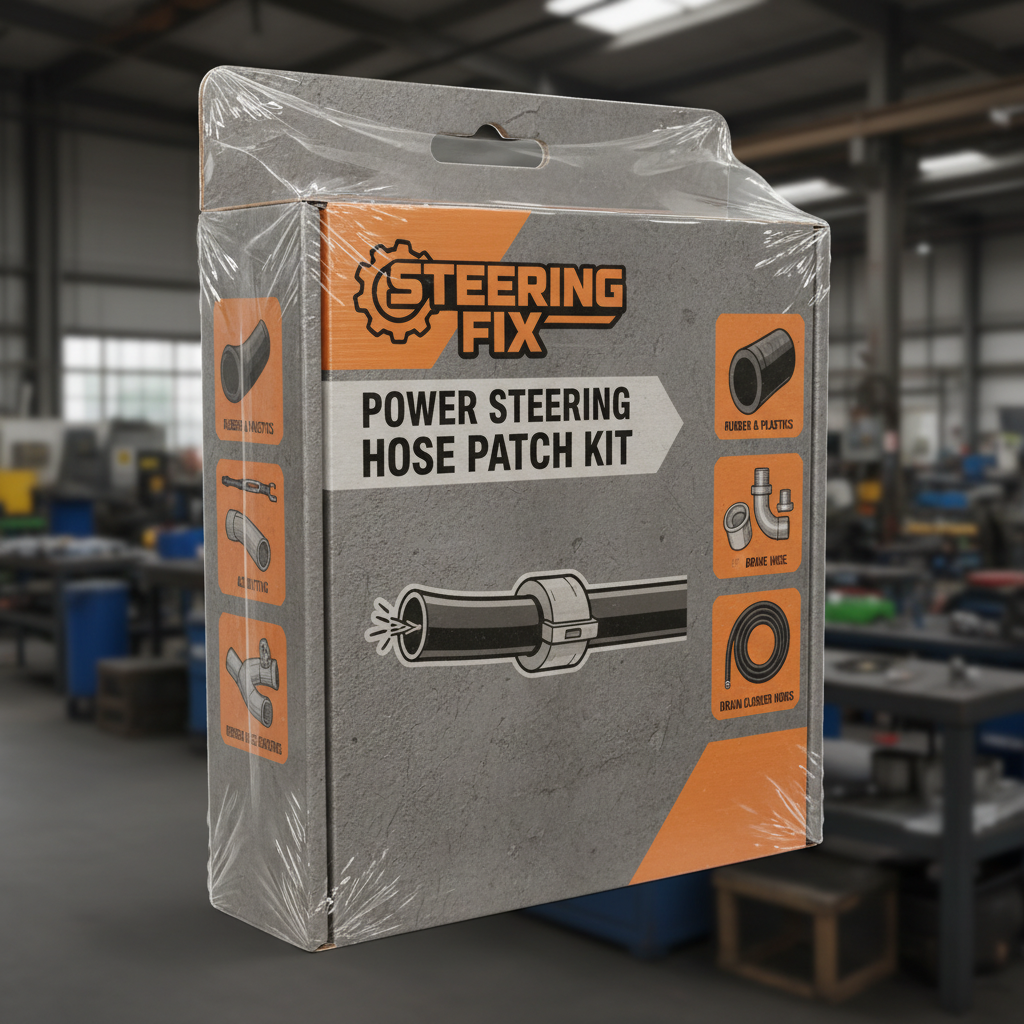
Why Patching a Power Steering Hose is Generally Not Recommended
The power steering system operates under extremely high pressure, often exceeding 1500 PSI. Attempting to patch a hose designed for such pressures is incredibly risky. Patches, even those designed for hydraulic lines, often fail under this stress, leading to sudden and potentially dangerous loss of steering control. Furthermore, power steering fluid is corrosive and can degrade patch materials over time, increasing the likelihood of failure. A failed patch can also introduce contaminants into the power steering system, damaging the pump and other components. Therefore, while a temporary fix might seem appealing, the potential consequences of a patch failing far outweigh any short-term convenience.
Important Note: Attempting to patch a power steering hose can create a significant safety hazard. Always prioritize replacing the hose with a new, high-quality component.
When is Patching Absolutely Unacceptable?
There are specific scenarios where even considering a patch is utterly unacceptable. If the hose exhibits any of the following, patching should never be attempted: cracks extending through the hose reinforcement layers, bulging or deformation of the hose, or any damage near fittings. These conditions indicate severe structural compromise, and a patch will not restore the hose's integrity. Furthermore, if the leak is significant or causes a noticeable drop in power steering fluid levels, patching is not a viable solution. In these cases, immediate replacement of the hose is essential for maintaining vehicle safety.
Red Flags – Do Not Patch:
• Cracks through reinforcement layers
• Bulging or deformation
• Damage near fittings
• Significant fluid leak
Power Steering Hose Replacement vs. Patching: A Comparison
Let's directly compare replacing a power steering hose with the risky practice of patching. Replacement guarantees a fully functional and reliable system, while patching is a temporary, and potentially dangerous, measure. A new hose ensures compatibility with your vehicle's power steering fluid and operates at the designed pressure. Choosing a high-quality hose, like those available at Hose QRT, provides long-lasting performance and peace of mind. Here's a breakdown:
Choosing the Right Replacement Hose and Where to Source It
When replacing a power steering hose, it's crucial to choose a component that meets or exceeds the original manufacturer's specifications. Consider factors like hose material, pressure rating, and fitting compatibility. At Hose QRT, we offer a wide selection of high-quality power steering hoses designed for various vehicle makes and models. We prioritize durability, reliability, and performance, ensuring you receive a product you can trust.
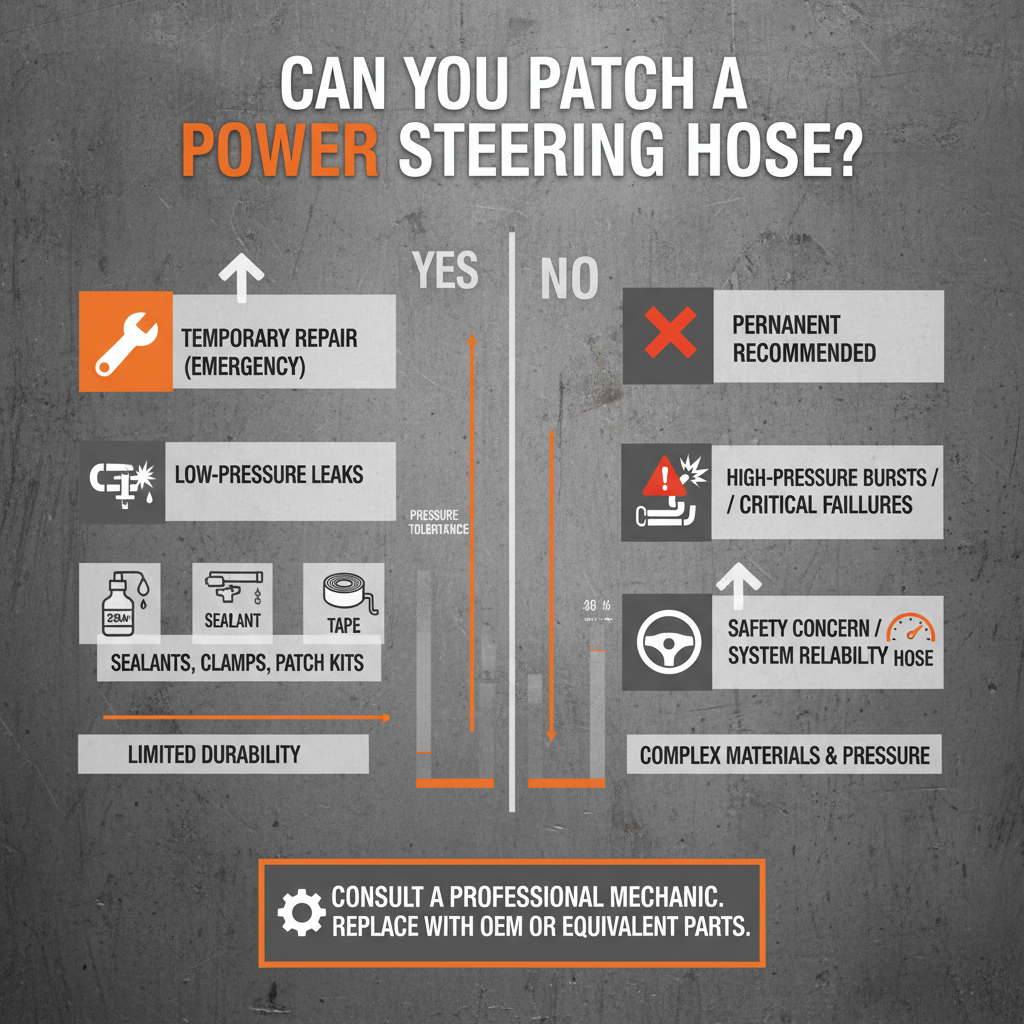
Conclusion: Prioritize Safety with Hose Replacement
In conclusion, patching a power steering hose is a risky and generally inadvisable practice. The potential for catastrophic failure and loss of steering control far outweighs any perceived convenience. Prioritizing safety and opting for a complete hose replacement, using a reputable supplier like Hose QRT, is the responsible and ultimately more cost-effective approach. Don't compromise on safety – invest in a reliable replacement hose and maintain full control of your vehicle.
Frequently Asked Questions (FAQs)
What are the signs of a failing power steering hose?
Several signs can indicate a failing power steering hose. These include visible leaks around the hose or fittings, difficulty steering (especially at low speeds), a whining noise coming from the power steering pump (often louder when turning the wheel), and a low power steering fluid level. Additionally, you might notice fluid stains under your vehicle where you park. If you experience any of these symptoms, it's crucial to inspect the hose and consider replacement.
How much does it typically cost to replace a power steering hose?
The cost of replacing a power steering hose can vary depending on the vehicle make and model, the location of the hose, and labor rates. Generally, you can expect to pay between $150 and $500 for parts and labor. The cost of the hose itself can range from $50 to $200, depending on the quality and specific vehicle requirements. At Hose QRT, we offer competitive pricing on high-quality replacement hoses.
Can I replace a power steering hose myself?
Replacing a power steering hose is a moderately challenging repair that requires some mechanical experience. It involves disconnecting hoses, draining and refilling the power steering fluid, and properly securing the new hose. If you are not comfortable working with hydraulic systems or lack the necessary tools, it's best to have a qualified mechanic perform the replacement. Improper installation can lead to leaks or system damage.
What type of power steering fluid should I use?
Using the correct type of power steering fluid is crucial for maintaining system performance and preventing damage. Consult your vehicle's owner's manual to determine the recommended fluid type. Different vehicles require different formulations (e.g., Dexron, Mercon, or specific brand-recommended fluids). Using the wrong fluid can cause seal damage, corrosion, and other problems.
-
Custom Power Steering Hose Kit Guide for Vehicle PerformanceNewsApr.16,2026
-
Guide to High Performance Custom Made Power Steering HosesNewsApr.09,2026
-
Comprehensive Guide to Custom High Pressure Power Steering Hose SolutionsNewsApr.07,2026
-
Comprehensive Guide to CRV Power Steering Hose Maintenance and ReplacementNewsApr.04,2026
-
Comprehensive Guide to CPP Power Steering Hoses for Optimal Vehicle PerformanceNewsMar.31,2026
-
Understanding the Cost to Repair Power Steering Hose and Associated FactorsNewsMar.28,2026
 Afrikaans
 Albanian
 Amharic
 Arabic
 Armenian
 Azerbaijani
 Basque
 Belarusian
 Bengali
 Bosnian
 Bulgarian
 Catalan
 Cebuano
 Corsican
 Croatian
 Czech
Czech
 Danish
 Dutch
Dutch
 Esperanto
 Estonian
 Finnish
 French
 Frisian
 Galician
 Georgian
 German
 Greek
Greek
 Gujarati
 Haitian Creole
 Hausa
Hausa
 Hawaiian
 Hebrew
 Hindi
Hindi
 Miao
Miao
 Hungarian
 Icelandic
 Igbo
Igbo
 Indonesian
 Irish
Irish
 Italian
 Japanese
 Javanese
 Kannada
 Kazakh
 Khmer
Khmer
 Rwandese
 Korean
 Kurdish
 Kyrgyz
 Lao
Lao
 Latin
Latin
 Latvian
 Lithuanian
 Luxembourgish
 Macedonian
 Malgashi
 Malay
Malay
 Malayalam
 Maltese
 Maori
Maori
 Marathi
 Mongolian
 Myanmar
 Nepali
 Norwegian
 Norwegian
 Occitan
 Pashto
 Persian
 Polish
 Portuguese
 Punjabi
 Romanian
 Russian
 Samoan
 Scottish Gaelic
 Serbian
 Sesotho
 Shona
Shona
 Sindhi
 Sinhala
 Slovak
 Slovenian
 Somali
 Spanish
 Sundanese
 Swahili
 Swedish
 Tagalog
 Tajik
Tajik
 Tamil
Tamil
 Tatar
Tatar
 Telugu
 Thai
Thai
 Turkish
 Turkmen
 Ukrainian
 Urdu
Urdu
 Uighur
 Uzbek
Uzbek
 Vietnamese
 Welsh
Welsh
 Bantu
Bantu
 Yiddish
 Yoruba
 Zulu
Zulu
 English