

Understanding the Cost to Repair Power Steering Hose and Associated Factors
What is the Cost to Repair a Power Steering Hose?
A failing power steering hose can make driving difficult and potentially dangerous. Understanding the cost to repair power steering hose is crucial for budget planning and timely vehicle maintenance. This article breaks down the various factors influencing repair costs, provides a price range estimate, and outlines whether DIY repair is feasible. We’ll cover everything from hose replacement to potential labor charges. Ignoring a leaking or damaged power steering hose can lead to more significant problems, so proactive repair is always recommended.
Factors Influencing the Cost of Power Steering Hose Repair
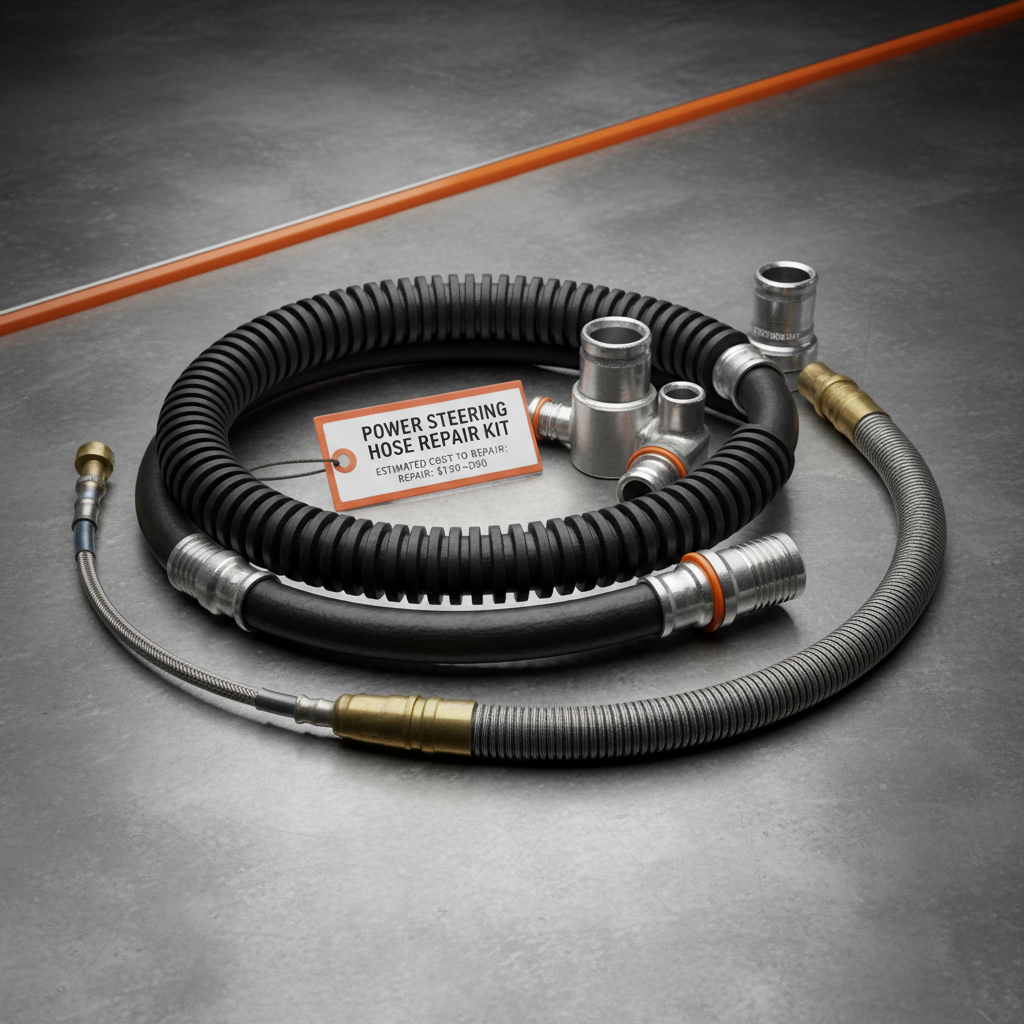
Several factors determine the overall cost of repairing a power steering hose. These include the vehicle's make and model, the type of hose damaged (high-pressure or low-pressure), and whether you choose a professional mechanic or attempt a DIY repair. Labor costs also significantly vary based on location and the mechanic’s hourly rate. The complexity of accessing the hose also plays a role; some hoses are easily accessible, while others require substantial disassembly. Finally, the quality of the replacement hose – whether you opt for an OEM (Original Equipment Manufacturer) part or an aftermarket alternative – will impact the final price.
Key Considerations: Vehicle model, hose type, part quality (OEM vs. aftermarket), labor rates, and accessibility of the hose all contribute to the final repair cost.
Cost to Repair Power Steering Hose: A Detailed Breakdown
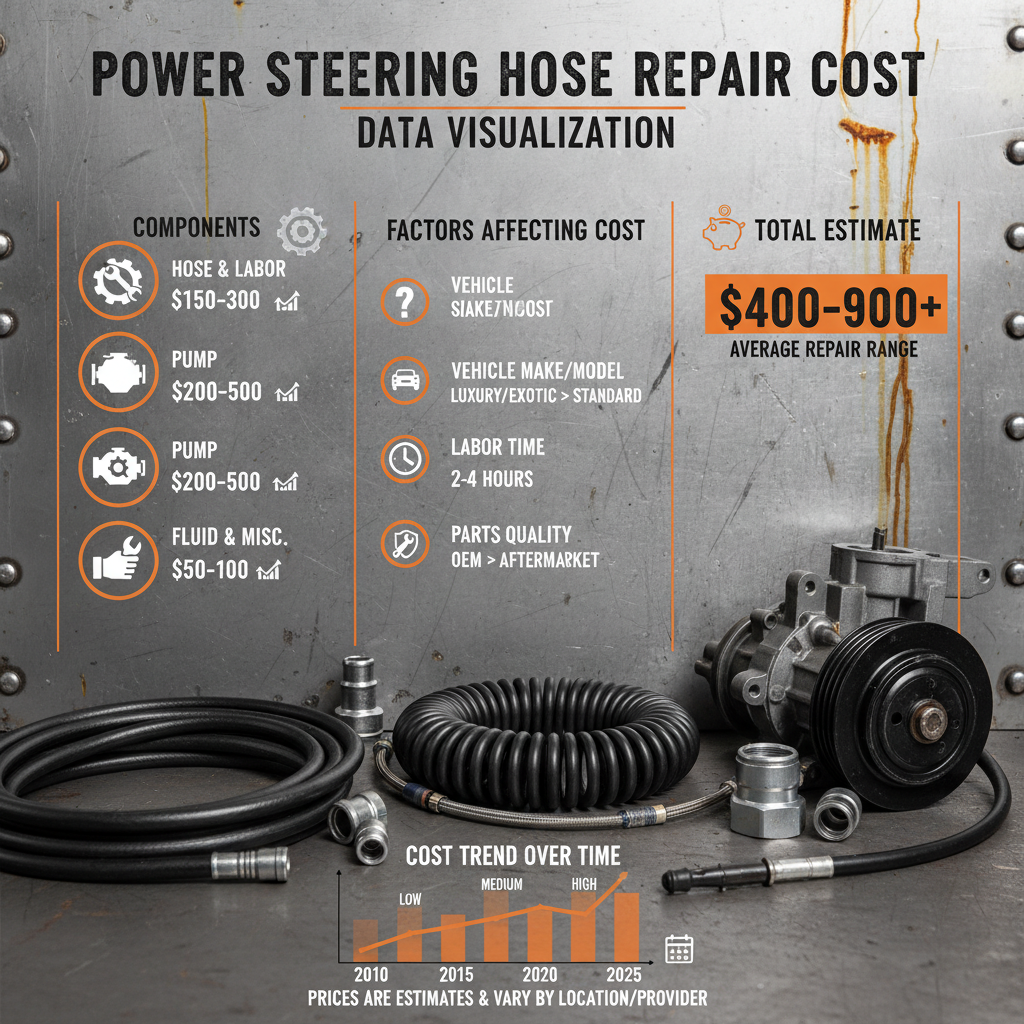
Let's break down the cost into its component parts. The cost of the power steering hose itself can range from $50 to $200, depending on the vehicle and whether it's a high-pressure or low-pressure hose. High-pressure hoses, designed to withstand significantly higher forces, are generally more expensive. Labor costs typically fall between $80 and $150 per hour, and the repair could take anywhere from 1 to 3 hours. This means labor alone could cost $80 to $450. Additional costs may include power steering fluid (around $10-$30), disposal fees, and potential alignment checks if the steering system has been significantly affected. A complete repair, including parts and labor, can range from $130 to $650.
Cost Components:
• Hose Replacement: $50 - $200
• Labor: $80 - $450
• Power Steering Fluid: $10 - $30
• Potential Alignment Check: $50 - $100
Power Steering Hose Replacement Cost by Vehicle Type
The cost of power steering hose repair can vary significantly based on your vehicle’s make and model. Luxury vehicles and those with more complex steering systems typically incur higher repair costs. Here’s a general guideline:
DIY vs. Professional Repair: Is it Worth It?
While attempting a DIY repair can save on labor costs, it’s not always advisable. Power steering systems operate under high pressure, and improper handling can be dangerous. If you are comfortable with automotive repair and have the necessary tools – including a flare nut wrench, jack, and safety glasses – a DIY repair is possible. However, if you lack experience, it’s best to leave it to a qualified mechanic. Improper installation can lead to leaks, system failure, and even injury. When in doubt, prioritize safety and professional expertise. You can find high-quality power steering hoses and related components at Hose QRT.
Conclusion: Addressing Power Steering Issues Promptly
Knowing the cost to repair a power steering hose empowers you to make informed decisions about your vehicle maintenance. While DIY repairs are an option for experienced individuals, professional service is often the safest and most reliable solution. Regularly inspecting your power steering system and addressing any leaks or issues promptly can prevent more significant and costly repairs down the road. Don’t hesitate to consult with a trusted mechanic for a proper diagnosis and estimate.
Frequently Asked Questions (FAQs)
What are the signs of a failing power steering hose?
Common signs include a whining noise when turning the steering wheel, difficulty steering, especially at low speeds, visible leaks under the vehicle, and a low power steering fluid level. Ignoring these symptoms can lead to complete power steering failure, making it dangerous to operate the vehicle. A visual inspection of the hoses for cracks, bulges, or leaks is a good first step. If you suspect a problem, it’s best to have a mechanic diagnose it promptly.
Can I drive with a leaking power steering hose?
Driving with a leaking power steering hose is not recommended. While you might be able to steer, it will be significantly more difficult, especially at low speeds. This makes maneuvering in traffic and parking challenging and potentially dangerous. Furthermore, continued driving with a leak can damage the power steering pump and other components, leading to even more expensive repairs. It’s best to have the hose replaced as soon as possible.
What tools are needed for a DIY power steering hose replacement?
Essential tools include a flare nut wrench set (specifically for power steering fittings), a jack and jack stands to safely lift the vehicle, safety glasses, gloves, a drain pan to catch power steering fluid, and new power steering fluid. You may also need pliers, a screwdriver set, and potentially a hose removal tool depending on the hose type and vehicle. Always consult your vehicle’s repair manual for specific instructions and tool requirements.
How often should I inspect my power steering hoses?
It’s a good practice to visually inspect your power steering hoses at least twice a year, or whenever you change your oil. Look for any signs of cracks, bulges, leaks, or chafing. Also, check the power steering fluid level regularly and top it off if necessary. Early detection of a problem can prevent more significant damage and potentially save you money on repairs.
-
Guide to High Performance Custom Made Power Steering HosesNewsApr.09,2026
-
Comprehensive Guide to Custom High Pressure Power Steering Hose SolutionsNewsApr.07,2026
-
Comprehensive Guide to CRV Power Steering Hose Maintenance and ReplacementNewsApr.04,2026
-
Comprehensive Guide to CPP Power Steering Hoses for Optimal Vehicle PerformanceNewsMar.31,2026
-
Understanding the Cost to Repair Power Steering Hose and Associated FactorsNewsMar.28,2026
-
Comprehensive Guide to Choosing the Right Clamp for Power Steering Hose SystemsNewsMar.26,2026
 Afrikaans
 Albanian
 Amharic
 Arabic
 Armenian
 Azerbaijani
 Basque
 Belarusian
 Bengali
 Bosnian
 Bulgarian
 Catalan
 Cebuano
 Corsican
 Croatian
 Czech
Czech
 Danish
 Dutch
Dutch
 Esperanto
 Estonian
 Finnish
 French
 Frisian
 Galician
 Georgian
 German
 Greek
Greek
 Gujarati
 Haitian Creole
 Hausa
Hausa
 Hawaiian
 Hebrew
 Hindi
Hindi
 Miao
Miao
 Hungarian
 Icelandic
 Igbo
Igbo
 Indonesian
 Irish
Irish
 Italian
 Japanese
 Javanese
 Kannada
 Kazakh
 Khmer
Khmer
 Rwandese
 Korean
 Kurdish
 Kyrgyz
 Lao
Lao
 Latin
Latin
 Latvian
 Lithuanian
 Luxembourgish
 Macedonian
 Malgashi
 Malay
Malay
 Malayalam
 Maltese
 Maori
Maori
 Marathi
 Mongolian
 Myanmar
 Nepali
 Norwegian
 Norwegian
 Occitan
 Pashto
 Persian
 Polish
 Portuguese
 Punjabi
 Romanian
 Russian
 Samoan
 Scottish Gaelic
 Serbian
 Sesotho
 Shona
Shona
 Sindhi
 Sinhala
 Slovak
 Slovenian
 Somali
 Spanish
 Sundanese
 Swahili
 Swedish
 Tagalog
 Tajik
Tajik
 Tamil
Tamil
 Tatar
Tatar
 Telugu
 Thai
Thai
 Turkish
 Turkmen
 Ukrainian
 Urdu
Urdu
 Uighur
 Uzbek
Uzbek
 Vietnamese
 Welsh
Welsh
 Bantu
Bantu
 Yiddish
 Yoruba
 Zulu
Zulu
 English