

R134a Refrigerant Charging Hose Kit | Easy AC Recharge Gauge
Strategic Importance of High-Performance Refrigerant Charging Hoses in Modern HVACR Systems
In the intricate landscape of automotive air conditioning and industrial refrigeration, the integrity and efficiency of every component are paramount. Central to reliable system performance, especially when handling contemporary refrigerants like R134a, is the charging hose. A high-quality r134a refrigerant charging hose is not merely a conduit; it is a precision-engineered instrument critical for system charging, evacuation, and diagnostics. This comprehensive overview delves into the technical aspects, market dynamics, and application advantages of these essential components, aimed at equipping B2B professionals with actionable insights for optimal system maintenance and operational efficiency.
The global demand for efficient and environmentally compliant HVACR solutions continues to drive innovation in component technology. As industries transition towards refrigerants with lower Global Warming Potential (GWP), the requirements for charging hoses become even more stringent. Compatibility with new refrigerants, minimal permeation rates, and robust construction are no longer just desirable features but critical necessities for maintaining system performance, reducing environmental impact, and ensuring technician safety. This article explores how advanced manufacturing techniques and rigorous quality control contribute to the superior performance of modern r134a refrigerant charging hose products.
The Manufacturing Process: Precision Engineering for R134a Hoses
The production of a high-quality r134a refrigerant charging hose involves a sophisticated multi-stage process, ensuring durability, low permeability, and operational safety. This integrated approach combines advanced material science with precision engineering.
Manufacturing Process Flow:
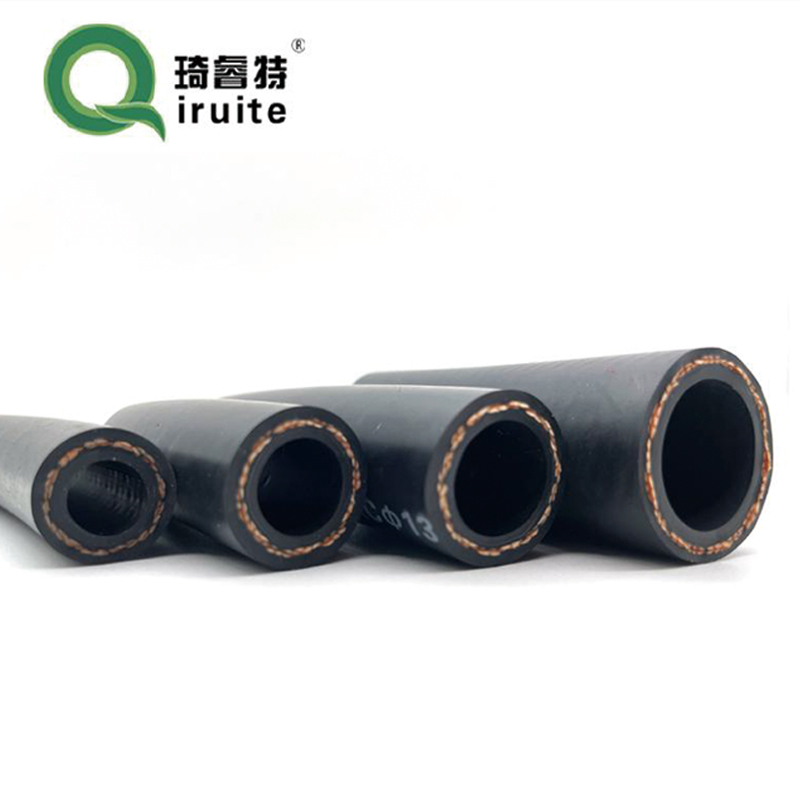
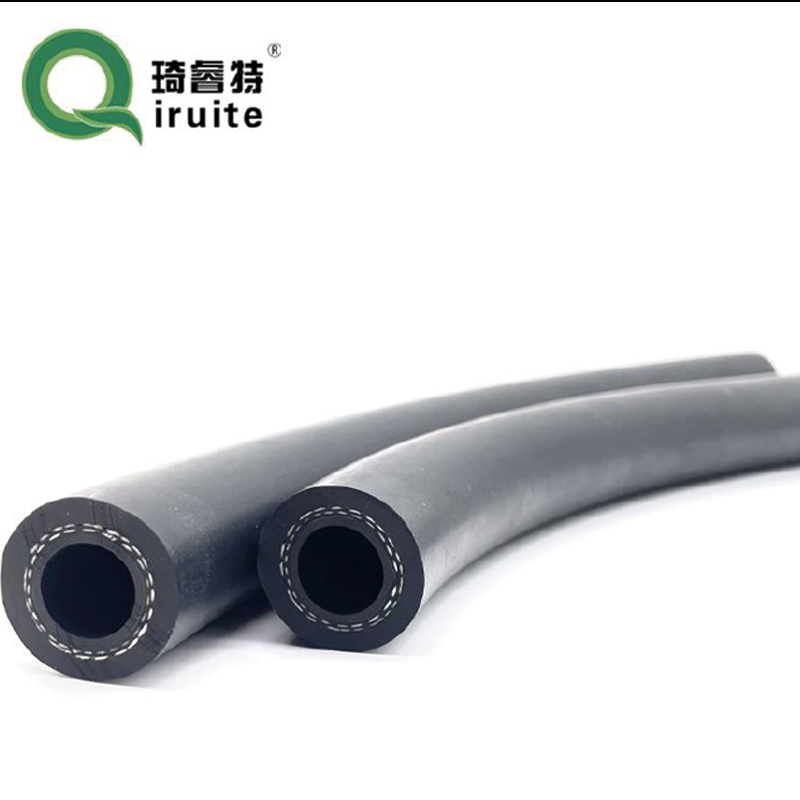
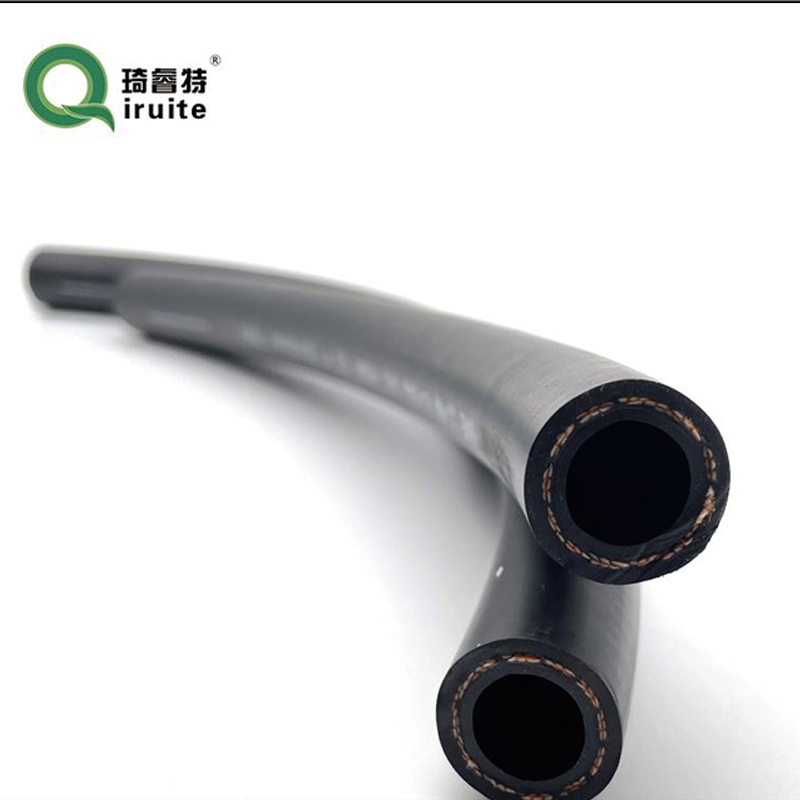
- 1. Material Selection: High-performance elastomeric compounds, typically a blend of NBR (Nitrile Butadiene Rubber) or EPDM (Ethylene Propylene Diene Monomer) for the inner liner, are chosen for their excellent chemical compatibility with R134a and low permeation rates. The reinforcement layer utilizes high-tensile synthetic fibers like polyester or aramid, while the outer cover is often made of weather-resistant EPDM or synthetic rubber for abrasion and UV resistance. Fittings are typically forged or CNC-machined from brass or stainless steel for corrosion resistance and precise threading.
- 2. Inner Liner Extrusion: The selected elastomeric compound is extruded through a die to form a seamless, precise inner tube. This step is critical for ensuring a smooth bore, minimizing refrigerant friction, and maintaining consistent wall thickness, which directly impacts permeability.
- 3. Reinforcement Braiding/Winding: The extruded inner liner is then passed through specialized braiding or spiraling machinery. Multiple layers of high-strength textile fibers are applied under tension, creating a robust reinforcement structure. This layer provides the necessary burst and working pressure capabilities, adhering to standards like SAE J2196.
- 4. Outer Cover Extrusion: A durable outer cover compound is then extruded over the reinforced assembly. This protective layer shields the hose from environmental degradation, ozone, abrasion, and oil, extending the service life of the r134a refrigerant hose.
- 5. Vulcanization/Curing: The raw hose is subjected to heat and pressure in a vulcanization process. This step chemically cross-links the polymer chains, transforming the raw rubber into a stable, elastic, and durable material with its final physical properties.
- 6. Cutting and Fitting Assembly: The cured hose is cut to precise lengths. High-precision CNC machining is often employed to manufacture the brass or stainless steel fittings (e.g., quick couplers, ball valves) to tight tolerances, ensuring leak-free connections and compatibility with standard ac manifold gauge set r134a connections.
- 7. Crimping: Specialized crimping machines permanently attach the fittings to the hose ends. This process is highly controlled to ensure a secure, leak-proof connection that can withstand high pressures and thermal cycling without compromising the hose's structural integrity.
- 8. Testing and Quality Control: Each finished r134a hose undergoes rigorous testing. This includes hydrostatic pressure testing to verify burst strength, leak detection (helium or nitrogen), impulse testing for fatigue resistance, and material compatibility checks. Adherence to international standards such as ISO 9001 and SAE J2196 is strictly maintained to guarantee performance and reliability.
- 9. Packaging: Products are carefully packaged to prevent damage during transit and storage, ensuring they arrive in optimal condition for industrial use.
This meticulous manufacturing process, emphasizing high-grade materials and advanced techniques, ensures that each r134a refrigerant charging hose delivers exceptional service life and consistent performance across target industries such as automotive HVAC, industrial refrigeration, and specialized chemical processing. Advantages include superior corrosion resistance from robust fittings, enhanced energy saving due to minimized leakage, and overall operational safety.
Technical Specifications and Performance Parameters
Understanding the precise technical specifications of an r134a refrigerant hose is crucial for ensuring compatibility, safety, and optimal system operation. Key parameters include working pressure, burst pressure, temperature range, and permeation rate.
Typical R134a Refrigerant Charging Hose Specifications
These specifications underscore the robust engineering required for a reliable r134a refrigerant charging hose. Adherence to SAE J2196 is particularly important as it mandates specific performance criteria for automotive air conditioning hoses, including minimum burst pressure, maximum permeation rate, and resistance to cold bending and vibration.
Key Technical Advantages and Performance Excellence
The advanced design and manufacturing of modern r134a refrigerant charging hose offer significant technical advantages, directly translating into enhanced operational efficiency and safety for B2B applications.
- Superior Permeation Resistance: Utilizing multi-layer construction with advanced elastomeric liners (e.g., Chloroprene rubber, NBR, or specific thermoplastic polymers), these hoses exhibit extremely low permeation rates, minimizing refrigerant loss and ensuring environmental compliance. This contributes to energy saving by reducing the need for frequent recharges.
- Exceptional Pressure Handling: Reinforced with high-tensile synthetic fibers, these hoses are designed to withstand high working pressures and offer a substantial safety margin with burst pressures typically 5 times the working pressure. This ensures safe operation even under fluctuating system conditions.
- Broad Temperature Range Performance: Engineered to perform reliably across a wide temperature spectrum, from extreme cold to intense heat, ensuring consistent performance in diverse climatic conditions and operational environments, critical for automotive and industrial applications.
- Durability and Longevity: The robust outer cover protects against abrasion, ozone, UV radiation, and common workshop chemicals (oils, greases), significantly extending the service life of the r134a recharge hose with gauge and reducing replacement frequency.
- Precision Fittings and Connections: High-grade forged or CNC-machined brass and stainless steel fittings ensure leak-proof connections. Features like quick couplers and ball valves provide secure, one-handed operation and minimize refrigerant release during connection/disconnection, enhancing both safety and efficiency.
- Enhanced Safety Features: Many high-quality hoses integrate features like blow-out resistant gauges, anti-flutter mechanisms, and color-coded hoses to prevent cross-contamination and ensure correct connection to the ac manifold gauge set r134a.
Application Scenarios and Target Industries
The versatility and reliability of the r134a refrigerant hose make it indispensable across a spectrum of industries requiring precise refrigerant management. Its applications extend far beyond standard automotive use.
Typical Application Scenarios:
- Automotive AC Service: Essential for charging, evacuating, and diagnosing R134a automotive air conditioning systems in workshops and dealerships. The integration with an r134a recharge hose with gauge provides real-time pressure monitoring for accurate servicing.
- Commercial HVAC & Refrigeration: Used in the installation, maintenance, and repair of commercial refrigeration units, chillers, and large-scale HVAC systems found in supermarkets, cold storage facilities, and office buildings.
- Industrial Process Cooling: Critical for cooling systems in various industrial processes, including petrochemical plants, plastics manufacturing, and metallurgical facilities, where precise temperature control is vital.
- Marine and Agricultural Equipment: Maintaining AC systems on heavy machinery, agricultural vehicles, and marine vessels that operate in harsh and demanding environments.
- Water Supply & Drainage Infrastructure: Although less direct, in facilities requiring climate control for sensitive equipment or control rooms, R134a systems are used, necessitating reliable charging hoses for maintenance.
Target Industries:
- Automotive Service & Manufacturing
- Commercial & Industrial HVACR
- Petrochemical and Chemical Processing
- Metallurgy and Heavy Manufacturing
- Food and Beverage Processing
- Logistics and Cold Chain Management
Vendor Comparison and Customized Solutions
Choosing the right supplier for r134a refrigerant charging hose is critical for long-term operational success. A thorough vendor comparison should consider not only product specifications but also manufacturing capabilities, quality assurance, and the ability to provide customized solutions.
Key Factors for Vendor Comparison:
- Certifications: Verify adherence to international quality standards such as ISO 9001, and product-specific standards like SAE J2196. This demonstrates a commitment to consistent quality and safety.
- Material Science Expertise: A leading vendor will demonstrate deep knowledge in elastomeric compounds and high-strength reinforcements, ensuring optimal material selection for specific refrigerant compatibility and pressure requirements.
- Manufacturing Technology: Assess the use of advanced techniques like CNC machining for fittings, automated braiding, and controlled vulcanization processes, which directly impact product precision and durability.
- Testing Regimen: Look for comprehensive in-house testing facilities for burst pressure, permeation, impulse fatigue, and material aging, providing verifiable performance data.
- Customization Capabilities: The ability to provide tailored solutions for specific lengths, fitting configurations (e.g., straight, 45°, 90°), color coding, or integrated features like built-in shut-off valves for specialized ac manifold gauge set r134a applications.
- Warranty and Support: A robust warranty and responsive after-sales support signify confidence in product quality and commitment to customer satisfaction.
Customized Solutions: Tailoring for Specific Needs
Recognizing that off-the-shelf solutions may not always meet unique operational demands, leading manufacturers offer extensive customization options for the r134a refrigerant charging hose. This flexibility is crucial for industries requiring specific hose lengths for reach, specialized fittings for integration into proprietary systems, or unique material compositions for extreme operating conditions. For instance, a particular industrial application might require a hose with enhanced abrasion resistance due to frequent dragging, or a specific burst pressure rating beyond standard offerings to handle transient pressure spikes.
Our expertise includes working with clients to develop bespoke solutions, from custom hose assemblies for specialized refrigeration units to branded r134a hose products for distribution networks. This collaborative approach ensures that the final product precisely matches the operational and safety requirements of the application, thereby maximizing efficiency and reducing total cost of ownership.
Application Case Studies
Case Study 1: Automotive OEM Assembly Line Efficiency
A major automotive OEM faced challenges with premature wear and high permeation rates of standard r134a hose products on their assembly lines, leading to frequent replacements and minor refrigerant losses. We partnered with them to develop a custom r134a refrigerant charging hose with an enhanced multi-layer barrier system and a highly abrasion-resistant outer cover. The new hoses, designed for robotic charging stations, exhibited a 30% reduction in permeation and extended service life by over 75%, significantly reducing maintenance costs and ensuring stringent environmental compliance.
Case Study 2: Industrial HVAC Maintenance in Extreme Environments
A large-scale industrial facility in a desert region required robust r134a refrigerant charging hose for their routine HVAC system maintenance. Their existing hoses deteriorated rapidly due to intense UV exposure and extreme temperature fluctuations. Our solution involved supplying hoses manufactured with specialized EPDM outer covers, offering superior UV and ozone resistance, coupled with fittings rated for -40°C to +120°C. This resulted in a marked improvement in hose lifespan and reliability, minimizing unscheduled downtime for critical cooling systems.
Industry Trends and Future Outlook for Refrigerant Hoses
The landscape for refrigerant charging hoses is continually evolving, driven by environmental regulations, technological advancements, and the push for greater efficiency. Key trends shaping the future of the r134a refrigerant charging hose and its successors include:
- Transition to Lower GWP Refrigerants: The phased global reduction of high-GWP refrigerants like R134a is accelerating the adoption of alternatives such as R1234yf. This demands new hose designs with specific material compatibility and even lower permeation rates to handle these newer, sometimes more volatile, substances.
- Smart Hoses and IoT Integration: Future charging hoses may integrate sensors for real-time pressure, temperature, and leak detection, transmitting data to an ac manifold gauge set r134a or a central monitoring system for predictive maintenance and enhanced safety.
- Enhanced Barrier Technologies: Research into advanced polymer blends and multi-layer barrier technologies (e.g., fluoropolymer liners) will continue to push the boundaries of permeation resistance, ensuring minimal refrigerant escape.
- Automation and Robotics: With increasing automation in manufacturing and service, hoses are being designed to withstand repeated flexing and mechanical stress, optimizing them for robotic handling and extended operational cycles.
- Sustainability in Manufacturing: Greater emphasis on sustainable manufacturing processes, including recycled content in hose covers and more energy-efficient production techniques, will play a growing role.
These trends highlight the ongoing need for robust R&D and manufacturing excellence to produce reliable, future-proof r134a hose and other refrigerant charging solutions. Manufacturers must stay agile, adapting materials and processes to meet evolving industry demands and regulatory requirements.
Trust and Partnership: FAQ, Lead Time, Warranty & Support
Frequently Asked Questions (FAQ)
Q: What is the typical service life of an R134a charging hose?
A: With proper care and adherence to recommended pressure limits, a high-quality r134a refrigerant hose can last 5-10 years in industrial settings. Factors like exposure to harsh chemicals, extreme temperatures, and mechanical stress can influence its lifespan. Regular inspection is recommended.
Q: Are these hoses compatible with other refrigerants?
A: While primarily designed for R134a, many hoses are also compatible with R12 and R22 due to similar material requirements. However, for refrigerants like R1234yf or ammonia, specialized hoses with different material compositions are required to ensure chemical compatibility and prevent degradation or excessive permeation.
Q: How do I choose the correct length for an r134a refrigerant charging hose?
A: The ideal length depends on the specific application and working distance. Common lengths range from 36 inches to 96 inches. Shorter hoses minimize refrigerant loss and pressure drop but may limit reach, while longer hoses offer flexibility but can increase pressure loss and potential for kinking. Consider the distance between your ac manifold gauge set r134a and the service ports.
Lead Time and Fulfillment
We maintain an optimized supply chain and manufacturing schedule to ensure efficient order fulfillment. Standard lead times for common r134a refrigerant charging hose configurations are typically 2-4 weeks. For custom orders or large-volume requests, lead times will be provided upon consultation, based on complexity and material availability. We leverage robust logistics partnerships to ensure timely and secure delivery worldwide.
Warranty Commitments
All our r134a hose products are backed by a comprehensive 12-month manufacturer's warranty against defects in materials and workmanship. This commitment reflects our confidence in the superior quality and durability of our products, ensuring peace of mind for our industrial and commercial clients. Our warranty aligns with industry best practices and international standards.
Customer Support
Our dedicated technical support team is available to assist with product selection, technical inquiries, and after-sales service. We offer expert guidance to ensure our clients receive the most suitable r134a refrigerant charging hose solutions for their specific applications. Reach out via our website or direct contact channels for prompt and professional assistance.
Conclusion
The r134a refrigerant charging hose stands as a critical component in the efficacy and safety of modern refrigeration and air conditioning systems. Its performance is directly tied to the precision of its manufacturing, the quality of its materials, and its adherence to rigorous international standards. For B2B decision-makers and technical engineers, selecting a charging hose is an investment in operational reliability, environmental compliance, and long-term cost efficiency. Partnering with a manufacturer that prioritizes expertise, quality, and comprehensive support ensures optimal system performance and mitigates risks associated with refrigerant handling.
References
- SAE International, SAE J2196: Automotive Air Conditioning Refrigerant Hose and Hose Assemblies.
- ASHRAE Handbook—Refrigeration (IP Edition). American Society of Heating, Refrigerating and Air-Conditioning Engineers, 2022.
- ISO 9001:2015 - Quality management systems — Requirements. International Organization for Standardization.
- European Parliament and Council, Regulation (EU) No 517/2014 on fluorinated greenhouse gases (F-Gas Regulation).
- United States Environmental Protection Agency (EPA) - Refrigerant Management Program.
-
Custom Power Steering Hose Kit Guide for Vehicle PerformanceNewsApr.16,2026
-
Guide to High Performance Custom Made Power Steering HosesNewsApr.09,2026
-
Comprehensive Guide to Custom High Pressure Power Steering Hose SolutionsNewsApr.07,2026
-
Comprehensive Guide to CRV Power Steering Hose Maintenance and ReplacementNewsApr.04,2026
-
Comprehensive Guide to CPP Power Steering Hoses for Optimal Vehicle PerformanceNewsMar.31,2026
-
Understanding the Cost to Repair Power Steering Hose and Associated FactorsNewsMar.28,2026
 Afrikaans
 Albanian
 Amharic
 Arabic
 Armenian
 Azerbaijani
 Basque
 Belarusian
 Bengali
 Bosnian
 Bulgarian
 Catalan
 Cebuano
 Corsican
 Croatian
 Czech
Czech
 Danish
 Dutch
Dutch
 Esperanto
 Estonian
 Finnish
 French
 Frisian
 Galician
 Georgian
 German
 Greek
Greek
 Gujarati
 Haitian Creole
 Hausa
Hausa
 Hawaiian
 Hebrew
 Hindi
Hindi
 Miao
Miao
 Hungarian
 Icelandic
 Igbo
Igbo
 Indonesian
 Irish
Irish
 Italian
 Japanese
 Javanese
 Kannada
 Kazakh
 Khmer
Khmer
 Rwandese
 Korean
 Kurdish
 Kyrgyz
 Lao
Lao
 Latin
Latin
 Latvian
 Lithuanian
 Luxembourgish
 Macedonian
 Malgashi
 Malay
Malay
 Malayalam
 Maltese
 Maori
Maori
 Marathi
 Mongolian
 Myanmar
 Nepali
 Norwegian
 Norwegian
 Occitan
 Pashto
 Persian
 Polish
 Portuguese
 Punjabi
 Romanian
 Russian
 Samoan
 Scottish Gaelic
 Serbian
 Sesotho
 Shona
Shona
 Sindhi
 Sinhala
 Slovak
 Slovenian
 Somali
 Spanish
 Sundanese
 Swahili
 Swedish
 Tagalog
 Tajik
Tajik
 Tamil
Tamil
 Tatar
Tatar
 Telugu
 Thai
Thai
 Turkish
 Turkmen
 Ukrainian
 Urdu
Urdu
 Uighur
 Uzbek
Uzbek
 Vietnamese
 Welsh
Welsh
 Bantu
Bantu
 Yiddish
 Yoruba
 Zulu
Zulu
 English