

SAE J1401 Brake Hose Specifications: Premium & Compliant Solutions
Understanding the Critical Role of SAE J1401 Brake Hose Specifications
In the realm of automotive and industrial braking systems, the integrity and performance of every component are paramount. Among these, the brake hose plays a vital role in transmitting hydraulic pressure from the master cylinder to the brake calipers or wheel cylinders, enabling efficient and reliable stopping power. Adherence to stringent standards like SAE J1401 is not merely a recommendation but a critical requirement for safety and operational longevity. This document delves into the intricacies of SAE J1401 brake hose specifications, exploring their manufacturing, applications, advantages, and the rigorous requirements they fulfill for B2B stakeholders.
The SAE J1401 standard delineates the minimum requirements for hydraulic brake hose assemblies used in automotive vehicles. These specifications cover material composition, construction, physical properties, and performance under various environmental and operational stresses. For manufacturers, integrators, and maintenance professionals, a deep understanding of SAE J1401 brake hose is indispensable for ensuring compliance, optimizing system performance, and guaranteeing end-user safety.
Industry Trends and the Evolving Landscape of Brake Hose Technology
The automotive and heavy-duty vehicle industries are continuously pushing the boundaries of performance, efficiency, and safety. This evolution directly impacts components like the j1401 brake hose. Current trends include the demand for:
- Enhanced Durability and Longevity: With vehicles operating for longer periods and under more demanding conditions, hoses must withstand extreme temperatures, vibrations, and aggressive fluids for extended service lives.
- Weight Reduction: Manufacturers are exploring lighter-weight materials and innovative designs to reduce overall vehicle mass, contributing to improved fuel efficiency and reduced emissions.
- Improved Pulsation Dampening: Modern braking systems require hoses that can effectively dampen pressure pulsations, ensuring a consistent pedal feel and reducing noise, vibration, and harshness (NVH).
- Compatibility with New Brake Fluids: The development of advanced brake fluids necessitates hoses that maintain chemical compatibility and structural integrity over time.
- Electrification Considerations: As electric and hybrid vehicles become more prevalent, brake hoses must integrate seamlessly into complex thermal management and regenerative braking systems, often requiring specialized electrical insulation or routing.
These trends underscore the importance of robust standards like SAE J1401, which provides a foundational benchmark, while also driving innovation in material science and manufacturing processes to exceed these minimum requirements.
Detailed Manufacturing Process of SAE J1401 Brake Hose Specifications
The production of an SAE J1401 brake hose is a meticulously controlled process, ensuring that each hose assembly meets the highest standards for performance and safety. It combines advanced material science with precision engineering.
1. Material Selection and Preparation
- Inner Tube: Typically made from EPDM (Ethylene Propylene Diene Monomer) or other synthetic rubber compounds, chosen for excellent chemical resistance to brake fluids (DOT 3, DOT 4, DOT 5.1) and high-temperature stability. Materials are blended and extruded into a seamless tube.
- Reinforcement Layers: High-tensile strength textile braids (e.g., polyester, rayon) or spiral-wound synthetic fibers are applied to provide burst strength and prevent volumetric expansion under pressure. These layers are critical for the hose's structural integrity.
- Outer Cover: An abrasion-resistant and weather-resistant synthetic rubber compound (e.g., SBR/EPDM blend) protects against ozone, UV radiation, oil, and physical damage.
2. Manufacturing Processes
- Extrusion of Inner Tube: The selected rubber compound is extruded through a die to form the inner tube, ensuring consistent wall thickness and a smooth inner bore for optimal fluid flow.
- Braiding/Wrapping of Reinforcement: The extruded inner tube is then fed through braiding or spiral wrapping machines. Multiple layers of textile reinforcement are applied, often in opposing directions, to maximize pressure resistance and minimize volumetric expansion. This is a critical step for meeting sae j1401 brake hose specifications for burst strength.
- Extrusion of Outer Cover: A final layer of protective rubber is extruded over the reinforced core.
- Vulcanization (Curing): The raw hose is then vulcanized under heat and pressure. This chemical process cross-links the rubber polymers, giving the hose its final elasticity, strength, and resistance properties.
- Cutting and Assembly: The cured hose is cut to precise lengths. End fittings, often manufactured via forging or CNC machining from high-grade steel or brass, are crimped onto the hose ends using specialized machinery, ensuring a leak-proof and robust connection.
3. Quality Control and Testing Standards
Each brake hose sae j1401 assembly undergoes rigorous testing to comply with SAE J1401 and often other relevant standards like FMVSS 106 (Federal Motor Vehicle Safety Standard), ISO 3996, and various OEM-specific requirements. Key tests include:
- Burst Pressure Test: Hoses are pressurized until they burst, ensuring they exceed specified burst pressure limits (typically >14000 psi for automotive).
- Volumetric Expansion Test: Measures the increase in hose volume under pressure, critical for maintaining consistent pedal feel. SAE J1401 mandates minimal expansion.
- Whip Test: Simulates dynamic stresses and fatigue by rapidly rotating a pressurized hose, checking for endurance.
- Tensile Strength Test: Measures the force required to pull the end fittings from the hose.
- Ozone Resistance Test: Exposes the hose to ozone-rich environments to check for cracking and degradation.
- Cold Flexibility Test: Assesses hose flexibility at low temperatures (-40°C or below).
- Impulse Test: Subjects the hose to repeated pressure cycles at elevated temperatures, simulating real-world vehicle operation over years.
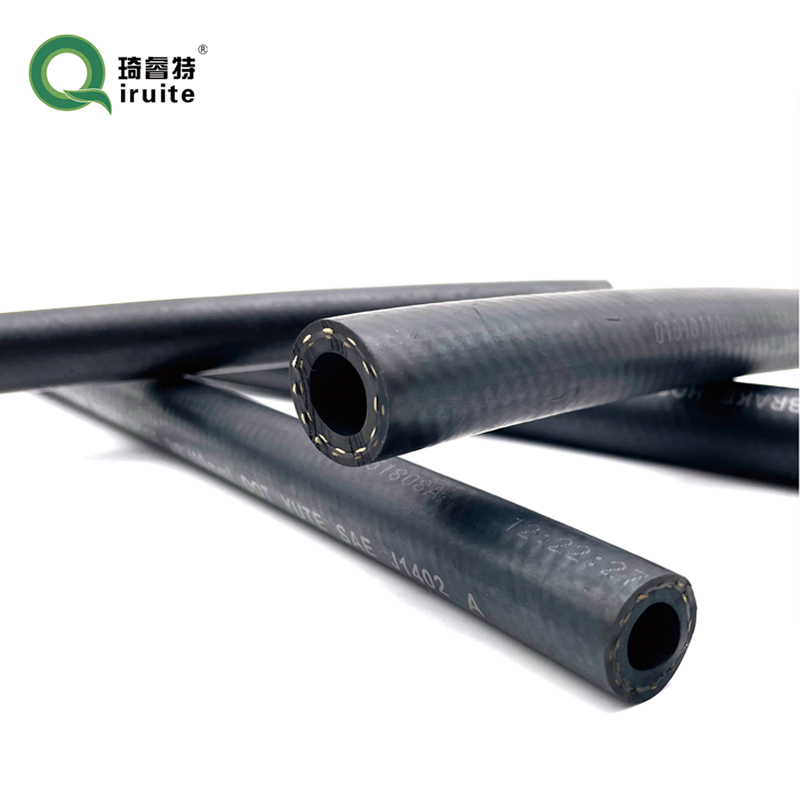
Image: A detailed view of SAE J1401 brake hose construction, illustrating reinforcement layers.
These tests, often conducted in ISO 17025 accredited laboratories, ensure that every hose assembly provides reliable and safe operation throughout its intended service life. Our products are rigorously tested to surpass these benchmarks, guaranteeing an extended service life in demanding environments.
Technical Parameters and SAE J1401 Brake Hose Specifications Overview
The specific technical parameters defined by SAE J1401 are crucial for engineers and procurement specialists. Below is a summary of typical sae j1401 brake hose specifications:
Table 1: Typical SAE J1401 Brake Hose Specifications
| Parameter | SAE J1401 Requirement (Typical) | Our Product Performance (Example) |
|---|---|---|
| Minimum Burst Pressure | >14,000 psi (96.5 MPa) | 16,000 - 18,000 psi (110 - 124 MPa) |
| Volumetric Expansion (at 1500 psi) | Max 0.35 cm³/ft for 1/8" ID hose | 0.25 cm³/ft for 1/8" ID hose |
| Tensile Strength (Hose-to-Fitting) | Min 325 lbs (1460 N) | >400 lbs (1800 N) |
| Operating Temperature Range | -40°C to +120°C (-40°F to +248°F) | -50°C to +150°C (-58°F to +302°F) |
| Ozone Resistance (70 hours at 50pphm) | No cracking (Grade 0) | No cracking (Grade 0) |
| Impulse Cycles (1000 psi, 121°C) | Min 150,000 cycles | >200,000 cycles |
These rigorous benchmarks ensure that hoses meeting the SAE J1401 brake hose specifications are suitable for critical braking applications, providing consistent performance and long-term reliability.
Application Scenarios and Target Industries
The versatile nature and robust performance characteristics of SAE J1401 brake hose make it indispensable across a wide array of industries:
- Automotive Industry: This is the primary domain, encompassing passenger cars, light trucks, SUVs, and motorcycles. J1401 hoses are critical for transmitting hydraulic pressure in disc and drum brake systems.
- Heavy-Duty Commercial Vehicles: Trucks, buses, and trailers rely on these hoses for their braking systems, enduring high pressures and continuous operation in challenging environments.
- Construction and Agricultural Equipment: Heavy machinery such as excavators, bulldozers, tractors, and combines frequently incorporate SAE J1401 brake hose assemblies in their hydraulic braking circuits, where robust performance and resistance to environmental factors like dirt, mud, and extreme temperatures are crucial.
- Industrial Machinery: Certain industrial applications requiring hydraulic pressure transmission for braking or clamping mechanisms can benefit from the proven reliability of J1401 hoses.
- Specialty Vehicles: Emergency vehicles, recreational vehicles (RVs), and utility vehicles often utilize these hoses due to their consistent performance under varied loads and conditions.
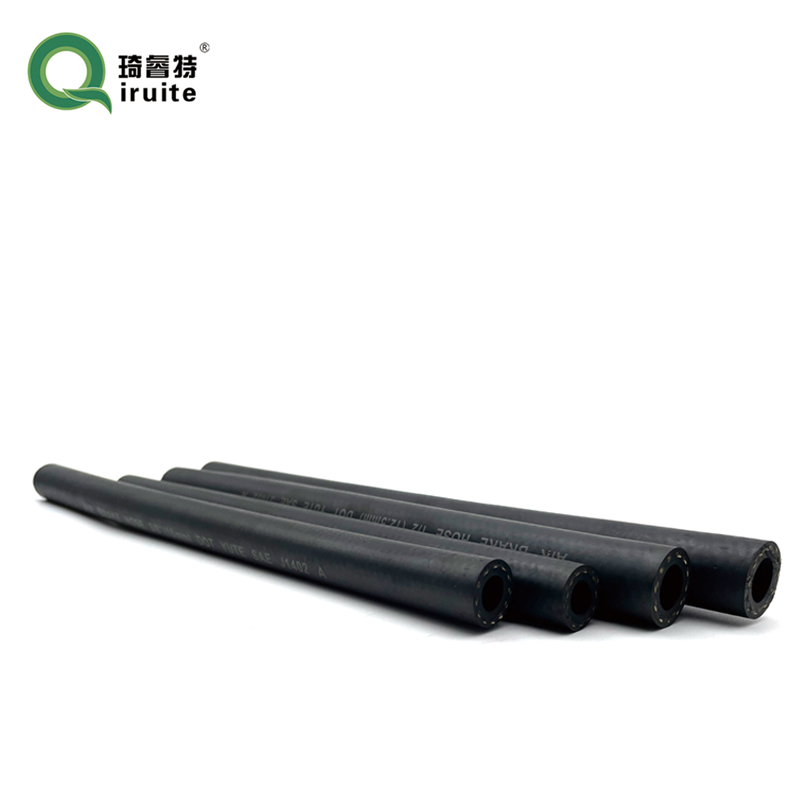
Image: SAE J1401 brake hoses being installed in a modern vehicle chassis.
In these scenarios, the advantages of hoses built to sae j1401 brake hose specifications become evident, offering energy saving through efficient pressure transfer and superior corrosion resistance due to advanced outer cover compounds, ensuring safety and longevity in diverse operational contexts.
Key Technical Advantages of SAE J1401 Compliant Hoses
Opting for brake hoses that strictly adhere to SAE J1401 brake hose specifications offers significant technical and operational advantages:
- Uncompromised Safety: The most critical advantage. J1401 ensures hoses can withstand extreme pressure spikes and environmental conditions without failure, directly preventing brake fluid leakage and catastrophic brake loss.
- Consistent Pedal Feel and Responsive Braking: Low volumetric expansion ensures that pedal pressure is efficiently converted into hydraulic force, providing a firm, consistent brake pedal feel and precise braking response, crucial for driver confidence and vehicle control.
- Superior Durability and Longevity: Built with robust materials and multi-layer reinforcement, these hoses resist abrasion, kinking, ozone degradation, and chemical attack from brake fluids, leading to extended service intervals and reduced maintenance costs.
- Broad Temperature Operating Range: Designed to perform reliably from extreme cold (-40°C) to high heat (+120°C), maintaining flexibility and pressure integrity across diverse climates.
- OEM Compatibility and Compliance: Hoses meeting J1401 standards are typically compliant with FMVSS 106 and other international regulations, making them ideal for OEM installations and aftermarket replacements that require strict adherence to automotive safety standards.
- Corrosion Resistance: The outer cover materials are specifically formulated to resist common automotive contaminants, road salts, and environmental exposure, preventing premature material degradation.
Vendor Comparison and Selection Criteria
When sourcing SAE J1401 brake hose, selecting the right vendor is paramount. It's not just about meeting the minimum sae j1401 brake hose specifications, but often exceeding them, backed by robust quality systems and responsive support.
Table 2: Vendor Comparison for SAE J1401 Brake Hoses
| Feature/Criterion | Vendor A (e.g., HoseQRT) | Vendor B (Competitor) |
|---|---|---|
| Certifications | ISO 9001, IATF 16949, FMVSS 106, DOT | ISO 9001, FMVSS 106 |
| Material Traceability | Full batch traceability from raw material to finished product. | Partial traceability. |
| Customization Capability | Extensive: custom lengths, fittings, colors, private labeling. | Limited: standard lengths, basic fittings. |
| Testing Beyond Standard | 120% impulse cycles, higher burst pressure, extended ozone. | Meets minimum J1401/FMVSS 106. |
| Technical Support | Dedicated engineering support, design consultation. | Standard product support. |
| Lead Time (Typical) | 2-4 weeks (standard), 4-6 weeks (custom). | 3-5 weeks (standard), longer for custom. |
Key factors to consider include the vendor's quality management systems (e.g., ISO 9001, IATF 16949 for automotive), their testing capabilities (in-house vs. third-party), material traceability, and their ability to provide custom solutions. A vendor with extensive experience and a track record of supplying leading automotive OEMs and industrial partners will offer greater assurance of product quality and reliability.
Customized Solutions for Specific Needs
While SAE J1401 brake hose specifications define a robust baseline, many B2B clients require tailored solutions to meet unique application demands. Our engineering team specializes in developing customized brake hose assemblies that go beyond standard offerings:
- Specialized Fittings: Designing and manufacturing unique end fittings from various materials (e.g., stainless steel for enhanced corrosion resistance) to integrate with proprietary braking systems.
- Optimized Lengths and Routing: Producing hoses in precise lengths to minimize slack, prevent kinking, and optimize routing in complex vehicle architectures, reducing installation time and potential for wear.
- Extreme Environment Hoses: Developing hoses with enhanced outer covers for superior resistance to extreme temperatures (e.g., for racing or Arctic conditions), chemicals, or abrasive environments.
- Low Volumetric Expansion Hoses: For applications demanding the absolute firmest pedal feel and rapid response, we can engineer hoses with even lower volumetric expansion rates than standard J1401.
- Integrated Solutions: Combining brake hoses with other fluid transfer lines or protective sleeves into a single assembly for streamlined installation and improved organization within the vehicle.
Our custom solutions leverage advanced material science and manufacturing techniques to deliver performance optimized for your specific requirements, all while maintaining strict adherence to the underlying principles of SAE J1401 safety and reliability.
Real-World Application Case Studies
Our commitment to quality and engineering excellence is reflected in the successful deployment of our SAE J1401 brake hose assemblies across diverse applications:
Case Study 1: Heavy-Duty Truck OEM
A prominent heavy-duty truck manufacturer faced challenges with premature brake hose wear in their long-haul vehicles operating in harsh environments with significant temperature fluctuations and road debris. Standard SAE J1401 brake hose met basic requirements but showed reduced service life. We collaborated to design a custom solution featuring an enhanced, multi-layered outer cover for superior abrasion and ozone resistance, coupled with specialized stainless steel end fittings for improved corrosion protection. The result was a 30% increase in average hose service life, reducing warranty claims and improving fleet uptime.
Case Study 2: Performance Automotive Manufacturer
A luxury performance car brand required brake hoses with minimal volumetric expansion to deliver an exceptionally firm and immediate pedal feel, critical for high-speed driving and track performance. Our engineers developed a specialized J1401 brake hose variant with a tighter weave reinforcement and a proprietary inner liner compound, achieving a volumetric expansion rate 25% lower than the standard J1401 maximum. This enabled the manufacturer to meet their stringent performance targets and enhance the driving experience for their discerning customers.
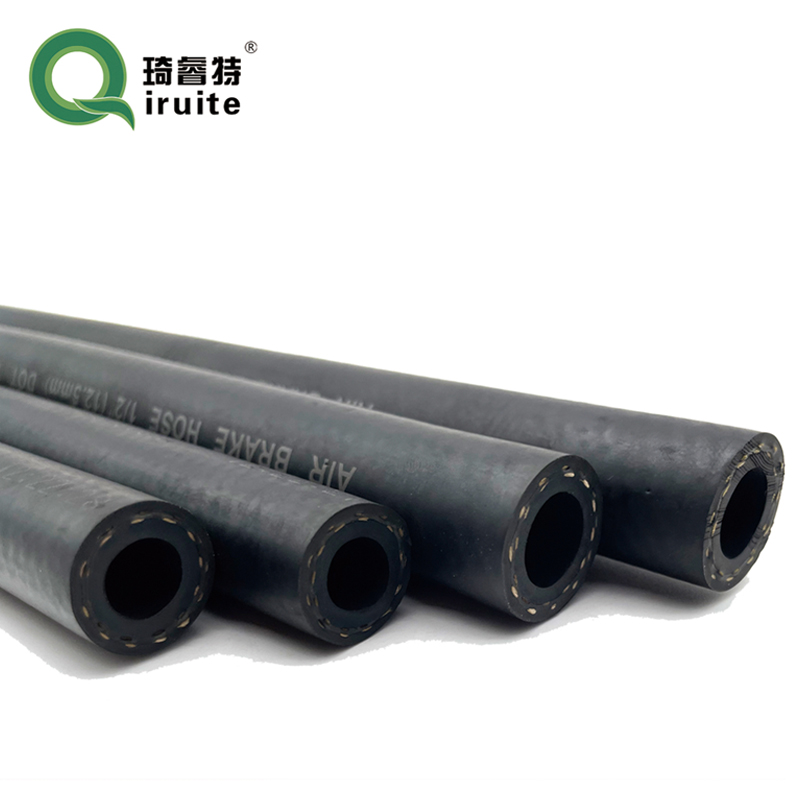
Image: Custom-engineered SAE J1401 brake hose assembly ready for high-performance application.
Ensuring Trustworthiness: FAQ
Frequently Asked Questions about SAE J1401 Brake Hose Specifications
- Q1: What is the primary difference between SAE J1401 and FMVSS 106?
- A1: SAE J1401 is an industry standard developed by the Society of Automotive Engineers (SAE) that outlines minimum performance and material requirements for hydraulic brake hoses. FMVSS 106 (Federal Motor Vehicle Safety Standard No. 106) is a U.S. federal regulation that mandates specific safety performance requirements for hydraulic brake hoses used in vehicles sold in the U.S. While J1401 provides the technical specifications, FMVSS 106 is the legal requirement. Hoses typically need to comply with both.
- Q2: How does volumetric expansion affect brake performance?
- A2: Volumetric expansion refers to the increase in the internal volume of a brake hose when subjected to hydraulic pressure. If a hose expands too much, a portion of the brake pedal effort is used to expand the hose rather than activating the calipers/cylinders. This results in a "spongy" or soft brake pedal, reduced braking efficiency, and delayed response. SAE J1401 sets strict limits on this expansion to ensure a firm pedal and consistent braking.
- Q3: What materials are typically used in the construction of an SAE J1401 brake hose?
- A3: The inner tube is usually EPDM rubber for chemical compatibility with brake fluid. Reinforcement layers are high-tensile strength textiles like polyester or rayon braids. The outer cover is often a durable synthetic rubber blend (e.g., SBR/EPDM) providing resistance to ozone, abrasion, and environmental factors.
- Q4: Can these hoses be used with all types of brake fluid (DOT 3, DOT 4, DOT 5, DOT 5.1)?
- A4: SAE J1401 hoses are designed and tested to be compatible with DOT 3, DOT 4, and DOT 5.1 glycol-ether-based brake fluids. They are generally NOT compatible with DOT 5 silicone-based fluid, which requires specific silicone-compatible hoses. Always verify compatibility with the manufacturer for specific applications.
Lead Time, Warranty, and Customer Support
We understand that reliable supply chains and robust support are crucial for our B2B partners.
- Lead Time: For standard SAE J1401 brake hose assemblies, our typical lead time ranges from 2-4 weeks, depending on order volume and current production schedules. Custom-engineered solutions may require 4-6 weeks for design, prototyping, and production setup. We offer expedited options for urgent requirements.
- Warranty: All our SAE J1401 brake hose products are backed by a comprehensive 2-year manufacturer's warranty against defects in materials and workmanship. This commitment underscores our confidence in the quality and durability of our products, exceeding industry standards.
- Customer Support: Our dedicated customer support team and technical engineers are available to assist with product selection, application guidance, and post-sales inquiries. We provide prompt responses and expert advice to ensure seamless integration and optimal performance of our hoses in your systems. For support, please contact us via our website or dedicated technical support line.
Conclusion
The adherence to SAE J1401 brake hose specifications is not merely a technical compliance point; it is a foundational pillar of safety, reliability, and performance in hydraulic braking systems. From stringent material selection and precision manufacturing to rigorous multi-stage testing, every aspect of producing these critical components is geared towards ensuring uncompromised operational integrity. For B2B partners in the automotive, heavy-duty, and industrial sectors, understanding and specifying J1401 compliant hoses, coupled with a focus on vendor capabilities and customization options, is essential for delivering superior end products and enhancing overall system safety and longevity.
References
- Society of Automotive Engineers (SAE) International. SAE J1401: Road Vehicle - Hydraulic Brake Hose Assemblies. Latest revision.
- National Highway Traffic Safety Administration (NHTSA). Federal Motor Vehicle Safety Standard (FMVSS) No. 106; Brake Hoses. Code of Federal Regulations, Title 49, Part 571.106.
- ISO 3996: Road vehicles — Brake hose assemblies for hydraulic braking systems using non-petroleum-base fluid — Type 1, 2, 3, 4 and 5. International Organization for Standardization.
These tests, often conducted in ISO 17025 accredited laboratories, ensure that every hose assembly provides reliable and safe operation throughout its intended service life. Our products are rigorously tested to surpass these benchmarks, guaranteeing an extended service life in demanding environments.
Technical Parameters and SAE J1401 Brake Hose Specifications Overview
The specific technical parameters defined by SAE J1401 are crucial for engineers and procurement specialists. Below is a summary of typical sae j1401 brake hose specifications:
Table 1: Typical SAE J1401 Brake Hose Specifications
| Parameter | SAE J1401 Requirement (Typical) | Our Product Performance (Example) |
|---|---|---|
| Minimum Burst Pressure | >14,000 psi (96.5 MPa) | 16,000 - 18,000 psi (110 - 124 MPa) |
| Volumetric Expansion (at 1500 psi) | Max 0.35 cm³/ft for 1/8" ID hose | 0.25 cm³/ft for 1/8" ID hose |
| Tensile Strength (Hose-to-Fitting) | Min 325 lbs (1460 N) | >400 lbs (1800 N) |
| Operating Temperature Range | -40°C to +120°C (-40°F to +248°F) | -50°C to +150°C (-58°F to +302°F) |
| Ozone Resistance (70 hours at 50pphm) | No cracking (Grade 0) | No cracking (Grade 0) |
| Impulse Cycles (1000 psi, 121°C) | Min 150,000 cycles | >200,000 cycles |
These rigorous benchmarks ensure that hoses meeting the SAE J1401 brake hose specifications are suitable for critical braking applications, providing consistent performance and long-term reliability.
Application Scenarios and Target Industries
The versatile nature and robust performance characteristics of SAE J1401 brake hose make it indispensable across a wide array of industries:
- Automotive Industry: This is the primary domain, encompassing passenger cars, light trucks, SUVs, and motorcycles. J1401 hoses are critical for transmitting hydraulic pressure in disc and drum brake systems.
- Heavy-Duty Commercial Vehicles: Trucks, buses, and trailers rely on these hoses for their braking systems, enduring high pressures and continuous operation in challenging environments.
- Construction and Agricultural Equipment: Heavy machinery such as excavators, bulldozers, tractors, and combines frequently incorporate SAE J1401 brake hose assemblies in their hydraulic braking circuits, where robust performance and resistance to environmental factors like dirt, mud, and extreme temperatures are crucial.
- Industrial Machinery: Certain industrial applications requiring hydraulic pressure transmission for braking or clamping mechanisms can benefit from the proven reliability of J1401 hoses.
- Specialty Vehicles: Emergency vehicles, recreational vehicles (RVs), and utility vehicles often utilize these hoses due to their consistent performance under varied loads and conditions.
Image: SAE J1401 brake hoses being installed in a modern vehicle chassis.
In these scenarios, the advantages of hoses built to sae j1401 brake hose specifications become evident, offering energy saving through efficient pressure transfer and superior corrosion resistance due to advanced outer cover compounds, ensuring safety and longevity in diverse operational contexts.
Key Technical Advantages of SAE J1401 Compliant Hoses
Opting for brake hoses that strictly adhere to SAE J1401 brake hose specifications offers significant technical and operational advantages:
- Uncompromised Safety: The most critical advantage. J1401 ensures hoses can withstand extreme pressure spikes and environmental conditions without failure, directly preventing brake fluid leakage and catastrophic brake loss.
- Consistent Pedal Feel and Responsive Braking: Low volumetric expansion ensures that pedal pressure is efficiently converted into hydraulic force, providing a firm, consistent brake pedal feel and precise braking response, crucial for driver confidence and vehicle control.
- Superior Durability and Longevity: Built with robust materials and multi-layer reinforcement, these hoses resist abrasion, kinking, ozone degradation, and chemical attack from brake fluids, leading to extended service intervals and reduced maintenance costs.
- Broad Temperature Operating Range: Designed to perform reliably from extreme cold (-40°C) to high heat (+120°C), maintaining flexibility and pressure integrity across diverse climates.
- OEM Compatibility and Compliance: Hoses meeting J1401 standards are typically compliant with FMVSS 106 and other international regulations, making them ideal for OEM installations and aftermarket replacements that require strict adherence to automotive safety standards.
- Corrosion Resistance: The outer cover materials are specifically formulated to resist common automotive contaminants, road salts, and environmental exposure, preventing premature material degradation.
Vendor Comparison and Selection Criteria
When sourcing SAE J1401 brake hose, selecting the right vendor is paramount. It's not just about meeting the minimum sae j1401 brake hose specifications, but often exceeding them, backed by robust quality systems and responsive support.
Table 2: Vendor Comparison for SAE J1401 Brake Hoses
| Feature/Criterion | Vendor A (e.g., HoseQRT) | Vendor B (Competitor) |
|---|---|---|
| Certifications | ISO 9001, IATF 16949, FMVSS 106, DOT | ISO 9001, FMVSS 106 |
| Material Traceability | Full batch traceability from raw material to finished product. | Partial traceability. |
| Customization Capability | Extensive: custom lengths, fittings, colors, private labeling. | Limited: standard lengths, basic fittings. |
| Testing Beyond Standard | 120% impulse cycles, higher burst pressure, extended ozone. | Meets minimum J1401/FMVSS 106. |
| Technical Support | Dedicated engineering support, design consultation. | Standard product support. |
| Lead Time (Typical) | 2-4 weeks (standard), 4-6 weeks (custom). | 3-5 weeks (standard), longer for custom. |
Key factors to consider include the vendor's quality management systems (e.g., ISO 9001, IATF 16949 for automotive), their testing capabilities (in-house vs. third-party), material traceability, and their ability to provide custom solutions. A vendor with extensive experience and a track record of supplying leading automotive OEMs and industrial partners will offer greater assurance of product quality and reliability.
Customized Solutions for Specific Needs
While SAE J1401 brake hose specifications define a robust baseline, many B2B clients require tailored solutions to meet unique application demands. Our engineering team specializes in developing customized brake hose assemblies that go beyond standard offerings:
- Specialized Fittings: Designing and manufacturing unique end fittings from various materials (e.g., stainless steel for enhanced corrosion resistance) to integrate with proprietary braking systems.
- Optimized Lengths and Routing: Producing hoses in precise lengths to minimize slack, prevent kinking, and optimize routing in complex vehicle architectures, reducing installation time and potential for wear.
- Extreme Environment Hoses: Developing hoses with enhanced outer covers for superior resistance to extreme temperatures (e.g., for racing or Arctic conditions), chemicals, or abrasive environments.
- Low Volumetric Expansion Hoses: For applications demanding the absolute firmest pedal feel and rapid response, we can engineer hoses with even lower volumetric expansion rates than standard J1401.
- Integrated Solutions: Combining brake hoses with other fluid transfer lines or protective sleeves into a single assembly for streamlined installation and improved organization within the vehicle.
Our custom solutions leverage advanced material science and manufacturing techniques to deliver performance optimized for your specific requirements, all while maintaining strict adherence to the underlying principles of SAE J1401 safety and reliability.
Real-World Application Case Studies
Our commitment to quality and engineering excellence is reflected in the successful deployment of our SAE J1401 brake hose assemblies across diverse applications:
Case Study 1: Heavy-Duty Truck OEM
A prominent heavy-duty truck manufacturer faced challenges with premature brake hose wear in their long-haul vehicles operating in harsh environments with significant temperature fluctuations and road debris. Standard SAE J1401 brake hose met basic requirements but showed reduced service life. We collaborated to design a custom solution featuring an enhanced, multi-layered outer cover for superior abrasion and ozone resistance, coupled with specialized stainless steel end fittings for improved corrosion protection. The result was a 30% increase in average hose service life, reducing warranty claims and improving fleet uptime.
Case Study 2: Performance Automotive Manufacturer
A luxury performance car brand required brake hoses with minimal volumetric expansion to deliver an exceptionally firm and immediate pedal feel, critical for high-speed driving and track performance. Our engineers developed a specialized J1401 brake hose variant with a tighter weave reinforcement and a proprietary inner liner compound, achieving a volumetric expansion rate 25% lower than the standard J1401 maximum. This enabled the manufacturer to meet their stringent performance targets and enhance the driving experience for their discerning customers.
Image: Custom-engineered SAE J1401 brake hose assembly ready for high-performance application.
Ensuring Trustworthiness: FAQ
Frequently Asked Questions about SAE J1401 Brake Hose Specifications
- Q1: What is the primary difference between SAE J1401 and FMVSS 106?
- A1: SAE J1401 is an industry standard developed by the Society of Automotive Engineers (SAE) that outlines minimum performance and material requirements for hydraulic brake hoses. FMVSS 106 (Federal Motor Vehicle Safety Standard No. 106) is a U.S. federal regulation that mandates specific safety performance requirements for hydraulic brake hoses used in vehicles sold in the U.S. While J1401 provides the technical specifications, FMVSS 106 is the legal requirement. Hoses typically need to comply with both.
- Q2: How does volumetric expansion affect brake performance?
- A2: Volumetric expansion refers to the increase in the internal volume of a brake hose when subjected to hydraulic pressure. If a hose expands too much, a portion of the brake pedal effort is used to expand the hose rather than activating the calipers/cylinders. This results in a "spongy" or soft brake pedal, reduced braking efficiency, and delayed response. SAE J1401 sets strict limits on this expansion to ensure a firm pedal and consistent braking.
- Q3: What materials are typically used in the construction of an SAE J1401 brake hose?
- A3: The inner tube is usually EPDM rubber for chemical compatibility with brake fluid. Reinforcement layers are high-tensile strength textiles like polyester or rayon braids. The outer cover is often a durable synthetic rubber blend (e.g., SBR/EPDM) providing resistance to ozone, abrasion, and environmental factors.
- Q4: Can these hoses be used with all types of brake fluid (DOT 3, DOT 4, DOT 5, DOT 5.1)?
- A4: SAE J1401 hoses are designed and tested to be compatible with DOT 3, DOT 4, and DOT 5.1 glycol-ether-based brake fluids. They are generally NOT compatible with DOT 5 silicone-based fluid, which requires specific silicone-compatible hoses. Always verify compatibility with the manufacturer for specific applications.
Lead Time, Warranty, and Customer Support
We understand that reliable supply chains and robust support are crucial for our B2B partners.
- Lead Time: For standard SAE J1401 brake hose assemblies, our typical lead time ranges from 2-4 weeks, depending on order volume and current production schedules. Custom-engineered solutions may require 4-6 weeks for design, prototyping, and production setup. We offer expedited options for urgent requirements.
- Warranty: All our SAE J1401 brake hose products are backed by a comprehensive 2-year manufacturer's warranty against defects in materials and workmanship. This commitment underscores our confidence in the quality and durability of our products, exceeding industry standards.
- Customer Support: Our dedicated customer support team and technical engineers are available to assist with product selection, application guidance, and post-sales inquiries. We provide prompt responses and expert advice to ensure seamless integration and optimal performance of our hoses in your systems. For support, please contact us via our website or dedicated technical support line.
Conclusion
The adherence to SAE J1401 brake hose specifications is not merely a technical compliance point; it is a foundational pillar of safety, reliability, and performance in hydraulic braking systems. From stringent material selection and precision manufacturing to rigorous multi-stage testing, every aspect of producing these critical components is geared towards ensuring uncompromised operational integrity. For B2B partners in the automotive, heavy-duty, and industrial sectors, understanding and specifying J1401 compliant hoses, coupled with a focus on vendor capabilities and customization options, is essential for delivering superior end products and enhancing overall system safety and longevity.
References
- Society of Automotive Engineers (SAE) International. SAE J1401: Road Vehicle - Hydraulic Brake Hose Assemblies. Latest revision.
- National Highway Traffic Safety Administration (NHTSA). Federal Motor Vehicle Safety Standard (FMVSS) No. 106; Brake Hoses. Code of Federal Regulations, Title 49, Part 571.106.
- ISO 3996: Road vehicles — Brake hose assemblies for hydraulic braking systems using non-petroleum-base fluid — Type 1, 2, 3, 4 and 5. International Organization for Standardization.
-
Custom Power Steering Hose Kit Guide for Vehicle PerformanceNewsApr.16,2026
-
Guide to High Performance Custom Made Power Steering HosesNewsApr.09,2026
-
Comprehensive Guide to Custom High Pressure Power Steering Hose SolutionsNewsApr.07,2026
-
Comprehensive Guide to CRV Power Steering Hose Maintenance and ReplacementNewsApr.04,2026
-
Comprehensive Guide to CPP Power Steering Hoses for Optimal Vehicle PerformanceNewsMar.31,2026
-
Understanding the Cost to Repair Power Steering Hose and Associated FactorsNewsMar.28,2026
 Afrikaans
 Albanian
 Amharic
 Arabic
 Armenian
 Azerbaijani
 Basque
 Belarusian
 Bengali
 Bosnian
 Bulgarian
 Catalan
 Cebuano
 Corsican
 Croatian
 Czech
Czech
 Danish
 Dutch
Dutch
 Esperanto
 Estonian
 Finnish
 French
 Frisian
 Galician
 Georgian
 German
 Greek
Greek
 Gujarati
 Haitian Creole
 Hausa
Hausa
 Hawaiian
 Hebrew
 Hindi
Hindi
 Miao
Miao
 Hungarian
 Icelandic
 Igbo
Igbo
 Indonesian
 Irish
Irish
 Italian
 Japanese
 Javanese
 Kannada
 Kazakh
 Khmer
Khmer
 Rwandese
 Korean
 Kurdish
 Kyrgyz
 Lao
Lao
 Latin
Latin
 Latvian
 Lithuanian
 Luxembourgish
 Macedonian
 Malgashi
 Malay
Malay
 Malayalam
 Maltese
 Maori
Maori
 Marathi
 Mongolian
 Myanmar
 Nepali
 Norwegian
 Norwegian
 Occitan
 Pashto
 Persian
 Polish
 Portuguese
 Punjabi
 Romanian
 Russian
 Samoan
 Scottish Gaelic
 Serbian
 Sesotho
 Shona
Shona
 Sindhi
 Sinhala
 Slovak
 Slovenian
 Somali
 Spanish
 Sundanese
 Swahili
 Swedish
 Tagalog
 Tajik
Tajik
 Tamil
Tamil
 Tatar
Tatar
 Telugu
 Thai
Thai
 Turkish
 Turkmen
 Ukrainian
 Urdu
Urdu
 Uighur
 Uzbek
Uzbek
 Vietnamese
 Welsh
Welsh
 Bantu
Bantu
 Yiddish
 Yoruba
 Zulu
Zulu
 English