

Can You Repair a High Pressure Power Steering Hose Safely and Effectively
Can You Repair a High Pressure Power Steering Hose?
Dealing with a failing power steering system can be frustrating. One common culprit is a compromised high-pressure power steering hose. But when faced with this issue, a crucial question arises: can you repair a high pressure power steering hose? While some minor issues might be temporarily addressed, a full repair is often not recommended due to safety concerns and the specialized nature of these components. This article will delve into the complexities of high-pressure hose repair, explore alternative solutions, and highlight why replacement with a quality hose from Hose QRT is often the most sensible approach.
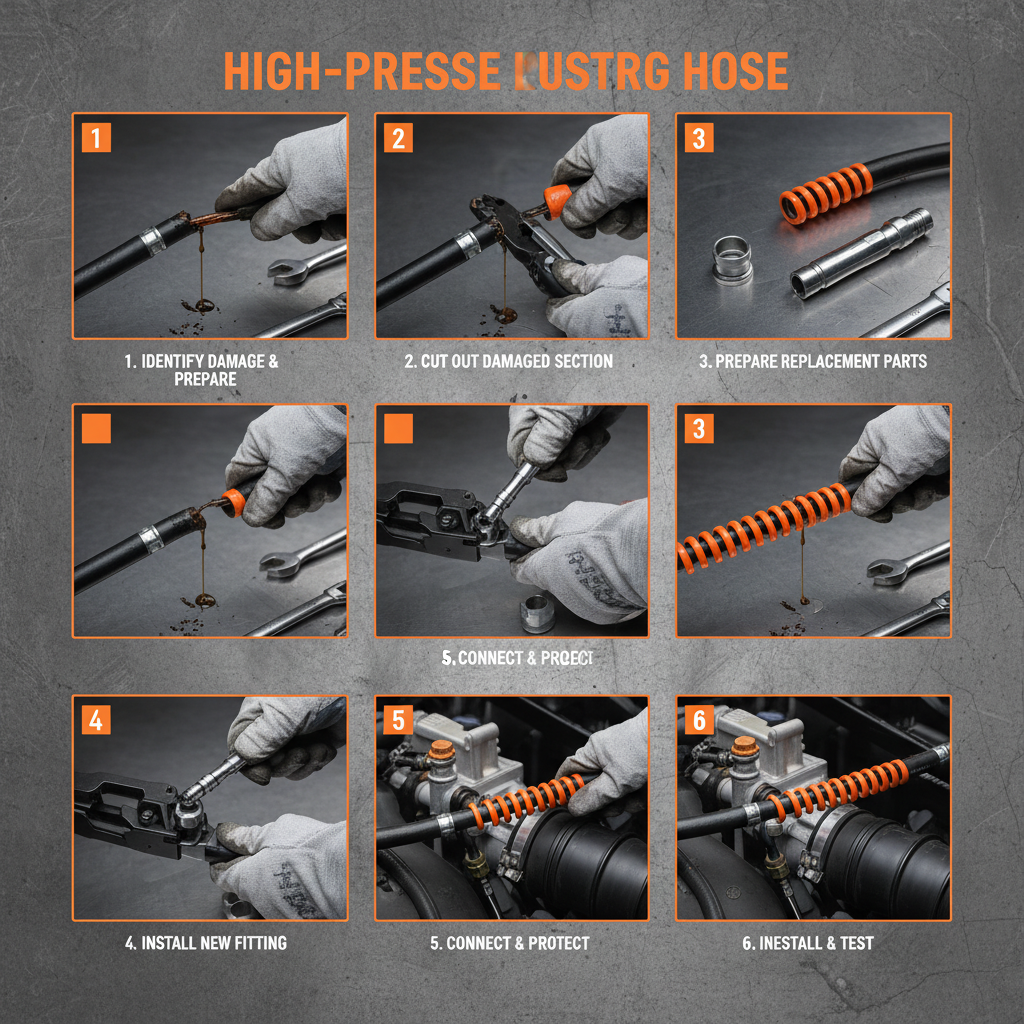
Understanding the Risks of Repairing High Pressure Hoses
High-pressure power steering hoses are engineered to withstand immense force. They're not like standard garden hoses! Attempting to repair a leak or damage, such as a crack or bulge, with patching or clamping is inherently risky. The extreme pressure within the system can cause a repair to fail catastrophically, leading to a sudden loss of power steering, potential injury, and further damage to your vehicle. Even a seemingly minor leak under high pressure can quickly escalate. The materials used in these hoses are specifically chosen for their durability and resistance to the power steering fluid, and attempting to bond different materials together often results in a weak point.
Key Risk Factors: Catastrophic failure, loss of power steering, potential injury, further vehicle damage, and unreliable repairs.
When is Repair Not Recommended?
Generally, repairing a high-pressure power steering hose isn’t advisable in most situations. Specifically, avoid attempting a repair if you observe any of the following: cracks in the hose material, bulging or blistering, significant abrasion or wear, or any visible signs of corrosion. Any hose that has experienced a complete rupture or significant fluid loss should always be replaced. Even if a leak appears small, the internal damage might be extensive. Don’t risk your safety or the integrity of your vehicle’s system attempting a temporary fix.
Repair Avoidance Checklist:
• Cracks or Bulges
• Significant Abrasion
• Visible Corrosion
• Complete Rupture
Can You Repair a High Pressure Power Steering Hose: Limited Exceptions
In extremely rare cases, a very minor pinhole leak might be temporarily addressed with a specialized hose repair kit specifically designed for power steering hoses. However, this should only be considered a temporary fix to get you to a repair shop for a proper replacement. These kits typically involve a sealant and clamp, but their effectiveness is limited, and the repair is never as reliable as a new hose. Always consult a qualified mechanic before attempting any repair, even a temporary one. Furthermore, ensure the sealant used is compatible with the power steering fluid in your vehicle.
Why Replacement is the Best Solution
Replacing a damaged high-pressure power steering hose is the safest and most reliable solution. Hose QRT offers a comprehensive range of high-quality replacement hoses engineered to meet or exceed OEM specifications. Using a new hose ensures optimal performance, prevents future leaks, and safeguards your vehicle’s power steering system. Our hoses are rigorously tested to withstand extreme pressure and temperature variations, offering peace of mind and long-lasting durability.
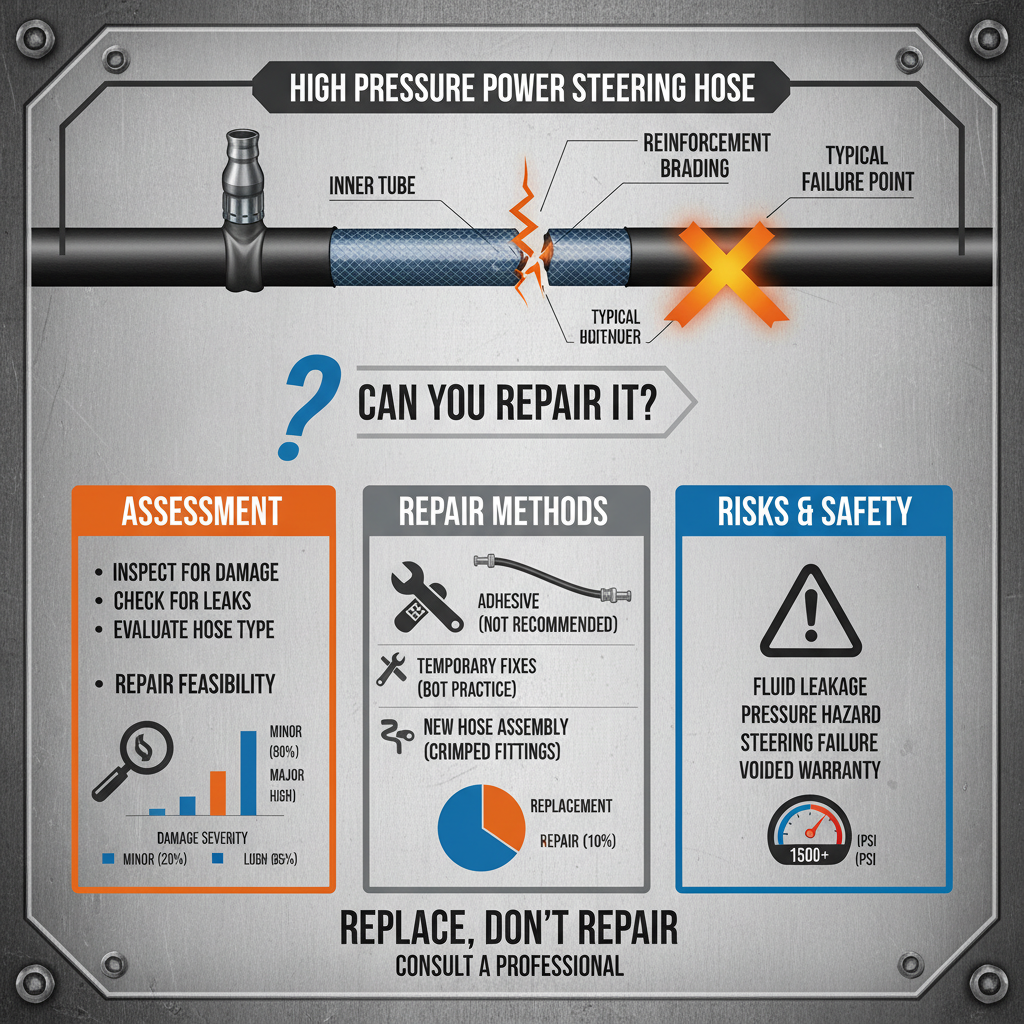
Conclusion: Prioritize Safety and Reliability
While the question of “can you repair a high pressure power steering hose?” might seem tempting to tackle DIY, the risks associated with repair far outweigh any potential cost savings. Prioritizing safety and reliability by replacing a damaged hose with a high-quality component from Hose QRT is the smartest and most responsible approach. Don't compromise on your vehicle’s performance or your personal safety – choose replacement and enjoy a smoothly operating power steering system.
Frequently Asked Questions (FAQs)
What are the signs of a failing power steering hose?
Common signs include a whining noise when turning the steering wheel, difficulty steering, fluid leaks near the power steering pump or steering rack, and a noticeable decrease in power steering assist. If you observe any of these symptoms, it's crucial to inspect your power steering hoses for damage. Ignoring these signs can lead to more significant issues and potential safety hazards.
How often should power steering hoses be replaced?
There isn’t a fixed replacement schedule, as it depends on driving conditions and hose quality. However, it's generally recommended to inspect power steering hoses every 2-3 years, or sooner if you notice any signs of wear or damage. Proactive replacement can prevent unexpected failures and costly repairs down the road. Consider replacing hoses as part of routine power steering system maintenance.
What type of fluid should I use in my power steering system?
The correct type of power steering fluid varies depending on your vehicle's make and model. Always refer to your vehicle's owner's manual for specific recommendations. Using the wrong fluid can damage the power steering system components, including the hoses and pump. Hose QRT can help you find the correct hose, and it’s always best to consult a qualified mechanic if you are unsure.
-
Custom Power Steering Hose Kit Guide for Vehicle PerformanceNewsApr.16,2026
-
Guide to High Performance Custom Made Power Steering HosesNewsApr.09,2026
-
Comprehensive Guide to Custom High Pressure Power Steering Hose SolutionsNewsApr.07,2026
-
Comprehensive Guide to CRV Power Steering Hose Maintenance and ReplacementNewsApr.04,2026
-
Comprehensive Guide to CPP Power Steering Hoses for Optimal Vehicle PerformanceNewsMar.31,2026
-
Understanding the Cost to Repair Power Steering Hose and Associated FactorsNewsMar.28,2026
 Afrikaans
 Albanian
 Amharic
 Arabic
 Armenian
 Azerbaijani
 Basque
 Belarusian
 Bengali
 Bosnian
 Bulgarian
 Catalan
 Cebuano
 Corsican
 Croatian
 Czech
Czech
 Danish
 Dutch
Dutch
 Esperanto
 Estonian
 Finnish
 French
 Frisian
 Galician
 Georgian
 German
 Greek
Greek
 Gujarati
 Haitian Creole
 Hausa
Hausa
 Hawaiian
 Hebrew
 Hindi
Hindi
 Miao
Miao
 Hungarian
 Icelandic
 Igbo
Igbo
 Indonesian
 Irish
Irish
 Italian
 Japanese
 Javanese
 Kannada
 Kazakh
 Khmer
Khmer
 Rwandese
 Korean
 Kurdish
 Kyrgyz
 Lao
Lao
 Latin
Latin
 Latvian
 Lithuanian
 Luxembourgish
 Macedonian
 Malgashi
 Malay
Malay
 Malayalam
 Maltese
 Maori
Maori
 Marathi
 Mongolian
 Myanmar
 Nepali
 Norwegian
 Norwegian
 Occitan
 Pashto
 Persian
 Polish
 Portuguese
 Punjabi
 Romanian
 Russian
 Samoan
 Scottish Gaelic
 Serbian
 Sesotho
 Shona
Shona
 Sindhi
 Sinhala
 Slovak
 Slovenian
 Somali
 Spanish
 Sundanese
 Swahili
 Swedish
 Tagalog
 Tajik
Tajik
 Tamil
Tamil
 Tatar
Tatar
 Telugu
 Thai
Thai
 Turkish
 Turkmen
 Ukrainian
 Urdu
Urdu
 Uighur
 Uzbek
Uzbek
 Vietnamese
 Welsh
Welsh
 Bantu
Bantu
 Yiddish
 Yoruba
 Zulu
Zulu
 English