

Nissan 300ZX Power Steering Hose Replacement and System Guide
Understanding and Replacing Your 300ZX Power Steering Hose
The Nissan 300ZX, a classic sports car known for its performance and handling, relies on a robust power steering system. A critical component of this system is the 300ZX power steering hose. Over time, these hoses can deteriorate due to heat, pressure, and age, leading to leaks and diminished steering performance. This article provides a comprehensive guide to understanding, identifying issues with, and replacing your 300ZX power steering hose, ensuring your vehicle continues to deliver a responsive and enjoyable driving experience. Knowing when and how to replace this hose is essential for maintaining the integrity of your power steering system.
Identifying Problems with Your 300ZX Power Steering Hose
Several symptoms can indicate a failing 300ZX power steering hose. The most common is a noticeable leak of power steering fluid. You might find fluid under the car, near the power steering pump, or around the steering rack. Other signs include difficult steering, especially at low speeds, a whining noise from the power steering pump (often caused by low fluid due to the leak), and intermittent loss of power steering assist. Regularly checking your power steering fluid level and inspecting the hose for cracks, bulges, or brittleness is a proactive way to prevent more significant problems. Ignoring these symptoms can lead to complete power steering failure and potentially damage other components. At Hose QRT, we offer high-quality replacement hoses to address these issues.
Key Symptoms: Leaks, difficult steering, whining noise, intermittent loss of assist, cracked or brittle hose.
Understanding the 300ZX Power Steering Hose System
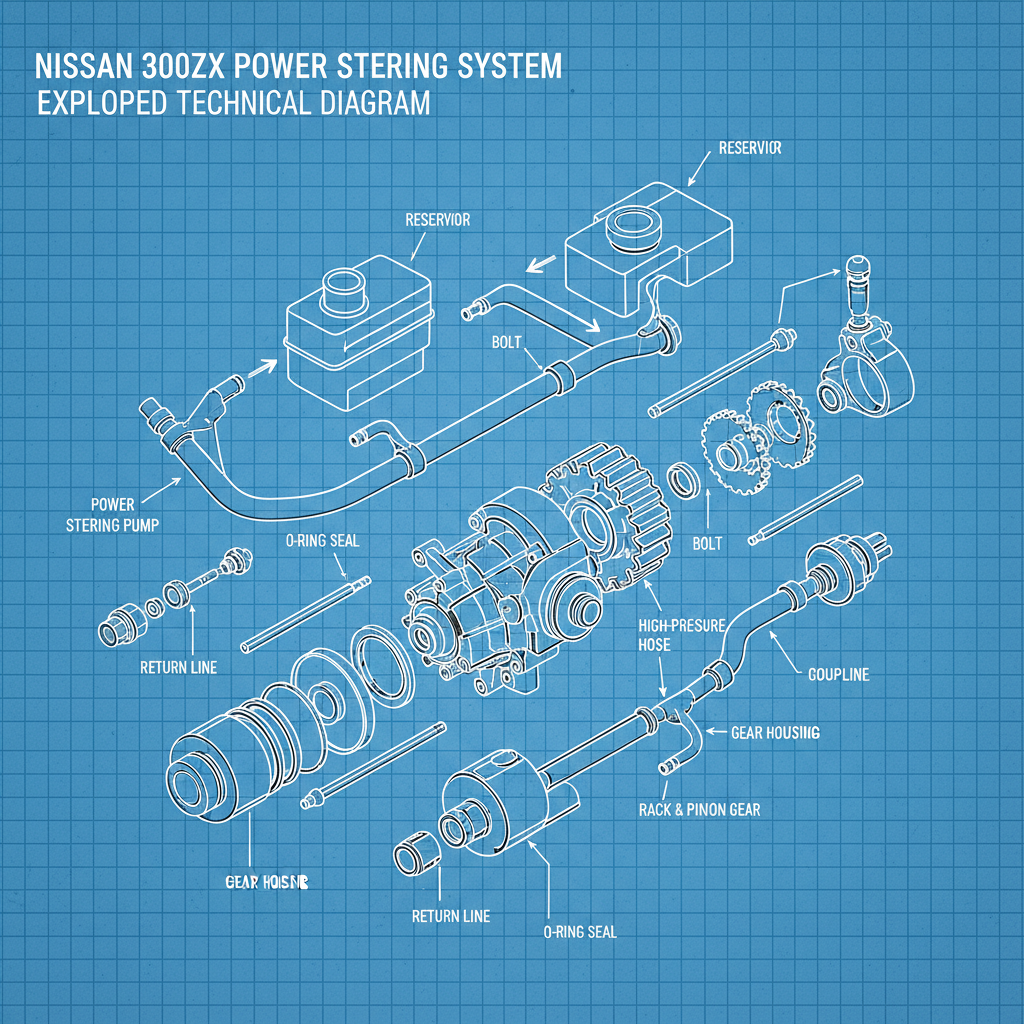
The 300ZX power steering system utilizes several hoses to circulate power steering fluid between the reservoir, pump, steering rack, and sometimes a cooler. The high-pressure hose carries fluid from the pump to the steering rack, while the return hose brings fluid back to the reservoir. A separate low-pressure hose connects the reservoir to the pump. Each hose is specifically designed to withstand the pressures and temperatures involved in the system. Using the correct hose type is critical for long-term reliability and safety. Incorrect hoses may fail prematurely, leading to further issues. Understanding the specific layout of your 300ZX’s power steering system, including the location of each hose, is crucial for a successful replacement.
Hose Types & Functions:
• High-Pressure Hose: Pump to Steering Rack
• Return Hose: Steering Rack to Reservoir
• Reservoir to Pump Hose: Low-Pressure Supply
300ZX Power Steering Hose: Material Comparison
Original 300ZX power steering hoses were typically made from reinforced rubber. However, modern replacement hoses often utilize materials like Teflon or stainless steel braided hoses for increased durability and resistance to heat and pressure. Here's a comparison:
Replacing Your 300ZX Power Steering Hose: A Step-by-Step Guide
Replacing the 300ZX power steering hose requires some mechanical skill. First, safely disconnect the negative battery terminal. Relieve pressure from the power steering system by turning the steering wheel lock-to-lock several times with the engine off. Locate the hose you are replacing. Loosen the hose clamps and carefully remove the old hose, being prepared for some fluid spillage (have a drain pan ready). Clean the connection points thoroughly. Install the new power steering hose, ensuring it's properly seated on all fittings. Secure the hose clamps tightly. Fill the power steering reservoir with the correct fluid. Turn the steering wheel lock-to-lock several times to bleed the system and check for leaks.
Properly disposing of the old power steering fluid is critical for environmental protection.
Hose QRT: Your Source for Quality 300ZX Power Steering Hoses
At Hose QRT, we specialize in providing high-quality replacement hoses for classic and performance vehicles like the Nissan 300ZX. We offer a range of hose materials to suit your needs and budget, including Teflon and stainless steel braided options. Our hoses are designed to meet or exceed original equipment specifications, ensuring a perfect fit and reliable performance. We are committed to providing exceptional customer service and fast shipping. Don't compromise on the performance and safety of your 300ZX – choose Hose QRT for all your power steering hose needs.
Conclusion: Maintaining Peak Performance
Replacing your 300ZX power steering hose is a vital maintenance task that ensures your vehicle's handling and safety. Investing in high-quality hoses from a trusted source like Hose QRT provides peace of mind and extends the life of your power steering system. Don't wait for a complete failure – proactive replacement is the key to keeping your 300ZX performing at its best.
Frequently Asked Questions (FAQs)
How often should I replace my 300ZX power steering hose?
Generally, it’s recommended to inspect your power steering hoses every 2-3 years. However, the lifespan can vary depending on driving conditions and the hose material. If you notice any signs of leakage, cracking, or swelling, replace the hose immediately. Replacing the hose as preventative maintenance is always better than waiting for a complete failure, which can lead to more extensive and costly repairs. Using a high-quality hose from Hose QRT will increase the longevity and reliability of your power steering system.
Can I use any power steering fluid with the new hose?
No, it's crucial to use the correct type of power steering fluid specified for your 1990-1996 Nissan 300ZX. Using the wrong fluid can cause damage to the pump and other components of the system. Refer to your owner's manual or consult with a qualified mechanic to determine the correct fluid for your vehicle. We recommend using a high-quality, synthetic power steering fluid for optimal performance and protection.
Is it difficult to bleed the power steering system after replacing the hose?
Bleeding the power steering system can be slightly challenging, but it's essential to remove any air trapped in the system. After installing the new hose and filling the reservoir, turn the steering wheel lock-to-lock several times with the engine running (have a helper monitor the fluid level). Check for any gurgling noises, which indicate air in the system. Repeat the process until the fluid is clear and the steering feels smooth. If you're uncomfortable performing this task, it's best to seek assistance from a qualified mechanic.
-
Custom Power Steering Hose Kit Guide for Vehicle PerformanceNewsApr.16,2026
-
Guide to High Performance Custom Made Power Steering HosesNewsApr.09,2026
-
Comprehensive Guide to Custom High Pressure Power Steering Hose SolutionsNewsApr.07,2026
-
Comprehensive Guide to CRV Power Steering Hose Maintenance and ReplacementNewsApr.04,2026
-
Comprehensive Guide to CPP Power Steering Hoses for Optimal Vehicle PerformanceNewsMar.31,2026
-
Understanding the Cost to Repair Power Steering Hose and Associated FactorsNewsMar.28,2026
 Afrikaans
 Albanian
 Amharic
 Arabic
 Armenian
 Azerbaijani
 Basque
 Belarusian
 Bengali
 Bosnian
 Bulgarian
 Catalan
 Cebuano
 Corsican
 Croatian
 Czech
Czech
 Danish
 Dutch
Dutch
 Esperanto
 Estonian
 Finnish
 French
 Frisian
 Galician
 Georgian
 German
 Greek
Greek
 Gujarati
 Haitian Creole
 Hausa
Hausa
 Hawaiian
 Hebrew
 Hindi
Hindi
 Miao
Miao
 Hungarian
 Icelandic
 Igbo
Igbo
 Indonesian
 Irish
Irish
 Italian
 Japanese
 Javanese
 Kannada
 Kazakh
 Khmer
Khmer
 Rwandese
 Korean
 Kurdish
 Kyrgyz
 Lao
Lao
 Latin
Latin
 Latvian
 Lithuanian
 Luxembourgish
 Macedonian
 Malgashi
 Malay
Malay
 Malayalam
 Maltese
 Maori
Maori
 Marathi
 Mongolian
 Myanmar
 Nepali
 Norwegian
 Norwegian
 Occitan
 Pashto
 Persian
 Polish
 Portuguese
 Punjabi
 Romanian
 Russian
 Samoan
 Scottish Gaelic
 Serbian
 Sesotho
 Shona
Shona
 Sindhi
 Sinhala
 Slovak
 Slovenian
 Somali
 Spanish
 Sundanese
 Swahili
 Swedish
 Tagalog
 Tajik
Tajik
 Tamil
Tamil
 Tatar
Tatar
 Telugu
 Thai
Thai
 Turkish
 Turkmen
 Ukrainian
 Urdu
Urdu
 Uighur
 Uzbek
Uzbek
 Vietnamese
 Welsh
Welsh
 Bantu
Bantu
 Yiddish
 Yoruba
 Zulu
Zulu
 English