

SAE J2064 Type C AC Hoses | High Performance & Reliability
Understanding SAE J2064 Type C: Advanced Solutions for HVAC Systems
In the intricate landscape of automotive and industrial climate control, the performance and reliability of components are paramount. Among these, air conditioning hoses play a critical role. This article delves into the specifics of SAE J2064 Type C hoses, a standard defining high-performance solutions for refrigerant conveyance. We will explore their technical advantages, application versatility, and the rigorous standards that ensure their longevity and efficiency in demanding operational environments.
Evolving Industry Trends in HVAC Hose Technology
The global automotive and industrial HVAC sector is undergoing significant transformation, driven by stringent environmental regulations, the advent of new refrigerants, and the push for greater energy efficiency. A key trend is the transition from HFC-134a to lower Global Warming Potential (GWP) refrigerants like HFO-1234yf. This shift demands hose materials that exhibit superior barrier properties and chemical compatibility to minimize refrigerant permeation and degradation.
Furthermore, the rise of electric vehicles (EVs) introduces new challenges, requiring hoses to withstand wider temperature ranges and potential exposure to different oils and coolants. There's also an increasing demand for lighter, more compact, and more flexible hose assemblies to accommodate complex routing within confined engine compartments and chassis. Advanced material science, including multi-layered elastomer and thermoplastic designs, is crucial in meeting these evolving requirements, enhancing both performance and service life, particularly for solutions like SAE J2064 Type C hoses.
Technical Specifications and Manufacturing Process of SAE J2064 Type C
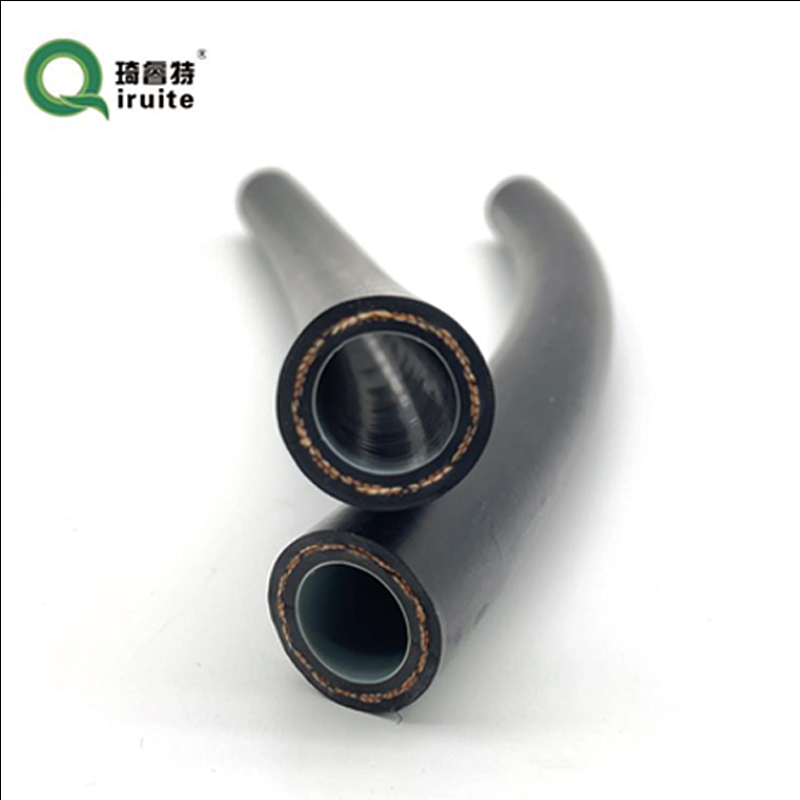
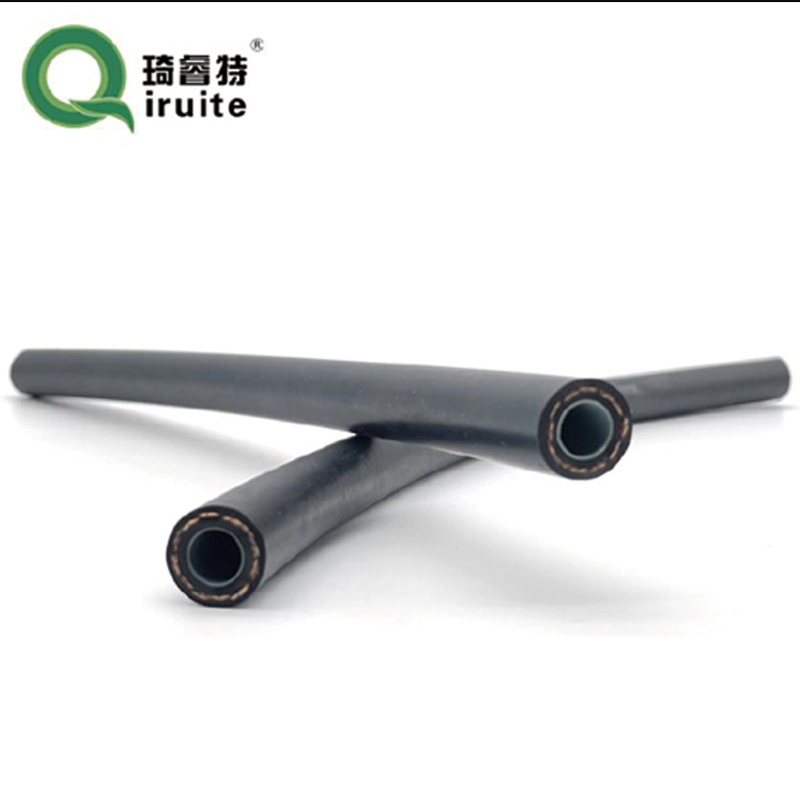
The SAE J2064 Type C specification delineates the performance and construction requirements for refrigerant hoses used in mobile air conditioning systems. These hoses are engineered to minimize refrigerant permeation, resist degradation from refrigerants and lubricants, and maintain integrity under varying pressures and temperatures. The "Type C" designation specifically refers to a multi-layer hose construction typically incorporating an impermeable barrier layer, an elastomeric body, and an outer cover.
Detailed Manufacturing Process:
- Material Selection & Preparation: Core materials typically include specialized elastomers (e.g., EPDM, butyl rubber) for the inner tube and outer cover, and a thermoplastic or nylon barrier layer for low permeation. Reinforcement layers often involve high-tensile synthetic fibers. These materials are chosen for their chemical resistance, flexibility, and mechanical strength.
- Extrusion of Inner Tube: The innermost layer, designed for chemical compatibility with refrigerants and oils, is precisely extruded to the specified diameter and wall thickness.
- Barrier Layer Application: A critical step, where the ultra-low permeation barrier material (e.g., nylon or special thermoplastic) is extruded over the inner tube. This layer is key to meeting SAE J2064 standards for refrigerant retention.
- Reinforcement Braiding/Spiraling: High-strength textile fibers are braided or spiraled around the barrier layer to provide burst strength and dimensional stability under pressure. This process is carefully controlled for tension and pitch.
- Outer Cover Extrusion: The outermost protective layer, often made of EPDM or similar weather-resistant elastomer, is extruded over the reinforcement. This layer provides resistance to abrasion, ozone, UV radiation, and external elements.
- Curing (Vulcanization): The composite hose is then subjected to heat and pressure in an autoclave to vulcanize the rubber components, consolidating the layers and imparting the final mechanical properties.
- Testing and Quality Control: Each batch undergoes rigorous testing to ensure compliance with SAE J2064. Key tests include permeation rate (critical for refrigerant retention), burst pressure, vacuum resistance, ozone resistance, aging, and fatigue resistance. Products are certified against standards such as ISO 9001 and IATF 16949 for automotive applications.
- Cutting and Assembly: Hoses are cut to specified lengths, and fittings are crimped or assembled, ensuring a leak-proof connection.
These hoses are engineered for a service life exceeding 10 years in typical automotive applications, contributing to energy saving by minimizing refrigerant loss and maintaining system efficiency. Target industries include automotive (passenger vehicles, commercial trucks, buses), heavy equipment, agricultural machinery, and specialized industrial refrigeration systems. Their robust design provides excellent corrosion resistance and operational stability.
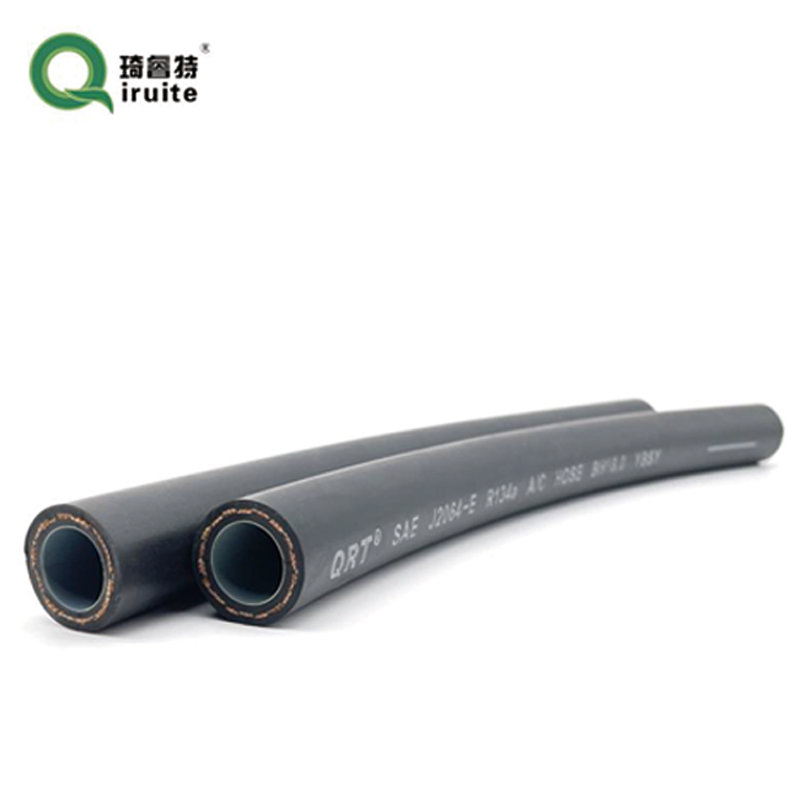
Typical Product Specification Table for SAE J2064 Type C Hoses
| Parameter | SAE J2064 Type C Specification | Typical Value (Example Product) |
|---|---|---|
| Refrigerant Compatibility | R134a, R1234yf | R134a, R1234yf, compatible with various PAG/POE oils |
| Permeation Rate (R134a) | Max. 0.040 kg/m²/year (SAE J2064) | Typically < 0.010 kg/m²/year |
| Working Temperature Range | -30°C to +125°C | -40°C to +135°C (brief excursions to 150°C) |
| Burst Pressure (Minimum) | ≥ 3450 psi (23.8 MPa) for nominal sizes | Typically 4500-6000 psi (31-41 MPa) |
| Vacuum Resistance | No collapse under 27 inches Hg for 24 hrs | No collapse under 29 inches Hg for 72 hrs |
| Ozone Resistance | No cracking after 70 hrs at 100 pphm | No cracking after 168 hrs at 100 pphm |
| Outer Diameter Tolerance | ±0.5 mm or as specified | Typically ±0.3 mm |
Diverse Application Scenarios
The robust construction and superior performance characteristics of SAE J2064 Type C hoses make them indispensable across a variety of demanding applications. Their primary use is in mobile air conditioning systems, but their attributes extend their utility significantly:
- Automotive HVAC Systems: From passenger cars and light trucks to heavy-duty commercial vehicles and buses, these hoses are the backbone of modern vehicular climate control, ensuring efficient refrigerant circulation and cabin comfort.
- Agricultural and Construction Equipment: Tractors, excavators, bulldozers, and other heavy machinery operate in harsh environments with extreme temperatures, dust, and vibrations. SAE J2064 Type C hoses provide the durability and reliability needed for operator comfort and equipment longevity in these demanding conditions.
- Off-Highway and Specialty Vehicles: This includes recreational vehicles (RVs), utility vehicles, and military applications, where robust and dependable HVAC systems are crucial for operational effectiveness and personnel well-being.
- Industrial Refrigeration and Fluid Transfer: While primarily for AC, the high-pressure and low-permeation properties of these hoses can lend them to specific industrial fluid transfer applications where chemical compatibility and minimal loss are critical.
In all these scenarios, their energy-saving capabilities stem from minimized refrigerant leakage, leading to fewer recharges and consistent system performance. Their inherent corrosion resistance ensures long-term operational integrity even when exposed to various environmental elements or chemical residues.
Key Technical Advantages of SAE J2064 Type C
The advantages of using hoses conforming to SAE J2064 Type C are manifold, translating directly into enhanced system performance, reliability, and cost-effectiveness for B2B applications:
- Superior Refrigerant Permeation Control: The multi-layer barrier design significantly reduces refrigerant escape, particularly crucial with modern, high-cost, and environmentally sensitive refrigerants like HFO-1234yf. This leads to fewer system recharges, lower operational costs, and reduced environmental impact.
- Exceptional Durability and Longevity: Engineered to withstand extreme temperature fluctuations (-40°C to +135°C), high pressures, vibrations, and abrasive conditions, ensuring a prolonged service life and reduced maintenance frequency.
- Chemical Compatibility: Optimized materials resist degradation from a wide range of refrigerants (R134a, R1234yf) and compressor oils (PAG, POE), preventing material breakdown and system contamination.
- High Burst and Working Pressures: The reinforced construction provides a significant safety margin, accommodating the fluctuating pressures inherent in AC systems, especially under peak demand.
- Ozone and UV Resistance: The robust outer cover protects against environmental factors, preventing cracking and premature aging, which is critical for components exposed under the hood or in outdoor machinery.
- Flexibility and Ease of Installation: Despite their robust nature, these hoses offer good flexibility, simplifying routing and installation in complex system layouts, minimizing labor costs.
- Compliance with Global Standards: Adherence to SAE J2064 ensures compatibility and performance recognized globally, facilitating easier integration into international supply chains and product designs.
Vendor Comparison: SAE J2064 Type C vs. Type E
When selecting AC hoses, distinguishing between different SAE J2064 types is crucial. While both Type C and Type E are designed for mobile AC, they have distinct construction characteristics impacting performance and cost.
Comparison Table: SAE J2064 Type C vs. Type E
| Feature | SAE J2064 Type C | SAE J2064 Type E |
|---|---|---|
| Inner Tube Material | Synthethic rubber (e.g., EPDM, Butyl) | Thermoplastic (e.g., Nylon, Polyamide) |
| Barrier Layer | Nylon or special thermoplastic | Often integrated into the inner tube, sometimes additional layer |
| Construction Type | Rubber-based, multi-layer with discrete barrier | Thermoplastic, often thinner wall |
| Permeation Performance | Excellent (low permeation) | Very good to excellent (can be comparable or slightly better for specific designs) |
| Flexibility | Good | Often superior flexibility, smaller bend radius |
| Weight | Higher than Type E | Lighter, beneficial for weight reduction |
| Temperature Range | Broad, excellent for extreme hot/cold | Good, but some thermoplastic can have limitations at very high temperatures. |
| Cost Implication | Generally cost-effective for high performance | Potentially higher unit cost depending on design, but labor savings possible. |
While Type E offers advantages in flexibility and weight, SAE J2064 Type C maintains a strong position due to its robust, proven rubber-based construction, excellent temperature resilience, and consistent permeation control across diverse operating conditions. Manufacturers like HoseQRT focus on optimizing Type C performance through advanced elastomer compounds and barrier technologies to meet the evolving demands for both R134a and R1234yf systems, often providing a balanced solution of performance, durability, and cost-effectiveness.
Customized Solutions for Unique Requirements
Recognizing that standard products may not always address highly specific industrial or automotive needs, we specialize in providing customized SAE J2064 Type C hose solutions. Our engineering team collaborates closely with clients to tailor hose designs, materials, and assemblies to exact specifications. This includes:
- Specific Diameter and Lengths: Manufacturing hoses to non-standard internal/external diameters and precise cut lengths to optimize routing and minimize waste.
- Specialized Material Compounds: Developing custom elastomer formulations for enhanced resistance to unique chemicals, oils, or extreme temperature profiles beyond the standard range.
- Integrated Assemblies: Providing complete hose assemblies with pre-attached fittings, bends, and protective sleeves, ready for immediate installation, reducing assembly time and potential for errors.
- Performance Optimization: Fine-tuning barrier layers for even lower permeation rates or designing for higher burst pressures for ultra-demanding applications.
- Color-Coding and Branding: Offering options for external color-coding for easy identification or incorporating client branding for consistent product lines.
Our extensive R&D capabilities and ISO/IATF certified manufacturing processes ensure that customized solutions meet the same rigorous performance and quality standards as our standard product lines.
Application Case Studies & Customer Experience
Our commitment to delivering high-performance SAE J2064 Type C hoses is reflected in numerous successful applications globally. Here are a few examples:
Case Study 1: Heavy-Duty Truck OEM
A major North American heavy-duty truck manufacturer faced persistent issues with premature AC hose failure due to extreme under-hood temperatures and vibration. We engineered a customized SAE J2064 Type C hose with an enhanced EPDM outer cover for superior heat and abrasion resistance, coupled with a thicker barrier layer for improved R134a retention. After implementation, the OEM reported a 40% reduction in AC system warranty claims related to hoses over a 3-year period. "The durability and reliability of these hoses have significantly improved our vehicles' HVAC performance, directly impacting customer satisfaction," remarked their Lead Engineer.
Case Study 2: European Agricultural Equipment Manufacturer
An agricultural machinery giant sought a robust AC hose solution compatible with R1234yf for their new line of tractors, which operate in dusty, outdoor conditions. Our team provided SAE J2064 Type C hoses specifically designed for HFO-1234yf with an advanced nylon barrier and an extremely UV and ozone-resistant EPDM cover. The hoses passed rigorous field testing, demonstrating minimal permeation and excellent resistance to environmental degradation, ensuring reliable cabin cooling for operators during long working hours in harsh sun. The customer praised our product's consistent performance and ease of integration into their existing assembly lines.
Ensuring Trust and Authority: Our Commitment
Certifications & Authoritative Standards
Our manufacturing facilities and processes adhere to the highest international quality standards, providing confidence in every product. We are certified under:
- ISO 9001: For Quality Management Systems, ensuring consistent product quality.
- IATF 16949: The automotive industry's standard for quality management, critical for suppliers of automotive parts.
- SAE J2064: Strict adherence to the Society of Automotive Engineers standards for mobile air conditioning hoses, validated through independent laboratory testing.
- Environmental Compliance: Our products and processes meet relevant environmental regulations, including REACH and RoHS.
We conduct extensive in-house testing, including accelerated aging, burst pressure, vacuum retention, and permeation tests, with results regularly verified by third-party laboratories. Our long-standing partnerships with leading automotive and industrial OEMs underscore our position as a trusted supplier.
Frequently Asked Questions (FAQ)
Q: What refrigerants are compatible with SAE J2064 Type C hoses?
A: These hoses are designed for compatibility with R134a and HFO-1234yf, as well as their respective lubricants (PAG and POE oils).
Q: What is the typical service life of these hoses?
A: Under normal operating conditions, SAE J2064 Type C hoses are designed for a service life exceeding 10 years, comparable to the lifespan of the vehicles or equipment they are installed in.
Q: Can these hoses be used in electric vehicle (EV) AC systems?
A: Yes, with careful consideration for the specific EV system's requirements (e.g., higher voltage, different thermal management fluids). Our custom solutions can address these specific needs.
Lead Time & Fulfillment
Standard product lead times typically range from 2-4 weeks, depending on order volume and specific requirements. For customized solutions, lead times are determined on a project-by-project basis, with prototypes often delivered within 4-6 weeks after design finalization. We maintain robust inventory management and flexible manufacturing schedules to meet demanding production timelines.
Warranty Commitments
All our SAE J2064 Type C hoses come with a comprehensive 1-year warranty against manufacturing defects, effective from the date of purchase. Extended warranty options and specific terms for OEM partnerships are available upon request, reflecting our confidence in product quality and durability.
Dedicated Customer Support
Our commitment extends beyond product delivery. We offer dedicated technical support and after-sales service, including product selection guidance, installation best practices, and troubleshooting. Our global network ensures timely assistance and expert advice to optimize the performance and longevity of your HVAC systems.
Conclusion
The demands on mobile and industrial HVAC systems are ever-increasing, necessitating components that offer unparalleled performance and reliability. SAE J2064 Type C hoses stand out as a premier solution, characterized by their advanced multi-layer construction, superior permeation control, and exceptional durability. By adhering to rigorous manufacturing processes and international quality standards, these hoses ensure optimal system efficiency, reduced environmental impact, and prolonged service life across a diverse range of applications. Partnering with a specialist vendor who understands these technical nuances and offers both standard and customized solutions is key to achieving sustained operational excellence.
References
- SAE International. (2015). SAE J2064: R134a and R1234yf Refrigerant Hoses for Mobile Air Conditioning Systems. Warrendale, PA: SAE International.
- Parker Hannifin Corporation. (2023). Refrigerant Hose Selection Guide. Retrieved from Parker.com.
- Freudenberg Sealing Technologies. (2022). Sealing Solutions for R1234yf Refrigerant Systems. Retrieved from fst.com.
- International Organization for Standardization. (2015). ISO 9001:2015 Quality management systems – Requirements. ISO Central Secretariat.
- Automotive Industry Action Group. (2016). IATF 16949:2016 Quality management system for automotive production and relevant service parts organizations. AIAG.
-
Custom Power Steering Hose Kit Guide for Vehicle PerformanceNewsApr.16,2026
-
Guide to High Performance Custom Made Power Steering HosesNewsApr.09,2026
-
Comprehensive Guide to Custom High Pressure Power Steering Hose SolutionsNewsApr.07,2026
-
Comprehensive Guide to CRV Power Steering Hose Maintenance and ReplacementNewsApr.04,2026
-
Comprehensive Guide to CPP Power Steering Hoses for Optimal Vehicle PerformanceNewsMar.31,2026
-
Understanding the Cost to Repair Power Steering Hose and Associated FactorsNewsMar.28,2026
 Afrikaans
 Albanian
 Amharic
 Arabic
 Armenian
 Azerbaijani
 Basque
 Belarusian
 Bengali
 Bosnian
 Bulgarian
 Catalan
 Cebuano
 Corsican
 Croatian
 Czech
Czech
 Danish
 Dutch
Dutch
 Esperanto
 Estonian
 Finnish
 French
 Frisian
 Galician
 Georgian
 German
 Greek
Greek
 Gujarati
 Haitian Creole
 Hausa
Hausa
 Hawaiian
 Hebrew
 Hindi
Hindi
 Miao
Miao
 Hungarian
 Icelandic
 Igbo
Igbo
 Indonesian
 Irish
Irish
 Italian
 Japanese
 Javanese
 Kannada
 Kazakh
 Khmer
Khmer
 Rwandese
 Korean
 Kurdish
 Kyrgyz
 Lao
Lao
 Latin
Latin
 Latvian
 Lithuanian
 Luxembourgish
 Macedonian
 Malgashi
 Malay
Malay
 Malayalam
 Maltese
 Maori
Maori
 Marathi
 Mongolian
 Myanmar
 Nepali
 Norwegian
 Norwegian
 Occitan
 Pashto
 Persian
 Polish
 Portuguese
 Punjabi
 Romanian
 Russian
 Samoan
 Scottish Gaelic
 Serbian
 Sesotho
 Shona
Shona
 Sindhi
 Sinhala
 Slovak
 Slovenian
 Somali
 Spanish
 Sundanese
 Swahili
 Swedish
 Tagalog
 Tajik
Tajik
 Tamil
Tamil
 Tatar
Tatar
 Telugu
 Thai
Thai
 Turkish
 Turkmen
 Ukrainian
 Urdu
Urdu
 Uighur
 Uzbek
Uzbek
 Vietnamese
 Welsh
Welsh
 Bantu
Bantu
 Yiddish
 Yoruba
 Zulu
Zulu
 English