Reliable Brake Line Suppliers for High Performance Automotive Hoses
For procurement managers and automotive engineers, sourcing a reliable partner among brake line suppliers requires more than just comparing price points; it demands a deep dive into material compatibility and pressure resistance. In the demanding environment of vehicle HVAC and fluid systems, the integrity of a hose can be the difference between operational efficiency and catastrophic system failure. Hebei Qiruite Rubber and Plastic Product Co., Ltd specializes in high-performance automotive air conditioning hoses designed to withstand extreme thermal cycling and chemical exposure.
Our engineering approach focuses on the critical bond between EPDM rubber, reinforced textile yarn, and nylon lining. By solving the industry-wide challenge of adhesion between these disparate materials, we provide hoses that exceed OEM requirements for R134a and the next-generation R1234yf refrigerants. Whether you are servicing heavy-duty trucks or passenger vehicles, understanding the technical specifications of your fluid conveyance systems is paramount to long-term reliability.

Advanced Material Composition and Bonding Technology for Automotive Fluid Lines
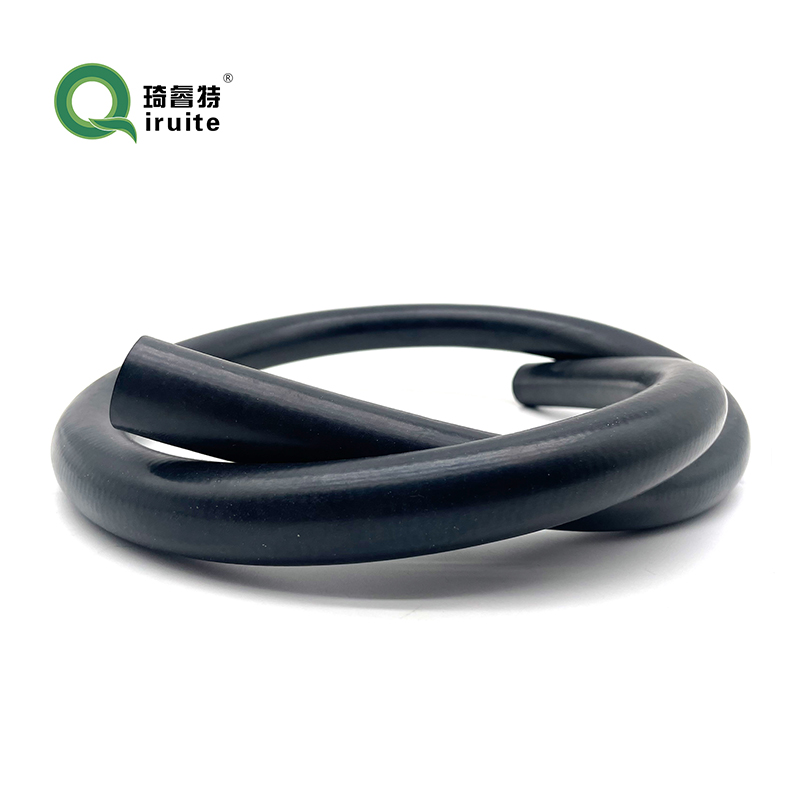
The performance of an automotive hose is fundamentally determined by its layered construction. Our products utilize a high-grade rubber exterior designed for environmental resilience, reinforced with a robust textile yarn braiding that provides the necessary structural integrity to handle high-pressure pulses. The interior is finished with a thick nylon lining, which serves as the primary barrier against refrigerant permeation.
One of the most significant technical hurdles in rubber manufacturing is the bonding of EPEDM rubber to nylon and polyester yarns. Inadequate bonding leads to delamination under pressure, causing premature failure. Through decade-long research and development, we have perfected a vulcanization process that ensures a seamless, chemical bond across all layers. This innovation allows our hoses to maintain stability across a wide temperature range from -40°C to +135°C, ensuring they remain flexible yet burst-resistant in the harshest engine bay environments.
Furthermore, our manufacturing process follows a strict sequence of extruding, braiding, and vulcanization. This ensures that every meter of hose possesses uniform wall thickness and consistent reinforcement density, which is critical for meeting the stringent QC/T 664-2000 domestic standards and SAE J2064 specifications.

Rigorous Quality Validation and International Standard Compliance
Quality assurance in the rubber and plastic industry is not merely about final inspection but about process control. Our production facility is ISO/TS 16949:2009 certified, reflecting a commitment to the automotive industry's most demanding quality management systems. Every batch of raw material undergoes stability testing before it enters the extrusion line to prevent variance in rubber elasticity or chemical resistance.
To validate our performance claims, our products are subjected to 18 distinct technical test requirements under the QC/T 664-2000 standard. These tests include, but are not limited to:
- Pulse Resistance: Simulating the constant pressure fluctuations of a running compressor.
- Permeation Testing: Ensuring refrigerants like R1234yf do not leak through the hose walls.
- Ozone and Aging Resistance: Testing the rubber's ability to resist cracking under UV and ozone exposure.
- Vibration and Shock Resistance: Ensuring the hose does not fatigue under vehicle chassis movement.
Many of our internal test parameters actually exceed the minimum requirements of these standards. By utilizing a third-party institution for final verification, we provide our global partners with an unbiased technical backing that simplifies the OEM approval process.
Application Engineering for Diverse Vehicle Platforms
The application of air conditioning hoses extends across a vast spectrum of vehicles, from light passenger cars to heavy-duty engineering machinery. Each platform presents unique challenges; for instance, engineering vehicles operate in high-dust and high-vibration environments, requiring enhanced outer cover durability, while luxury cars demand ultra-low permeability to maintain system efficiency.
Our hoses are specifically engineered to be compatible with a variety of refrigerants, including R12, R134a, R404a, and the environmentally friendly R1234yf. The flexibility of the hose is a key design factor, allowing for complex routing within tight engine compartments without kinking or restricting flow. This flexibility, combined with high burst pressure ratings, ensures that the system remains sealed even during sudden pressure spikes.
For clients with unique requirements, we offer tailor-made customization. This includes modifying the inner diameter, outer diameter, or rubber compound to suit specific chemical environments or temperature extremes. By collaborating closely with the client's engineering team, we can develop customized hose solutions that integrate seamlessly into the overall vehicle architecture.
Technical Specification Matrix for E-Type A/C Hoses
| Inner Diameter (Inch/mm) | Outer Diameter (mm) | Working Pressure (Mpa) | Burst Pressure (Mpa) |
|---|---|---|---|
| 5/16" (8.2±0.4) | 18.7±0.5 | 3.5 | 20 |
| 13/32" (10.5±0.4) | 22.5±0.5 | 3.5 | 23 |
| 1/2" (13±0.4) | 23±0.5 | 3.5 | 22 |
| 5/8" (16±0.4) | 28±0.5 | 3.5 | 21 |
| 3/4" (19±0.4) | 28.5±0.6 | 3.5 | 18 |
Strategic Procurement and Supply Chain Considerations
When evaluating potential partners, procurement professionals must look beyond the immediate product and analyze the supplier's R&D depth. A manufacturer with an independent laboratory and experienced technical staff can provide faster iteration cycles for customized products, reducing the time-to-market for new vehicle models.
Logistics and packaging also play a critical role in maintaining product quality during transit. We provide hoses in 50m or 100m rolls, protected by plastic woven film to prevent contamination and surface damage. Our ability to ship within 15 days after down payment ensures that our clients can maintain lean inventories without risking production halts.
Operating in diverse markets—from Brazil and Mexico to Russia and Australia—has taught us the importance of regional standard adaptation. Whether adhering to SAE standards for the American market or specific domestic requirements in Asia, our ability to pivot production specifications makes us a versatile partner for global distributors.
Future Trends in Automotive Fluid Conveyance Systems
The automotive industry is currently undergoing a massive transition toward electrification and sustainable refrigerants. As vehicles move toward EV platforms, the requirements for thermal management systems are evolving. We are seeing an increased demand for hoses that can handle higher thermal loads and more aggressive eco-friendly refrigerants without sacrificing permeability standards.
The integration of smarter materials, such as those with improved vibration damping properties, is becoming a priority for OEM buyers. We are continuing to invest in our specialized lab to explore new rubber compounds that offer even lower permeability, which is essential for the efficiency of the next generation of HVAC systems.
Ultimately, the goal is to create a zero-leak environment. By refining the bonding technology between the rubber and the nylon lining, we are pushing the boundaries of how long a hose can remain in service without maintenance, thereby increasing the overall lifecycle value of the vehicle.
Technical and Procurement FAQ
What makes your EPDM-nylon bonding technology superior?
Our proprietary vulcanization process solves the common industry problem where EPEDM rubber fails to bond effectively with nylon linings and polyester yarns, preventing delamination under high pressure.
Are these hoses compatible with R1234yf refrigerant?
Yes, our hoses are specifically designed to meet Automotive OEM requirements for both R134a and the next-generation R1234yf refrigerants, offering low permeability and high chemical resistance.
Can you provide customized dimensions for specific vehicle models?
Absolutely. We have the capability for independent R&D and can produce tailor-made hose products with specific inner/outer diameters and performance characteristics based on customer requirements.
What quality standards do your products adhere to?
Our products are produced following the Domestic standard QC/T 664-2000 and meet SAE J2064 specifications, with certification under ISO/TS 16949:2009.
What is the typical lead time for large volume orders?
Generally, shipping is arranged within 15 days after we receive the down payment, though this may vary slightly depending on the level of customization required.
How do you ensure consistency across different batches of hoses?
We implement strict control over raw material quality and rubber stability, supported by our specialized lab and experienced staff who monitor each production patch.
Technical References and Industry Standards
- SAE International - Automotive Engineering Standards
- ISO - International Organization for Standardization
- NIST - Materials Research and Testing
- Rubber World - Industrial Rubber Technology Insights
For organizations seeking high-reliability automotive fluid solutions, the technical capacity of your supplier is the most critical variable. Hebei Qiruite Rubber and Plastic Product Co., Ltd combines decade-long expertise with rigorous testing to ensure your systems perform under pressure.
Related Technical Insights